Sobre este libro

HAROLD MARCH, the rising reviewer and social critic, was walking vigorously across a great tableland of moors and commons, the horizon of which was fringed with the far-off woods of the famous estate of Torwood Park. He was a good-looking young man in tweeds, with very pale curly hair and pale clear eyes. Walking in wind and sun in the very landscape of liberty, he was still young enough to remember his politics and not merely try to forget them. For his errand at Torwood Park was a political one; it was the place of appointment named by no less a person than the Chancellor of the Exchequer, Sir Howard Horne, then introducing his so-called Socialist budget, and prepared to expound it in an interview with so promising a penman. Harold March was the sort of man who knows everything about politics, and nothing about politicians. He also knew a great deal about art, letters, philosophy, and general culture; about almost everything, indeed, except the world he was living in.

Empieza este libro hoy por 0 €

  • Disfruta de acceso completo a todos los libros de la app durante el periodo de prueba
  • Sin compromiso, cancela cuando quieras
Pruébalo gratis ahora
Más de 52 000 clientes han dado a Nextory 5 estrellas en la App Store y Google Play.

  1. 100 Clásicos de la Literatura Universal

    Francis Scott Fitzgerald, Mary Shelley, Lyman Frank Baum, Louisa May Alcott, Dante Alighieri, Jane Austen, Ambrose Bierce, Emily Brontë, Edgar Rice Burroughs, Lewis Carroll, Wilkie Collins, René Descartes, Charles Dickens, Emily Dickinson, Alexandre Dumas, Gustave Flaubert, Benito Pérez Galdós, Johann Wolfgang von Goethe, Thomas Hardy, E T A Hoffmann, Washington Irving, Henry James, James Joyce, Franz Kafka, Gaston Leroux, Federico García Lorca, H.P. Lovecraft, Publio Virgilio Marón, Lucy Maud Montgomery, John William Polidori, Marco Polo, Antoine de Saint-Exupéry, Emilio Salgari, Walter Scott, Mark Twain, Jules Verne, Julio Verne, H.G. Wells, Edith Wharton, Mary Wollstonecraft, Stefan Zweig, Sun Tzu, Bram Stoker, - Aristoteles, George Bernard Shaw, Henryk Sienkiewicz, Concepción Arenal, Charlotte Brontë, Miguel de Cervantes, G.K. Chesterton, Daniel Defoe, Fyodor Mikhailovich Dostoyevsky, Arthur Conan Doyle, Sigmund Freud, H. Rider Haggard, Homero, Immanuel Kant, Rudyard Kipling, Molière, Friedrich Nietzsche, Fernando de Rojas, Sófocles, William Makepeace Thackeray, León Tolstói, Voltaire, Ramón María del Valle-Inclán, Oscar Wilde, Virginia Woolf

  2. 4.0

    Ortodoxia

    G.K. Chesterton

  3. 2.5

    El hombre que fue jueves

    G.K. Chesterton

  4. #4

    La cruz azul

    G.K. Chesterton

  5. Santo Tomás de Aquino : Biografía filosófica sobre pensamiento escolástico, teología medieval y la relación entre fe y razón

    G.K. Chesterton

  6. San Francisco de Asís : Biografía religiosa sobre la pobreza evangélica, la mística medieval y la espiritualidad franciscana

    G.K. Chesterton

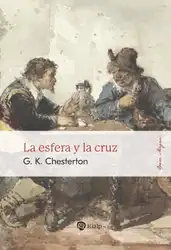
  7. #11

    La esfera y la cruz

    G.K. Chesterton

  8. El padre Brown

    G.K. Chesterton

  9. El Napoleón de Notting Hill

    G.K. Chesterton

  10. El hombre que fue jueves

    G.K. Chesterton

  11. #168

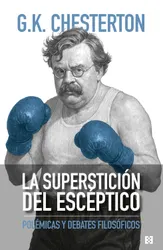
    La superstición del escéptico : Polémicas y debates filosóficos

    G.K. Chesterton

  12. 2.5

    Las aventuras completas del padre Brown : El sacerdote detective que resuelve crímenes con astucia y fe. Nueva Traducción

    G.K. Chesterton