The Ethics of Immanuel Kant : Metaphysics of Morals - Philosophy of Law & The Doctrine of Virtue + The Critique of Practical Reason: Theory of Moral Reasoning + Perpetual Peace (Unabridged)

This carefully crafted ebook: "The Ethics of Immanuel Kant" is formatted for your eReader with a functional and detailed table of contents. Fundamental Principles of the Metaphysics of Morals, also known as the Groundwork of the Metaphysic of Morals, is the first of Immanuel Kant's mature works on moral philosophy and remains one of the most influential in the field. Kant conceives his investigation as a work of foundational ethics—one that clears the ground for future research by explaining the core concepts and principles of moral theory and showing that they are normative for rational agents. Kant aspires to nothing less than this: to lay bare the fundamental principle of morality and show that it applies to us. The Metaphysics of Morals is a work of political and moral philosophy by Immanuel Kant. The work is divided into two main parts, "The Science of Right, which deals with the rights that people have or can acquire, and the Doctrine of Virtue, which deals with the virtues they ought to acquire." The Critique of Practical Reason is the second of Immanuel Kant's three critiques and deals with his moral philosophy. Immanuel Kant (1724-1804) was a German philosopher, who, according to the Stanford Encyclopedia of Philosophy is "the central figure of modern philosophy." Kant argued that fundamental concepts of the human mind structure human experience, that reason is the source of morality, that aesthetics arises from a faculty of disinterested judgment, that space and time are forms of our understanding, and that the world as it is "in-itself" is unknowable. Contents: Fundamental Principles of the Metaphysic of Morals The Metaphysics of Morals Philosophy of Law (The Science of Right) The Metaphysical Elements of Ethics The Critique of Practical Reason: Theory of Moral Reasoning Perpetual Peace

Om denne bog

This carefully crafted ebook: "The Ethics of Immanuel Kant" is formatted for your eReader with a functional and detailed table of contents. Fundamental Principles of the Metaphysics of Morals, also known as the Groundwork of the Metaphysic of Morals, is the first of Immanuel Kant's mature works on moral philosophy and remains one of the most influential in the field. Kant conceives his investigation as a work of foundational ethics—one that clears the ground for future research by explaining the core concepts and principles of moral theory and showing that they are normative for rational agents. Kant aspires to nothing less than this: to lay bare the fundamental principle of morality and show that it applies to us. The Metaphysics of Morals is a work of political and moral philosophy by Immanuel Kant. The work is divided into two main parts, "The Science of Right, which deals with the rights that people have or can acquire, and the Doctrine of Virtue, which deals with the virtues they ought to acquire." The Critique of Practical Reason is the second of Immanuel Kant's three critiques and deals with his moral philosophy. Immanuel Kant (1724-1804) was a German philosopher, who, according to the Stanford Encyclopedia of Philosophy is "the central figure of modern philosophy." Kant argued that fundamental concepts of the human mind structure human experience, that reason is the source of morality, that aesthetics arises from a faculty of disinterested judgment, that space and time are forms of our understanding, and that the world as it is "in-itself" is unknowable. Contents: Fundamental Principles of the Metaphysic of Morals The Metaphysics of Morals Philosophy of Law (The Science of Right) The Metaphysical Elements of Ethics The Critique of Practical Reason: Theory of Moral Reasoning Perpetual Peace

Kom i gang med denne bog i dag for 0 kr.

  • Få fuld adgang til alle bøger i appen i prøveperioden
  • Ingen forpligtelser, opsiges når som helst
Prøv gratis nu
Mere end 52.000 mennesker har givet Nextory fem stjerner i App Store og Google Play.

  1. 12 Masterpieces You Have to Read Before You Die. Philosophy

    Niccolo Machiavelli, Tommaso Campanella, Francis Bacon, Thomas More, John Stuart Mill, Immanuel Kant, Kahlil Gibran, Leo Tolstoy, G.K. Chesterton, Henry David Thoreau

  2. Groundwork of the Metaphysics of Morals

    Immanuel Kant

  3. 4.0

    Den evige fred

    Immanuel Kant

  4. 4.0

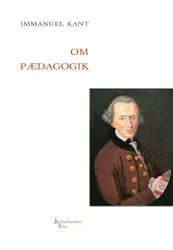
    Om pædagogik

    Immanuel Kant

  5. 100 Clásicos de la Literatura Universal

    Francis Scott Fitzgerald, Mary Shelley, Lyman Frank Baum, Louisa May Alcott, Dante Alighieri, Jane Austen, Ambrose Bierce, Emily Brontë, Edgar Rice Burroughs, Lewis Carroll, Wilkie Collins, René Descartes, Charles Dickens, Emily Dickinson, Alexandre Dumas, Gustave Flaubert, Benito Pérez Galdós, Johann Wolfgang von Goethe, Thomas Hardy, E T A Hoffmann, Washington Irving, Henry James, James Joyce, Franz Kafka, Gaston Leroux, Federico García Lorca, H.P. Lovecraft, Publio Virgilio Marón, Lucy Maud Montgomery, John William Polidori, Marco Polo, Antoine de Saint-Exupéry, Emilio Salgari, Walter Scott, Mark Twain, Jules Verne, Julio Verne, H.G. Wells, Edith Wharton, Mary Wollstonecraft, Stefan Zweig, Sun Tzu, Bram Stoker, - Aristoteles, George Bernard Shaw, Henryk Sienkiewicz, Concepción Arenal, Charlotte Brontë, Miguel de Cervantes, G.K. Chesterton, Daniel Defoe, Fyodor Mikhailovich Dostoyevsky, Arthur Conan Doyle, Sigmund Freud, H. Rider Haggard, Homero, Immanuel Kant, Rudyard Kipling, Molière, Friedrich Nietzsche, Fernando de Rojas, Sófocles, William Makepeace Thackeray, León Tolstói, Voltaire, Ramón María del Valle-Inclán, Oscar Wilde, Virginia Woolf

  6. Hacia la paz perpetua

    Immanuel Kant

  7. Teoría y praxis : Estudio preliminar: Eduardo García Belsunce

    Immanuel Kant

  8. Crítica de la Razón Pura

    Immanuel Kant

  9. La paz perpetua : Octava edición

    Immanuel Kant

  10. Yaşam Felsefesi

    Immanuel Kant

  11. La Paz Perpetua :

    Immanuel Kant

  12. 2.5

    An Answer to the Question: What is Enlightenment?

    Immanuel Kant