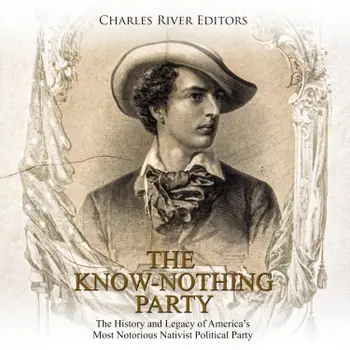
The Know Nothing Party: The History and Legacy of America’s Most Notorious Nativist Political Party

It is not uncommon that a failed movement or group from the past might be cited as a “cautionary” example for the world today. In the wake of contemporary debates over immigration, the “Know Nothings” have been regularly cited as an example of how dangerous nativist attitudes can become and, indeed, have proven to be in America’s history. Several columnists, for instance, have striven to make comparisons between the Know Nothings of antebellum America and President Donald Trump’s immigration policies, helping in part to generate modern interest in a political party that many Americans have heard of but tend to know little about.

The Know Nothing movement can actually be tied to a number of violent episodes and ethnically-charged riots that occurred during the last 1850s. The debate over immigration in the 1850s was more than a clash of worldviews - it touched upon the core of America’s values. While nativists, like the Know Nothings, believed that immigrants who embraced politics from their native lands represented a threat to America’s values, those who opposed them argued that it was precisely America’s values that made immigration a necessity and a valuable component of American life. As the Republicans and Know Nothings spread from the ashes of the Whig Party, the Republicans, led by President Lincoln, rejected nativism and embraced a kind of American exceptionalism. Lincoln did not believe that America was “better” or even more “moral” than other nations, but his brand of exceptionalism advanced the view that America represented a great experiment, one that proposed that a society based on the ideals of the Declaration of Independence (i.e. life, liberty, and the pursuit of happiness). Should it fail, Lincoln believed it would shatter the hopes of the rest of the world as people sought to overcome despotic and tyrannical forms of rule.
Begin vandaag nog met dit boek voor € 0

  • Krijg volledige toegang tot alle boeken in de app tijdens de proefperiode
  • Geen verplichtingen, op elk moment annuleren
Probeer nu gratis
Meer dan 52.000 mensen hebben Nextory 5 sterren gegeven in de App store en op Google Play.

  1. The Most Controversial Cases of the Early 20th Century: The Murder of Stanford White, Sacco & Vanzetti, Leopold & Loeb, and the Lindbergh Baby Kidnapping

    Charles River Editors

  2. The Wars of Alexander the Great: The History of the Campaigns in Persia and India that Established the World’s Largest Empire

    Charles River Editors

  3. 3.7

    The Battle of Chaldiran: The History and Legacy of the Ottoman Empire’s Decisive Victory Over the Safavid Dynasty in Anatolia

    Charles River Editors

  4. 3.6

    The Battle of the Somme: The History and Legacy of World War I’s Biggest Battle

    Charles River Editors

  5. 3.0

    The Yakuza and the Triads: The History of Asia’s Most Notorious Transnational Criminal Organizations

    Charles River Editors

  6. 3.5

    The Shining Path: The History of Peru’s Revolutionary Communist Party and the Ongoing Civil War

    Charles River Editors

  7. Zimbabwe under the British Empire: The History of Great Britain’s Colonization and Decolonization Before the Country’s Independence

    Charles River Editors

  8. Edith Stein: The Life and Legacy of the Jewish Philosopher Who Became a Catholic Saint

    Charles River Editors

  9. 5.0

    The Germanic Tribes in Antiquity: The History and Legacy of the Ancient Peoples Who Spread across Europe

    Charles River Editors

  10. Weird Television: A Collection of Interrupted Broadcasts, Paranormal Apparitions, and Other Mysteries on TV

    Charles River Editors

  11. Nostradamus and Baba Vanga: The Controversial Lives and Prophecies of the Modern Era’s Most Famous Seers

    Charles River Editors

  12. U-Boats in the Atlantic: The History of Germany’s Submarines during World War I and World War II

    Charles River Editors