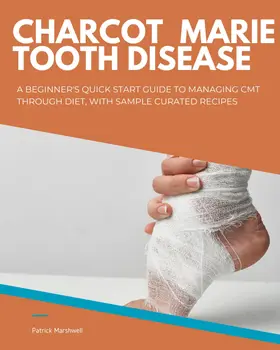
Charcot Marie Tooth Disease : A Beginner's Quick Start Guide to Managing CMT Through Diet, With Sample Curated Recipes

The term "Charcot-Marie-Tooth disease," usually abbreviated as "CMT," refers to a group of inherited conditions that affect the nerves in the extremities and can lead to nerve damage.

Jean-Martin Charcot, Pierre Marie, and Howard Henry Tooth were the physicians who originally characterized the sickness in 1886. The condition was given their names in honor of their contributions. According to mda.org, there are around 19 cases of CMT for every 100,000 persons who are part of the general population.

CMT is distinguished by the gradual deterioration of muscular strength and atrophy, as well as a loss of sensation in the extremities, particularly the hands and feet. The symptoms of CMT normally start appearing in childhood or adolescence, and the condition typically advances gradually throughout one's lifetime.

However, some treatments can help to reduce symptoms and slow the progression of the condition. Although there is no cure for CMT at this time, there are treatments available.

With the assistance of various assistive technology and adaptive equipment, some people who have CMT can live lives that are close to normal. Diet and nutrition are also very significant factors to consider while trying to alleviate the symptoms of CMT.

In this beginner's guide, we'll cover the following in detail:

What causes Charcot-Marie-tooth disease?

What are the genetic factors that Cause CMT Disease?

What are the symptoms of Charcot-Marie-tooth disease?

How is Charcot-Marie-tooth disease diagnosed?

Who is at risk to get Charcot-Marie-tooth disease?

What are the complications of Charcot-Marie-Tooth disease?

How to manage Charcot-Marie-tooth disease through diet and nutrition?

Managing CMT through natural methods and lifestyle changes.

So, let's get started!

Over dit boek

The term "Charcot-Marie-Tooth disease," usually abbreviated as "CMT," refers to a group of inherited conditions that affect the nerves in the extremities and can lead to nerve damage.

Jean-Martin Charcot, Pierre Marie, and Howard Henry Tooth were the physicians who originally characterized the sickness in 1886. The condition was given their names in honor of their contributions. According to mda.org, there are around 19 cases of CMT for every 100,000 persons who are part of the general population.

CMT is distinguished by the gradual deterioration of muscular strength and atrophy, as well as a loss of sensation in the extremities, particularly the hands and feet. The symptoms of CMT normally start appearing in childhood or adolescence, and the condition typically advances gradually throughout one's lifetime.

However, some treatments can help to reduce symptoms and slow the progression of the condition. Although there is no cure for CMT at this time, there are treatments available.

With the assistance of various assistive technology and adaptive equipment, some people who have CMT can live lives that are close to normal. Diet and nutrition are also very significant factors to consider while trying to alleviate the symptoms of CMT.

In this beginner's guide, we'll cover the following in detail:

What causes Charcot-Marie-tooth disease?

What are the genetic factors that Cause CMT Disease?

What are the symptoms of Charcot-Marie-tooth disease?

How is Charcot-Marie-tooth disease diagnosed?

Who is at risk to get Charcot-Marie-tooth disease?

What are the complications of Charcot-Marie-Tooth disease?

How to manage Charcot-Marie-tooth disease through diet and nutrition?

Managing CMT through natural methods and lifestyle changes.

So, let's get started!

Begin vandaag nog met dit boek voor € 0

  • Krijg volledige toegang tot alle boeken in de app tijdens de proefperiode
  • Geen verplichtingen, op elk moment annuleren
Probeer nu gratis
Meer dan 52.000 mensen hebben Nextory 5 sterren gegeven in de App store en op Google Play.

  1. Nitric Oxide : A Beginner's 3-Step Quick Start Overview and Guide on its Applications for Health, With a Sample FAQ

    Patrick Marshwell

  2. Thoracic Outlet Syndrome : A Beginner's Quick Start Guide to Managing TOS Through Lifestyle Remedies, Including Stretching and Exercise

    Patrick Marshwell

  3. 5.0

    Vestibular Migraine

    Patrick Marshwell

  4. Eye Movement Desensitization and Reprocessing (EMDR) : A Beginner's 30-Minute Quick Start Guide and Overview of EMDR to Manage Stress, Anxiety, and Trauma

    Patrick Marshwell

  5. Tesamorelin : The Skeptic’s Guide: How to Evaluate Claims, Evidence, and Trade-offs Without Guesswork

    Patrick Marshwell

  6. Low Salicylate Diet : A Beginner’s 3-Step Plan to Manage Salicylate Sensitivity and Build a Safer Food List

    Patrick Marshwell

  7. Hiatal Hernia Syndrome : A Beginner's 3-Step Plan to Managing Hiatal Hernia Syndrome Through Diet, With Sample Recipes and a Meal Plan

    Patrick Marshwell

  8. Bronchiectasis : A Beginner's 3-Step Guide on Managing Bronchiectasis Through Natural Methods and Diet, With Sample Recipes and a Meal Plan

    Patrick Marshwell

  9. DMSO Book : A Beginner's Overview on its Use Cases for Inflammatory Conditions, with a Potential 6-Step Plan

    Patrick Marshwell

  10. Morgellons Disease : A Beginner's Quick Start Guide to Understanding and Managing the Condition

    Patrick Marshwell

  11. Alpha-Gal Allergy : A Beginner's Quick Start Overview and Guide to Managing the Condition Through Diet, with Sample Meat-Free Recipes and a 7-Day Meal Plan

    Patrick Marshwell

  12. Nail Fungus : A Beginner's Quick Start Guide to Managing Nail Fungus Through Diet, With Sample Recipes and a 7-Day Meal Plan

    Patrick Marshwell