Dubliners

The stories were written when Irish nationalism was at its peak, and a search for a national identity and purpose was raging; at a crossroads of history and culture, Ireland was jolted by various converging ideas and influences. They centre on Joyce's idea of an epiphany: a moment where a character experiences self-understanding or illumination. Many of the characters in Dubliners later appear in minor roles in Joyce's novel Ulysses. The initial stories in the collection are narrated by child protagonists, and as the stories continue, they deal with the lives and concerns of progressively older people. This is in line with Joyce's tripartite division of the collection into childhood, adolescence and maturity.

THERE was no hope for him this time: it was the third stroke. Night after night I had passed the house (it was vacation time) and studied the lighted square of window: and night after night I had found it lighted in the same way, faintly and evenly. If he was dead, I thought, I would see the reflection of candles on the darkened blind for I knew that two candles must be set at the head of a corpse. He had often said to me: "I am not long for this world," and I had thought his words idle. Now I knew they were true. Every night as I gazed up at the window I said softly to myself the word paralysis. It had always sounded strangely in my ears, like the word gnomon in the Euclid and the word simony in the Catechism. But now it sounded to me like the name of some maleficent and sinful being. It filled me with fear, and yet I longed to be nearer to it and to look upon its deadly work.

Old Cotter was sitting at the fire, smoking, when I came downstairs to supper. While my aunt was ladling out my stirabout he said, as if returning to some former remark of his:

"No, I wouldn't say he was exactly... but there was something queer... there was something uncanny about him. I'll tell you my opinion...."

He began to puff at his pipe, no doubt arranging his opinion in his mind. Tiresome old fool! When we knew him first he used to be rather interesting, talking of faints and worms; but I soon grew tired of him and his endless stories about the distillery.

"I have my own theory about it," he said. "I think it was one of those... peculiar cases.... But it's hard to say...."

He began to puff again at his pipe without giving us his theory. My uncle saw me staring and said to me:

"Well, so your old friend is gone, you'll be sorry to hear."

"Who?" said I.

"Father Flynn."

"Is he dead?"

ABOUT AUTHOR:

James Augustine Aloysius Joyce (1882 – 1941) was an Irish novelist and poet, considered to be one of the most influential writers in the modernist avant-garde of the early 20th century. Joyce is best known for Ulysses (1922), a landmark work in which the episodes of Homer's Odyssey are paralleled in an array of contrasting literary styles, perhaps most prominent among these the stream of consciousness technique he perfected. Other major works are the short-story collection Dubliners (1914), and the novels A Portrait of the Artist as a Young Man (1916) and Finnegans Wake (1939). His complete oeuvre also includes three books of poetry, a play, occasional journalism, and his published letters.
Begin vandaag nog met dit boek voor € 0

  • Krijg volledige toegang tot alle boeken in de app tijdens de proefperiode
  • Geen verplichtingen, op elk moment annuleren
Probeer nu gratis
Meer dan 52.000 mensen hebben Nextory 5 sterren gegeven in de App store en op Google Play.

  1. 5.0

    50 Masterpieces you have to read before you die vol: 2 : Timeless Classics to Enrich Your Mind and Soul

    Louisa, Jane Austen, Joseph Conrad, D. H. Lawrence, George Eliot, Leo Tolstoy, James Joyce, Charles Dickens, Bram Stoker, Oscar Wilde, Honoré de Balzac, Edgar Rice Burroughs, Anne Brontë, Charlotte Brontë, Emily Brontë, Lewis Carroll, Willa Cather, Miguel de Cervantes, E. E. Cummings, Fyodor Dostoyevsky, Daniel Defoe, Arthur Conan Doyle, Alexandre Dumas, Gustave Flaubert, Henry James, Victor Hugo, HB Classics

  2. Dubliners

    James Joyce

  3. 4.0

    25+ The World's Greatest Short Stories. Vol. 1 : The Legend of Sleepy Hollow, The Gold Bug, Daisy Miller, The Yellow Wallpaper, The Call of Cthulhu and other

    Washington Irving, Edgar Allan Poe, Herman Melville, Bret Harte, Leo Tolstoy, Fyodor Dostoevsky, Rudyard Kipling, Charlotte Perkins Gilman, Anton Chekhov, David Herbert Lawrence, James Joyce, Ivan Turgenev, Nikolai Gogol, Mikhail Bulgakov, Ivan Bunin, Joseph Sheridan Le Fanu, O.Henry, Ambrose Gwinnett Bierce, Robert Louis Stevenson, Herbert George Wells, William Wymark Jacobs, Arthur Conan Doyle, Henry James, Howard Phillips Lovecraft, Alexander Pushkin, Gilbert Keith Chesterton

  4. 5.0

    50 Masterpieces You Must Read Before You Die: Volume 2 : Unleash Your Inner Bookworm

    Louisa May Alcott, Jane Austen, Joseph Conrad, D. H. Lawrence, George Eliot, Leo Tolstoy, James Joyce, Charles Dickens, Bram Stoker, Oscar Wilde, Honoré de Balzac, Edgar Rice Burroughs, Anne Brontë, Charlotte Brontë, Emily Brontë, Lewis Carroll, Willa Cather, Miguel de Cervantes, E. E. Cummings, Fyodor Dostoyevsky, Daniel Defoe, Arthur Conan Doyle, Alexandre Dumas, Gustave Flaubert, Henry James, Victor Hugo, Pocket Classic

  5. 50 Masterpieces You Must Read Before You Die: Volume 2 : Your Guide to the World's Must-Read Classics

    Louisa May Alcott, Jane Austen, Joseph Conrad, D. H. Lawrence, George Eliot, Leo Tolstoy, James Joyce, Charles Dickens, Bram Stoker, Oscar Wilde, Honoré de Balzac, Edgar Rice Burroughs, Anne Brontë, Charlotte Brontë, Emily Brontë, Lewis Carroll, Willa Cather, Miguel de Cervantes, E. Cummings, Fyodor Dostoyevsky, Daniel Defoe, Arthur Conan Doyle, Alexandre Dumas, Gustave Flaubert, Henry James, Victor Hugo, MyBooks Classics

  6. 3.1

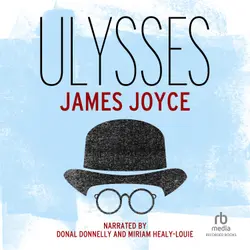
    Ulysses

    James Joyce

  7. 50 Masterpieces you have to read before you die

    Frances Hodgson Burnett, Homer, Charles Dickens, Lyman Frank Baum, Nathaniel Hawthorne, Thomas Hardy, Robert Louis Stevenson, Henry Haggard, Wilkie Collins, H.G. Wells, Sir Walter Scott, Lucy Maud Montgomery, Louisa May Alcott, Henry Fielding, Mary Shelley, Arthur Conan Doyle, Leo Tolstoy, Euripides, Fyodor Dostoevsky, Alexander Pushkin, James Fenimore Cooper, Daniel Defoe, Joseph Conrad, Jonathan Swift, William Shakespeare, Oscar Wilde, John Bunyan, Charles Darwin, Alfred Tennyson, Bram Stoker, James Joyce, Dante Alighieri, Howard Pyle, Jane Austen, Emily Bronte, Giovanni Boccaccio, Rudyard Kipling

  8. 3.5

    Dubliners

    James Joyce

  9. Dubliners

    James Joyce

  10. Ulysses

    James Joyce

  11. 3.3

    Dubliners

    James Joyce

  12. 4.0

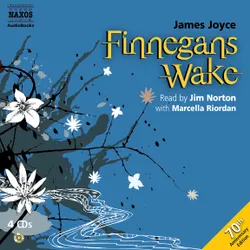
    Finnegans Wake

    James Joyce