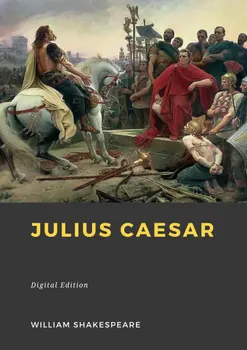
Julius Caesar

William Shakespeare's "Julius Caesar" is a gripping political drama that delves into the complex themes of power, betrayal, and the consequences of ambition.

Set in ancient Rome, the play unfolds in the wake of Caesar's triumphant return from war. As the city celebrates his victories, a group of senators, including Brutus and Cassius, grows increasingly concerned about Caesar's growing influence and potential tyranny. They plot his assassination in an attempt to preserve the Roman Republic.

The play explores the moral dilemmas faced by its characters, particularly Brutus, who must grapple with his loyalty to Caesar and his love for Rome. The famous line "Et tu, Brute?" captures the heart-wrenching moment when Brutus joins the conspiracy against Caesar.

Shakespeare's masterful language and deep insights into human nature shine throughout the play. He examines the consequences of political machinations and the chaos that ensues when leaders are overthrown.

"Julius Caesar" is not just a historical tragedy; it's a timeless exploration of the human condition and the eternal struggle for power. It raises questions about the morality of political actions and the tension between individual honor and the greater good.

This play continues to captivate readers and audiences alike with its compelling characters, intense conflicts, and thought-provoking themes. Whether you're interested in history, politics, or simply enjoy a well-crafted story, "Julius Caesar" remains a must-read classic that offers profound insights into the complexities of human ambition and the consequences of our choices.

ABOUT THE AUTHOR

William Shakespeare, the immortal bard of Avon, was a masterful playwright and poet whose brilliance continues to captivate the world. Born in 1564 in Stratford-upon-Avon, England, his life remains shrouded in mystery, yet his literary legacy shines brightly. Shakespeare's unparalleled talent crafted timeless works such as "Romeo and Juliet", "Hamlet", and "Macbeth", exploring the depths of human emotion and the complexities of the human psyche. His words, like a symphony of language, have left an indelible mark on literature, theater, and culture, transcending time and space. Today, his eloquence and storytelling prowess continue to enchant audiences, making him an everlasting icon of artistic excellence.

Over dit boek

William Shakespeare's "Julius Caesar" is a gripping political drama that delves into the complex themes of power, betrayal, and the consequences of ambition.

Set in ancient Rome, the play unfolds in the wake of Caesar's triumphant return from war. As the city celebrates his victories, a group of senators, including Brutus and Cassius, grows increasingly concerned about Caesar's growing influence and potential tyranny. They plot his assassination in an attempt to preserve the Roman Republic.

The play explores the moral dilemmas faced by its characters, particularly Brutus, who must grapple with his loyalty to Caesar and his love for Rome. The famous line "Et tu, Brute?" captures the heart-wrenching moment when Brutus joins the conspiracy against Caesar.

Shakespeare's masterful language and deep insights into human nature shine throughout the play. He examines the consequences of political machinations and the chaos that ensues when leaders are overthrown.

"Julius Caesar" is not just a historical tragedy; it's a timeless exploration of the human condition and the eternal struggle for power. It raises questions about the morality of political actions and the tension between individual honor and the greater good.

This play continues to captivate readers and audiences alike with its compelling characters, intense conflicts, and thought-provoking themes. Whether you're interested in history, politics, or simply enjoy a well-crafted story, "Julius Caesar" remains a must-read classic that offers profound insights into the complexities of human ambition and the consequences of our choices.

ABOUT THE AUTHOR

William Shakespeare, the immortal bard of Avon, was a masterful playwright and poet whose brilliance continues to captivate the world. Born in 1564 in Stratford-upon-Avon, England, his life remains shrouded in mystery, yet his literary legacy shines brightly. Shakespeare's unparalleled talent crafted timeless works such as "Romeo and Juliet", "Hamlet", and "Macbeth", exploring the depths of human emotion and the complexities of the human psyche. His words, like a symphony of language, have left an indelible mark on literature, theater, and culture, transcending time and space. Today, his eloquence and storytelling prowess continue to enchant audiences, making him an everlasting icon of artistic excellence.
Begin vandaag nog met dit boek voor € 0

  • Krijg volledige toegang tot alle boeken in de app tijdens de proefperiode
  • Geen verplichtingen, op elk moment annuleren
Probeer nu gratis
Meer dan 52.000 mensen hebben Nextory 5 sterren gegeven in de App store en op Google Play.

  1. 4.0

    Develop your General Culture in 500 Quotes

    Winston Churchill, Confucius, Albert Einstein, William Shakespeare, Sun Tzu

  2. Nieuw

    Romeo and Juliet

    William Shakespeare

  3. 3.8

    Macbeth

    William Shakespeare

  4. 2.7

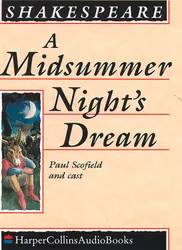
    A Midsummer Night’s Dream

    William Shakespeare

  5. 4.0

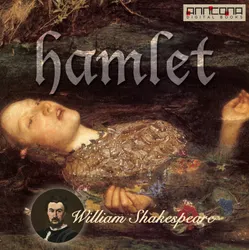
    Hamlet

    William Shakespeare

  6. Romeo & Juliet

    William Shakespeare

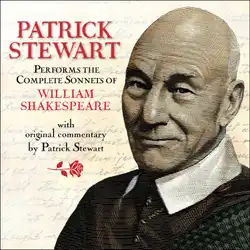
  7. Patrick Stewart Performs the Complete Sonnets of William Shakespeare : With Original Commentary by Patrick Stewart

    William Shakespeare, Patrick Stewart

  8. Voor jou en jou alleen : De sonnetten

    William Shakespeare

  9. 10 Masterpieces You Have to Read Before You Die, Vol. 3

    Edgar Allan Poe, William Shakespeare, H.P. Lovecraft, Mary W. Shelley, Osamu Dazai, Jack London, Fyodor Dostoyevsky, Nathaniel Hawthorne, Frances Hodgson Burnett, Robert Louis Stevenson

  10. 3.0

    Romeo and Juliet - Audiobook

    William Shakespeare

  11. The Big Book of Classics for the Long Winter

    Selma Lagerlöf, Charles Dickens, Mark Twain, Harriet Beecher Stowe, Martin Luther, William Shakespeare, Henry Wadsworth Longfellow, Max Brand, William Wordsworth, Carolyn Wells, Sophie May, Louisa May Alcott, Henry van Dyke, William John Locke, Walter Scott, Anthony Trollope, Rudyard Kipling, Beatrix Potter, Emily Dickinson, Lucas Malet, Thomas Nelson Page, O.Henry, Alice Hale Burnett, Walter Crane, Amy Ella Blanchard, Amanda M. Douglas), Ernest Ingersoll, L. Frank Baum, J.M. Barrie, Eleanor H. Porter, Annie F. Johnston, Jacob A. Riis, Edward A. Rand, Florence L. Barclay, E T A Hoffmann, Hans Christian Andersen, William Butler Yeats, Lucy Maud Montgomery, Leo Tolstoy, Fyodor Dostoevsky, Alfred Lord Tennyson, George MacDonald, A. S. Boyd, Juliana Horatia Ewing, Brothers Grimm, Clement Moore, Susan Anne Livingston, Ridley Sedgwick, Nora A. Smith, Louis Stevenson

  12. 4.0

    3500 Final Quotes

    Marcus Aurelius, Jane Austen, Beaumarchais, Napoleon Bonaparte, Buddha, Winston Churchill, Cicero, Confucius, Nicolas de Chamfort, Charles de Gaulle, Antoine de Saint-Exupéry, Denis Diderot, Fyodor Dostoevsky, Albert Einstein, Ralph Waldo Emerson, Anne Frank, Mahatma Gandhi, Immanuel Kant, Søren Kierkegaard, Martin Luther King, Georg Christoph Lichtenberg, Abraham Lincoln, Montesquieu, Friedrich Nietzsche, Plato, Marcel Proust, Arthur Schopenhauer, William Shakespeare, Socrates, Baruch Spinoza, Henry David Thoreau, Leonardo da Vinci, Voltaire, Oscar Wilde, Laozi


Gerelateerde categorieën