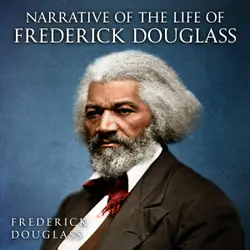
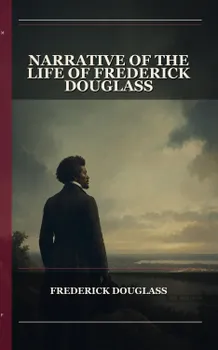
Narrative Of The Life Of Frederick Douglass

The Narrative of the Life of Frederick Douglass was written in 1845, seven years after Douglass escaped slavery, and is the first of three autobiographies. It covers his life as a slave, enduring the whips of the overseers and the hopelessness of his circumstances, until his escape to the north and arrival at New Bedford, Massachusetts. The brutalities he witnessed and his slowly growing desire for freedom are presented in the vivid language he was already known for in his antislavery oration. The eloquence of Douglass's speeches caused some skeptics to doubt his credibility, believing that a former slave with no education could never speak so well. Thus, part of his motivation for writing the book was to dispel this suspicion and to provide a fuller history than was possible in his lectures. The abolitionists William Lloyd Garrison and Wendell Phillips provided introductions vouching for the truth of Douglass's words. The book was an immediate best seller. The fame brought danger to Douglass, who sailed for England shortly after the book's publication to ensure he would not be apprehended as a fugitive slave. He spent two years touring and lecturing in Great Britain and Ireland before returning to America to continue his abolitionist work. English supporters raised funds to purchase his freedom from his former master. The slave narrative is an autobiographical genre written by escaped slaves concerning their lives in bondage. Slave narratives not only promoted abolitionism by giving first hand evidence of the cruelty and hypocrisy of slaveholders, but also allowed African Americans to express themselves as intelligent, articulate individuals, deserving of respect and freedom. Douglass's Narrative is perhaps the most important example of the genre, on the basis of its literary merits and its impact on the abolitionist movement.
Over dit boek

The Narrative of the Life of Frederick Douglass was written in 1845, seven years after Douglass escaped slavery, and is the first of three autobiographies. It covers his life as a slave, enduring the whips of the overseers and the hopelessness of his circumstances, until his escape to the north and arrival at New Bedford, Massachusetts. The brutalities he witnessed and his slowly growing desire for freedom are presented in the vivid language he was already known for in his antislavery oration. The eloquence of Douglass's speeches caused some skeptics to doubt his credibility, believing that a former slave with no education could never speak so well. Thus, part of his motivation for writing the book was to dispel this suspicion and to provide a fuller history than was possible in his lectures. The abolitionists William Lloyd Garrison and Wendell Phillips provided introductions vouching for the truth of Douglass's words. The book was an immediate best seller. The fame brought danger to Douglass, who sailed for England shortly after the book's publication to ensure he would not be apprehended as a fugitive slave. He spent two years touring and lecturing in Great Britain and Ireland before returning to America to continue his abolitionist work. English supporters raised funds to purchase his freedom from his former master. The slave narrative is an autobiographical genre written by escaped slaves concerning their lives in bondage. Slave narratives not only promoted abolitionism by giving first hand evidence of the cruelty and hypocrisy of slaveholders, but also allowed African Americans to express themselves as intelligent, articulate individuals, deserving of respect and freedom. Douglass's Narrative is perhaps the most important example of the genre, on the basis of its literary merits and its impact on the abolitionist movement.
Begin vandaag nog met dit boek voor € 0

  • Krijg volledige toegang tot alle boeken in de app tijdens de proefperiode
  • Geen verplichtingen, op elk moment annuleren
Probeer nu gratis
Meer dan 52.000 mensen hebben Nextory 5 sterren gegeven in de App store en op Google Play.

  1. Black History Collection : Narrative of the Life of Frederick Douglass, Incidents in the Life of a Slave Girl, Up from Slavery, The Souls of Black Folk

    Frederick Douglass, Harriet Ann Jacobs, Booker T. Washington, W.E.B. DuBois

  2. #67

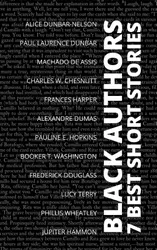
    7 best short stories - Black Authors

    Frederick Douglass, Alice Dunbar-Nelson, Charles W. Chesnutt, Paul Laurence Dunbar, Machado de Assis, Alexandre Dumas, Frances Harper, Pauline E. Hopkins, Booker T. Washington, Lucy Terry, Phillis Wheatley, Jupiter Hammon, August Nemo

  3. Once Upon a Slave : Memoirs of Frederick Douglass, Underground Railroad, 12 Years a Slave…

    Frederick Douglass, Solomon Northup, Willie Lynch, Nat Turner, Sojourner Truth, Harriet Jacobs, Mary Prince, William Craft, Ellen Craft, Louis Hughes, Jacob D. Green, Booker T. Washington, Olaudah Equiano, Elizabeth Keckley, William Still, Sarah H. Bradford, Josiah Henson, Charles Ball, Austin Steward, Henry Bibb, L. S. Thompson, Kate Drumgoold, Lucy A. Delaney, Moses Grandy, John Gabriel Stedman, Henry Box Brown, Margaretta Matilda Odell, Thomas S. Gaines, Brantz Mayer, Theodore Canot, Daniel Drayton, Thomas Clarkson, F. G. Fontaine, John Dixon Long, Stephen Smith, Joseph Mountain, Ida B. Wells-Barnett, Lydia Maria Child, William Wells Brown

  4. The Collected Works of Frederick Douglass : PergamonMedia

    Frederick Douglass

  5. Nieuw

    My Bondage and My Freedom

    Frederick Douglass

  6. Nieuw

    Narrative of the Life of Frederick Douglass

    Frederick Douglass

  7. Nieuw

    The Narrative of the Life of Frederick Douglass, an American Slave

    Frederick Douglass

  8. Narrative of the Life of Frederick Douglass

    Frederick Douglass

  9. Narrative of the Life of Frederick Douglass

    Frederick Douglass

  10. Narrative Of The Life Of Frederick Douglass

    Frederick Douglass

  11. My Bondage and My Freedom

    Frederick Douglass