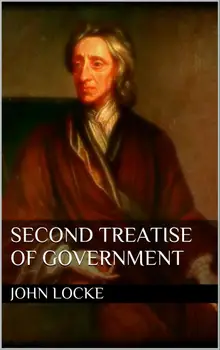
Second Treatise of Government

Sect. 1. It having been shewn in the foregoing discourse,

(1). That Adam had not, either by natural right of fatherhood, or by positive donation from God, any such authority over his children, or dominion over the world, as is pretended:

(2). That if he had, his heirs, yet, had no right to it:

(3). That if his heirs had, there being no law of nature nor positive law of God that determines which is the right heir in all cases that may arise, the right of succession, and consequently of bearing rule, could not have been certainly determined:

(4). That if even that had been determined, yet the knowledge of which is the eldest line of Adam's posterity, being so long since utterly lost, that in the races of mankind and families of the world, there remains not to one above another, the least pretence to be the eldest house, and to have the right of inheritance:

All these premises having, as I think, been clearly made out, it is impossible that the rulers now on earth should make any benefit, or derive any the least shadow of authority from that, which is held to be the fountain of all power, Adam's private dominion and paternal jurisdiction; so that he that will not give just occasion to think that all government in the world is the product only of force and violence, and that men live together by no other rules but that of beasts, where the strongest carries it, and so lay a foundation for perpetual disorder and mischief, tumult, sedition and rebellion, (things that the followers of that hypothesis so loudly cry out against) must of necessity find out another rise of government, another original of political power, and another way of designing and knowing the persons that have it, than what Sir Robert Filmer hath taught us.

Over dit boek

Sect. 1. It having been shewn in the foregoing discourse,

(1). That Adam had not, either by natural right of fatherhood, or by positive donation from God, any such authority over his children, or dominion over the world, as is pretended:

(2). That if he had, his heirs, yet, had no right to it:

(3). That if his heirs had, there being no law of nature nor positive law of God that determines which is the right heir in all cases that may arise, the right of succession, and consequently of bearing rule, could not have been certainly determined:

(4). That if even that had been determined, yet the knowledge of which is the eldest line of Adam's posterity, being so long since utterly lost, that in the races of mankind and families of the world, there remains not to one above another, the least pretence to be the eldest house, and to have the right of inheritance:

All these premises having, as I think, been clearly made out, it is impossible that the rulers now on earth should make any benefit, or derive any the least shadow of authority from that, which is held to be the fountain of all power, Adam's private dominion and paternal jurisdiction; so that he that will not give just occasion to think that all government in the world is the product only of force and violence, and that men live together by no other rules but that of beasts, where the strongest carries it, and so lay a foundation for perpetual disorder and mischief, tumult, sedition and rebellion, (things that the followers of that hypothesis so loudly cry out against) must of necessity find out another rise of government, another original of political power, and another way of designing and knowing the persons that have it, than what Sir Robert Filmer hath taught us.
Begin vandaag nog met dit boek voor € 0

  • Krijg volledige toegang tot alle boeken in de app tijdens de proefperiode
  • Geen verplichtingen, op elk moment annuleren
Probeer nu gratis
Meer dan 52.000 mensen hebben Nextory 5 sterren gegeven in de App store en op Google Play.

  1. A Letter Concerning Toleration : Enriched edition.

    John Locke

  2. #1

    An Essay Concerning Human Understanding. Volume One

    John Locke

  3. Ensayo sobre la tolerancia : El Locke desconocido: la precuela de «Carta sobre la tolerancia» y 18 textos fundamentales.

    John Locke

  4. Second Treatise of Government :

    John Locke

  5. An Essay Concerning Humane Understanding : Volume 1MDCXC, Based on the 2nd Edition, Books 1 and 2

    John Locke

  6. 50 citations de John Locke

    John Locke

  7. 1800 Citations de philosophes

    Aristote, Épicure, Platon, Thalès de Milet, – Socrate, Protagoras, Anaximandre, Épictète, Héraclite, Marc Aurèle, René Descartes, Michel de Montaigne, Alexis de Tocqueville, Voltaire, Charles De Montesquieu, Jean-Jacques Rousseau, Emmanuel Kant, Hannah Arendt, Gottfried Wilhelm Leibniz, Georg Wilhelm Friedrich Hegel, Friedrich Nietzsche, Arthur Schopenhauer, David Hume, John Locke, Francis Bacon, Thomas Hobbes, Thomas More, Confucius, Érasme, Lao Tseu, Baruch Spinoza, Søren Kierkegaard, Nicolas Machiavel, Thomas d'Aquin, Henry David Thoreau

  8. 250 citations de philosophes anglais

    David Hume, John Locke, Francis Bacon, Thomas Hobbes, Thomas More

  9. An Essay Concerning Human Understanding (Vol. 1) : Exploring Empiricism and the Philosophy of Mind by John Locke

    John Locke

  10. Muutamia mietteitä kasvatuksesta

    John Locke

  11. Of the Conduct of the Understanding

    John Locke

  12. The Empiricists. Сlassic collection. Illustrated : Concerning Human Understanding, Principles of Human Knowledge, Dialogues Concerning Natural Religio and others

    Francis Bacon, Thomas Hobbes, John Locke, George Berkeley, David Hume, John Stuart Mill