Over dit boek

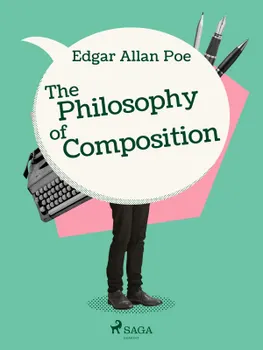
This fascinating literary essay, written by the famous American writer and poet, Edgar Allan Poe, explores the mystique of artistic creation.

By using his renowned poem ‘The Raven’ as an example, Poe explains how good writers write well, concluding that brevity, ‘unity of effect’ and a logical method are the most important factors.

Taking the reader through the deliberate choices made when writing the poem, the author also discusses theme, setting, sound, and the importance of refrain.

‘The Philosophy of Composition’ (1846) is a perfect read for literary scholars, writers, and fans of Poe.

Edgar Allan Poe (1809–1849) was an American writer, poet, editor and literary critic, best known for his gothic, macabre tales that include ‘The Fall of the House of Usher’, ‘The Tell-Tale Heart’, and ‘The Murders in the Rue Morgue’.

One of America’s first short story writers, Poe is considered the inventor of detective fiction and a key figure in both horror and science fiction. His work had a profound impact on American and international literature and he was one of the first American writers to earn international recognition. His other notable works include ‘The Raven and other Poem’s’, (1845) ‘The Cask of Amontillado’, ‘The Fall of the House of Usher’, and ‘The Tell-Take Heart’.

With many of his stories adapted for TV and screen, including the gothic 2014 film ‘Stonehearst Asylum’, starring Kate Beckinsale, Michael Caine, and Ben Kingsley, Poe continues to influence literature, film, and television to this day.
Begin vandaag nog met dit boek voor € 0

  • Krijg volledige toegang tot alle boeken in de app tijdens de proefperiode
  • Geen verplichtingen, op elk moment annuleren
Probeer nu gratis
Meer dan 52.000 mensen hebben Nextory 5 sterren gegeven in de App store en op Google Play.

  1. 3.0

    50 Masterpieces you have to read before you die vol: 1 (2020 Edition) : Included: Little Women, The Richest Man in Babylon Emma, The Call Of The Wild ....

    Louisa May Alcott, Dante Alighieri, Marcus Aurelius, Jane Austen, L. Frank Baum, Charlotte Brontë, Emily Brontë, Anne Brontë, Miguel de Cervantes, Agatha Christie, George S. Clason, Arthur Conan Doyle, Joseph Conrad, Charles Dickens, Fyodor Dostoyevsky, Alexandre Dumas, George Eliot, G.K. Chesterton, G.K. Chesterton, Zane Grey, Nathaniel Hawthorne, Napoleon Hill, Homer, Victor Hugo, Frances Hodgson Burnett, Washington Irving, Henry James, Franz Kafka, Rudyard Kipling, Jack London, Leo Tolstoy, H.P. Lovecraft, Lucy Maud Montgomery, Joseph Murphy, Robert Louis Stevenson, Edgar Allan Poe, Marcel Proust, Publius, Mary Shelley, Bram Stoker, Mark Twain, Sun Tzu, Lew Wallace, Wallace D. Wattles, H.G. Wells

  2. 4.2

    The Fall of the House of Usher

    Edgar Allan Poe

  3. Nieuw

    Strange Worlds of Weird Tales : 18 Lost Science Fiction, Fantasy & Horror Stories from the Legendary Magazine

    H.P. Lovecraft, Edgar Allan Poe, Robert E. Howard, Frank Belknap Long, August Derleth, Dorothy Quick, Hugh B. Cave, Kenneth Sterling, Paul Ernst, Carl Jacobi, George T. Spillman, Edmond Hamilton, Henry Kuttner, Carl W. Ganzlin, Edwin Baird, H. Bedford-Jones

  4. 4.0

    Selected Works of Edgar Allan Poe

    Edgar Allan Poe

  5. 3.5
    #2

    The Tell-Tale Heart

    Edgar Allan Poe

  6. 3.0
    #4

    The Black Cat

    Edgar Allan Poe

  7. Selected Works of Edgar Allan Poe

    Edgar Allan Poe

  8. The Fall of the House of Usher :

    Edgar Allan Poe

  9. 4.3

    The Tell-Tale Heart

    Edgar Allan Poe

  10. 4.3

    The Black Cat :

    Edgar Allan Poe

  11. Greatest Tales of Edgar Allan Poe - Audiobook

    Edgar Allan Poe, Classic Audiobooks

  12. World's Greatest Sci-Fi Stories

    Daniel Defoe, Benjamin Franklin, Washington Irving, Mateo Falcone, Charlotte Bronte, Mary Shelley, Nathaniel Hawthorne, Nikolai Gogol, Edgar Allan Poe, Fyodor Dostoyevsky, Charles Dickens, Herman Melville, Mark Twain, Guy De Maupassant, Oscar Wilde, Leo Tolstoy, H.G. Wells, Ambrose Bierce, Stephen Crane, Kate Chopin, Jack London, E. M. Forster