3.0(1)

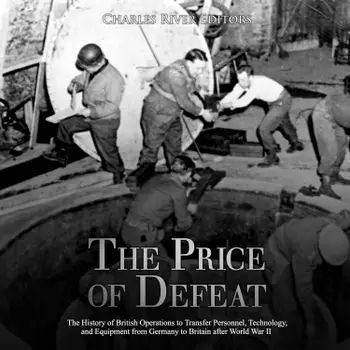
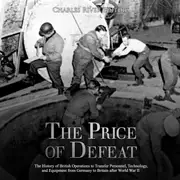
The Price of Defeat: The History of British Operations to Transfer Personnel, Technology, and Equipment from Germany to Britain after World War II

After the last shots of World War II were fired and the process of rebuilding Germany and Europe began, the Western Allies and the Soviet Union each tried to obtain the services of the Third Reich's leading scientists, especially those involved in rocketry, missile technology, and aerospace research. Naturally, this was a delicate affair due to the fact many of the German scientists were not only active Nazis but had helped the Nazi war machine terrorize the world. There is an enormous amount of documentation about the American efforts, particularly Operation Paperclip and its ultimate outcomes, yet the parallel programs involving the transfer of personnel, intellectual property (IP), and equipment to the UK have attracted limited academic study and are almost forgotten by the general public. A pioneering article by John Farquharson in 1997 assessed the extent and nature of British transfers, but research into the military and civilian units that carried out the transfers had to wait until the partial declassification of official files in 2006. This was followed by the publication of sensationalist and generalized allegations of unethical practices in the mass media, which prompted personal memoirs in book form from Michael Howard (2010) and in the popular press.

The first full length, academic book by Sean Longden (2009), based on extensive use of official archives and the personal memoirs of many more veterans, showed how British policy evolved amidst a rapidly changing geopolitical context. The most recent work by Charlie Hall (2019) is the most academic treatment of the topic so far and focuses more deeply on that geopolitical context, especially the emerging Cold War, and it also made use of many more archival sources. Hall also emphasized the importance of what he terms “exploitation” of equipment, IP, and personnel, and the work demonstrated how the emphasis gradually shifted towards the latter.

Over dit boek

After the last shots of World War II were fired and the process of rebuilding Germany and Europe began, the Western Allies and the Soviet Union each tried to obtain the services of the Third Reich's leading scientists, especially those involved in rocketry, missile technology, and aerospace research. Naturally, this was a delicate affair due to the fact many of the German scientists were not only active Nazis but had helped the Nazi war machine terrorize the world. There is an enormous amount of documentation about the American efforts, particularly Operation Paperclip and its ultimate outcomes, yet the parallel programs involving the transfer of personnel, intellectual property (IP), and equipment to the UK have attracted limited academic study and are almost forgotten by the general public. A pioneering article by John Farquharson in 1997 assessed the extent and nature of British transfers, but research into the military and civilian units that carried out the transfers had to wait until the partial declassification of official files in 2006. This was followed by the publication of sensationalist and generalized allegations of unethical practices in the mass media, which prompted personal memoirs in book form from Michael Howard (2010) and in the popular press.

The first full length, academic book by Sean Longden (2009), based on extensive use of official archives and the personal memoirs of many more veterans, showed how British policy evolved amidst a rapidly changing geopolitical context. The most recent work by Charlie Hall (2019) is the most academic treatment of the topic so far and focuses more deeply on that geopolitical context, especially the emerging Cold War, and it also made use of many more archival sources. Hall also emphasized the importance of what he terms “exploitation” of equipment, IP, and personnel, and the work demonstrated how the emphasis gradually shifted towards the latter.

Begin vandaag nog met dit boek voor € 0

  • Krijg volledige toegang tot alle boeken in de app tijdens de proefperiode
  • Geen verplichtingen, op elk moment annuleren
Probeer nu gratis
Meer dan 52.000 mensen hebben Nextory 5 sterren gegeven in de App store en op Google Play.

  1. Eleanor of Aquitaine and Richard the Lionheart: The History of the Mother and Son Who Shaped Medieval Europe

    Charles River Editors

  2. Billie Holiday and Etta James: The Lives and Legacies of the Famous Jazz Singers

    Charles River Editors

  3. The Wars that Forged Ancient Rome: The History of the Military Campaigns that Established Antiquity’s Greatest Empire

    Charles River Editors

  4. The Myths of India: The History and Legacy of Mythology across the Indian Subcontinent

    Charles River Editors

  5. Nostradamus and Baba Vanga: The Controversial Lives and Prophecies of the Modern Era’s Most Famous Seers

    Charles River Editors

  6. Rome’s Conquest of Western Europe: The History of the Campaigns that Expanded the Roman Empire across the Continent

    Charles River Editors

  7. 3.0

    Basque Country: The Turbulent History and Legacy of the Basque Autonomous Community in Spain

    Charles River Editors

  8. The Greatest Generals of the Roman Republic: The History of the Military Leaders Who Led the Rise of Rome

    Charles River Editors

  9. 4.0

    The War of the Spanish Succession: The History of the Conflict Between the Bourbons and Habsburgs that Engulfed Europe

    Charles River Editors

  10. 3.0

    Flat Earth and Hollow Earth Theories: A History of Strange Tales and Bizarre Beliefs about the Planet

    Charles River Editors

  11. Niels Bohr and J. Robert Oppenheimer: The Lives and Careers of the Physicists Who Pioneered Atomic Energy

    Charles River Editors

  12. Ernest Shackleton and Robert Falcon Scott: The History of the British Explorers’ Notorious Rivalry during the Heroic Age of Antarctic Exploration

    Charles River Editors