4.5(2)

The Prophet

In "The Prophet," Kahlil Gibran weaves a rich tapestry of poetic prose that explores profound themes of love, joy, sorrow, and the nature of existence. Set in the fictional city of Orphalese, the narrative revolves around Almustafa, a prophet who shares his wisdom with the townspeople before returning to his homeland. Gibran's literary style, characterized by lyrical simplicity and metaphorical depth, draws from the influences of Eastern spirituality and Western literary forms, crafting a timeless philosophical work that resonates across cultures and eras. The book's essays, structured as verses, manifest a contemplative dialogue on the human experience, rooted in both Sufi mysticism and Christian ideals, contributing to its universal appeal. Kahlil Gibran, a Lebanese-American poet, artist, and philosopher, was born in 1883 in Bsharri, Lebanon, and emigrated to the United States at a young age. His diverse cultural background profoundly influenced his writing, allowing him to blend Eastern and Western thought seamlessly. "The Prophet," published in 1923, became his most celebrated work, reflecting Gibran's own spiritual journey and his quest for wisdom amidst the complexities of modern life. This remarkable book is highly recommended for readers seeking a deeper understanding of themselves and the world around them. Gibran's insights are not only poetic but also profoundly philosophical, encouraging reflection and introspection. "The Prophet" serves as both a guide and a meditation, making it an essential addition to the libraries of those who yearn for enlightenment and human connection.

Over dit boek

In "The Prophet," Kahlil Gibran weaves a rich tapestry of poetic prose that explores profound themes of love, joy, sorrow, and the nature of existence. Set in the fictional city of Orphalese, the narrative revolves around Almustafa, a prophet who shares his wisdom with the townspeople before returning to his homeland. Gibran's literary style, characterized by lyrical simplicity and metaphorical depth, draws from the influences of Eastern spirituality and Western literary forms, crafting a timeless philosophical work that resonates across cultures and eras. The book's essays, structured as verses, manifest a contemplative dialogue on the human experience, rooted in both Sufi mysticism and Christian ideals, contributing to its universal appeal. Kahlil Gibran, a Lebanese-American poet, artist, and philosopher, was born in 1883 in Bsharri, Lebanon, and emigrated to the United States at a young age. His diverse cultural background profoundly influenced his writing, allowing him to blend Eastern and Western thought seamlessly. "The Prophet," published in 1923, became his most celebrated work, reflecting Gibran's own spiritual journey and his quest for wisdom amidst the complexities of modern life. This remarkable book is highly recommended for readers seeking a deeper understanding of themselves and the world around them. Gibran's insights are not only poetic but also profoundly philosophical, encouraging reflection and introspection. "The Prophet" serves as both a guide and a meditation, making it an essential addition to the libraries of those who yearn for enlightenment and human connection.

Begin vandaag nog met dit boek voor € 0

  • Krijg volledige toegang tot alle boeken in de app tijdens de proefperiode
  • Geen verplichtingen, op elk moment annuleren
Probeer nu gratis
Meer dan 52.000 mensen hebben Nextory 5 sterren gegeven in de App store en op Google Play.

  1. 3.4

    De profeet

    Kahlil Gibran

  2. 12 Masterpieces You Have to Read Before You Die. Philosophy

    Niccolo Machiavelli, Tommaso Campanella, Francis Bacon, Thomas More, John Stuart Mill, Immanuel Kant, Kahlil Gibran, Leo Tolstoy, G.K. Chesterton, Henry David Thoreau

  3. 3.5

    The Prophet - Audiobook

    Kahlil Gibran

  4. The Prophet : by Kahlil Gibran

    Kahlil Gibran

  5. 50+ Self-Help Classics Collection

    Napoleon Hill, James Allen, Kahlil Gibran, Sun Tzu, Lao Tzu, Confucius, Benjamin Franklin, Marcus Aurelius Antoninus, Russell H. Conwell, Ralph Waldo Emerson, Florence Scovel Shinn, Charles F. Haanel, Wallace D. Wattles, Orison Swett Marden, George Samuel Clason, William Walker Atkinson, P.T. Barnum, G.K. Chesterton, Leo Tolstoy

  6. 5.0

    The Prophet

    Kahlil Gibran

  7. The Prophet

    Kahlil Gibran

  8. The Prophet

    Kahlil Gibran

  9. 4.5

    The Prophet

    Kahlil Gibran

  10. Nieuw

    50 Clásicos que Debes Leer Antes de Morir : Un viaje literario por los tesoros de la literatura universal

    Dante Alighieri, Aristóteles, Jane Austen, Charles Baudelaire, Giovanni Boccaccio, Anne Brontë, C. Collodi, James Fenimore Cooper, Fedor Mikhaïlovitch Dostoïevski, Arthur Conan Doyle, Alexandre Dumas, José de Espronceda, Gustave Flaubert, Sigmund Freud, Benito Pérez Galdós, Kahlil Gibran, Johann Wolfgang Goethe, Johann Wolfgang von Goethe, Victor Hugo, Thomas Hardy, Nathaniel Hawthorne, Vicente Blasco Ibáñez, Washington Irving, James Joyce, Mariano José de Larra, Jack London, Federico García Lorca, H.P. Lovecraft, Antonio Machado, Gustav Meyrink, John Stuart Mill, Amado Nervo, Friedrich Nietzsche, Solomon Northup, Alexander Sergeyevich Pushkin, Francisco de Quevedo, Walter Scott, William Shakespeare, Robert Louis Stevenson, Harriet Beecher Stowe, Jonathan Swift, Mark Twain, Miguel De Unamuno, Ramón María del Valle-Inclán, Julio Verne, Virginia Woolf

  11. 4.3

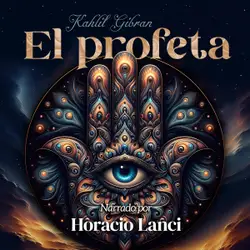
    El profeta

    Kahlil Gibran

  12. Nieuw
    4.3

    El profeta

    Kahlil Gibran