The Two Gentlemen of Verona

While the word “gentlemen” suggests that its heroes are adults, The Two Gentlemen of Verona is more intelligible if we think of them as boys, leaving home for the first time. One has a crush on a girl, Julia, though he hasn’t yet told her.

Sent to court to learn to be “perfect gentlemen,” Valentine and Proteus are derailed by their attraction to Sylvia, the ruler’s daughter. Valentine’s mental denseness does not deter Sylvia from returning his love, but he is caught, and banished, when he tries to elope with her. Proteus’s desire for Sylvia wipes out his former love, leading him into despicable acts that win scorn from Sylvia and wound Julia, who has pursued him disguised as a boy.

When Sylvia follows Valentine into banishment, Proteus follows Sylvia, and Julia follows Proteus, the stage is set for a disturbing ending. But the stage is also set for the “gentlemen” to take small steps toward maturity.

The authoritative edition of The Two Gentlemen of Verona from The Folger Shakespeare Library, the trusted and widely used Shakespeare series for students and general readers, includes:

-Freshly edited text based on the best early printed version of the play

-Full explanatory notes conveniently placed on pages facing the text of the play

-Scene-by-scene plot summaries

-A key to the play’s famous lines and phrases

-An introduction to reading Shakespeare’s language

-An essay by a leading Shakespeare scholar providing a modern perspective on the play

-Fresh images from the Folger Shakespeare Library’s vast holdings of rare books

-An annotated guide to further reading

Essay by Jeffrey Masten

The Folger Shakespeare Library in Washington, DC, is home to the world’s largest collection of Shakespeare’s printed works, and a magnet for Shakespeare scholars from around the globe. In addition to exhibitions open to the public throughout the year, the Folger offers a full calendar of performances and programs. For more information, visit Folger.edu.

Over dit boek

While the word “gentlemen” suggests that its heroes are adults, The Two Gentlemen of Verona is more intelligible if we think of them as boys, leaving home for the first time. One has a crush on a girl, Julia, though he hasn’t yet told her.

Sent to court to learn to be “perfect gentlemen,” Valentine and Proteus are derailed by their attraction to Sylvia, the ruler’s daughter. Valentine’s mental denseness does not deter Sylvia from returning his love, but he is caught, and banished, when he tries to elope with her. Proteus’s desire for Sylvia wipes out his former love, leading him into despicable acts that win scorn from Sylvia and wound Julia, who has pursued him disguised as a boy.

When Sylvia follows Valentine into banishment, Proteus follows Sylvia, and Julia follows Proteus, the stage is set for a disturbing ending. But the stage is also set for the “gentlemen” to take small steps toward maturity.

The authoritative edition of The Two Gentlemen of Verona from The Folger Shakespeare Library, the trusted and widely used Shakespeare series for students and general readers, includes:

-Freshly edited text based on the best early printed version of the play

-Full explanatory notes conveniently placed on pages facing the text of the play

-Scene-by-scene plot summaries

-A key to the play’s famous lines and phrases

-An introduction to reading Shakespeare’s language

-An essay by a leading Shakespeare scholar providing a modern perspective on the play

-Fresh images from the Folger Shakespeare Library’s vast holdings of rare books

-An annotated guide to further reading

Essay by Jeffrey Masten

The Folger Shakespeare Library in Washington, DC, is home to the world’s largest collection of Shakespeare’s printed works, and a magnet for Shakespeare scholars from around the globe. In addition to exhibitions open to the public throughout the year, the Folger offers a full calendar of performances and programs. For more information, visit Folger.edu.
Begin vandaag nog met dit boek voor € 0

  • Krijg volledige toegang tot alle boeken in de app tijdens de proefperiode
  • Geen verplichtingen, op elk moment annuleren
Probeer nu gratis
Meer dan 52.000 mensen hebben Nextory 5 sterren gegeven in de App store en op Google Play.

  1. 4.0

    Develop your General Culture in 500 Quotes

    Winston Churchill, Confucius, Albert Einstein, William Shakespeare, Sun Tzu

  2. Nieuw

    Romeo and Juliet

    William Shakespeare

  3. 3.8

    Macbeth

    William Shakespeare

  4. 4.0

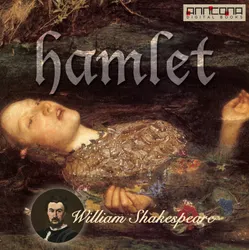
    Hamlet

    William Shakespeare

  5. 2.7

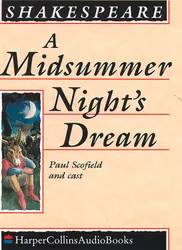
    A Midsummer Night’s Dream

    William Shakespeare

  6. Romeo & Juliet

    William Shakespeare

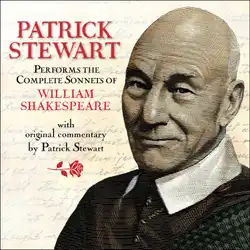
  7. Patrick Stewart Performs the Complete Sonnets of William Shakespeare : With Original Commentary by Patrick Stewart

    William Shakespeare, Patrick Stewart

  8. Voor jou en jou alleen : De sonnetten

    William Shakespeare

  9. 10 Masterpieces You Have to Read Before You Die, Vol. 3

    Edgar Allan Poe, William Shakespeare, H.P. Lovecraft, Mary W. Shelley, Osamu Dazai, Jack London, Fyodor Dostoyevsky, Nathaniel Hawthorne, Frances Hodgson Burnett, Robert Louis Stevenson

  10. 3.0

    Romeo and Juliet - Audiobook

    William Shakespeare

  11. The Big Book of Classics for the Long Winter

    Selma Lagerlöf, Charles Dickens, Mark Twain, Harriet Beecher Stowe, Martin Luther, William Shakespeare, Henry Wadsworth Longfellow, Max Brand, William Wordsworth, Carolyn Wells, Sophie May, Louisa May Alcott, Henry van Dyke, William John Locke, Walter Scott, Anthony Trollope, Rudyard Kipling, Beatrix Potter, Emily Dickinson, Lucas Malet, Thomas Nelson Page, O.Henry, Alice Hale Burnett, Walter Crane, Amy Ella Blanchard, Amanda M. Douglas), Ernest Ingersoll, L. Frank Baum, J.M. Barrie, Eleanor H. Porter, Annie F. Johnston, Jacob A. Riis, Edward A. Rand, Florence L. Barclay, E T A Hoffmann, Hans Christian Andersen, William Butler Yeats, Lucy Maud Montgomery, Leo Tolstoy, Fyodor Dostoevsky, Alfred Lord Tennyson, George MacDonald, A. S. Boyd, Juliana Horatia Ewing, Brothers Grimm, Clement Moore, Susan Anne Livingston, Ridley Sedgwick, Nora A. Smith, Louis Stevenson

  12. 4.0

    3500 Final Quotes

    Marcus Aurelius, Jane Austen, Beaumarchais, Napoleon Bonaparte, Buddha, Winston Churchill, Cicero, Confucius, Nicolas de Chamfort, Charles de Gaulle, Antoine de Saint-Exupéry, Denis Diderot, Fyodor Dostoevsky, Albert Einstein, Ralph Waldo Emerson, Anne Frank, Mahatma Gandhi, Immanuel Kant, Søren Kierkegaard, Martin Luther King, Georg Christoph Lichtenberg, Abraham Lincoln, Montesquieu, Friedrich Nietzsche, Plato, Marcel Proust, Arthur Schopenhauer, William Shakespeare, Socrates, Baruch Spinoza, Henry David Thoreau, Leonardo da Vinci, Voltaire, Oscar Wilde, Laozi


Gerelateerde categorieën