Transformation : A Monster Took His Skin — and His Life

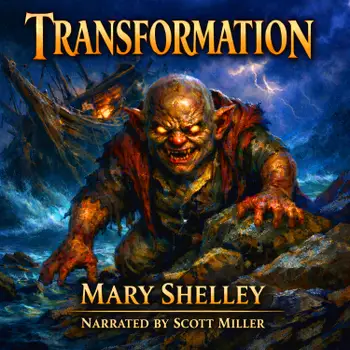
Transformation is a Gothic short story by Mary Shelley that explores pride, temptation, and the dangerous bargains people make with themselves. It follows Guido, a young man undone by arrogance, who encounters a grotesque dwarf offering him a terrible trade — one that will give him power and revenge at the cost of his very identity. The tale blends moral fable with supernatural unease, showing how a single reckless choice can unmake a life. Shelley uses atmosphere, confession, and shifting identity rather than overt horror, creating a story that feels more like a warning whispered from experience.

Though brief, Transformation carries the same concerns that run through Shelley’s larger work: the fragility of the self, the consequences of unchecked impulses, and the thin line between the human and the monstrous. Its power comes not from shock but from recognition — the sense that Guido’s downfall begins inside him, long before the supernatural enters the room.

Mary Shelley (1797–1851) was an English novelist and essayist best known as the author of Frankenstein, a book that helped shape both science fiction and modern horror. The daughter of philosophers Mary Wollstonecraft and William Godwin, she grew up among writers and radicals, later traveling through Europe with the poet Percy Bysshe Shelley. Across her novels, short stories, and journals, she explored grief, ambition, invention, and moral responsibility. Works like The Last Man, Mathilda, and Transformation show the breadth of her voice beyond Frankenstein. Shelley wrote in a time when women authors were often dismissed, yet her ideas outlived the age that doubted her. Today she is regarded as one of the foundational figures of speculative literature.
Over dit boek

Transformation is a Gothic short story by Mary Shelley that explores pride, temptation, and the dangerous bargains people make with themselves. It follows Guido, a young man undone by arrogance, who encounters a grotesque dwarf offering him a terrible trade — one that will give him power and revenge at the cost of his very identity. The tale blends moral fable with supernatural unease, showing how a single reckless choice can unmake a life. Shelley uses atmosphere, confession, and shifting identity rather than overt horror, creating a story that feels more like a warning whispered from experience.

Though brief, Transformation carries the same concerns that run through Shelley’s larger work: the fragility of the self, the consequences of unchecked impulses, and the thin line between the human and the monstrous. Its power comes not from shock but from recognition — the sense that Guido’s downfall begins inside him, long before the supernatural enters the room.

Mary Shelley (1797–1851) was an English novelist and essayist best known as the author of Frankenstein, a book that helped shape both science fiction and modern horror. The daughter of philosophers Mary Wollstonecraft and William Godwin, she grew up among writers and radicals, later traveling through Europe with the poet Percy Bysshe Shelley. Across her novels, short stories, and journals, she explored grief, ambition, invention, and moral responsibility. Works like The Last Man, Mathilda, and Transformation show the breadth of her voice beyond Frankenstein. Shelley wrote in a time when women authors were often dismissed, yet her ideas outlived the age that doubted her. Today she is regarded as one of the foundational figures of speculative literature.

Begin vandaag nog met dit boek voor € 0

  • Krijg volledige toegang tot alle boeken in de app tijdens de proefperiode
  • Geen verplichtingen, op elk moment annuleren
Probeer nu gratis
Meer dan 52.000 mensen hebben Nextory 5 sterren gegeven in de App store en op Google Play.

  1. 3.0

    50 Masterpieces you have to read before you die vol: 1 (2020 Edition) : Included: Little Women, The Richest Man in Babylon Emma, The Call Of The Wild ....

    Louisa May Alcott, Dante Alighieri, Marcus Aurelius, Jane Austen, L. Frank Baum, Charlotte Brontë, Emily Brontë, Anne Brontë, Miguel de Cervantes, Agatha Christie, George S. Clason, Arthur Conan Doyle, Joseph Conrad, Charles Dickens, Fyodor Dostoyevsky, Alexandre Dumas, George Eliot, G.K. Chesterton, G.K. Chesterton, Zane Grey, Nathaniel Hawthorne, Napoleon Hill, Homer, Victor Hugo, Frances Hodgson Burnett, Washington Irving, Henry James, Franz Kafka, Rudyard Kipling, Jack London, Leo Tolstoy, H.P. Lovecraft, Lucy Maud Montgomery, Joseph Murphy, Robert Louis Stevenson, Edgar Allan Poe, Marcel Proust, Publius, Mary Shelley, Bram Stoker, Mark Twain, Sun Tzu, Lew Wallace, Wallace D. Wattles, H.G. Wells

  2. 4.1

    Frankenstein

    Mary Shelley

  3. Apocalypse Then : 6 Early Tales of Humanities End

    E. M. Forster, Jack London, Arthur Conan Doyle, M.P. Shiel, H.P. Lovecraft, Mary Shelley

  4. 3.9

    Frankenstein

    Mary Shelley

  5. 3.9

    Frankenstein : The Modern Prometheus

    Mary Shelley

  6. Frankenstein :

    Mary Shelley

  7. 4.5

    Frankenstein :

    Mary Shelley

  8. Frankenstein and Other Stories

    Mary Shelley

  9. 4.0
    #2

    Tales of the Dark Romantics & Beyond : A collection of mysterious and chilling works by

    Edgar Allan Poe, Nathaniel Hawthorne, Herman Melville, Ambrose Bierce, Washington Irving, Henry James, Mary Shelley, Bram Stoker, William Cullen Bryant, Louisa May Alcott, Emily Bronte, Lord Alfred, James Whitcomb Riley

  10. 3.9

    Frankenstein

    Mary Shelley

  11. 3.6

    Frankenstein :

    Mary Shelley

  12. 2.0

    Frankenstein

    Mary Shelley


Gerelateerde categorieën