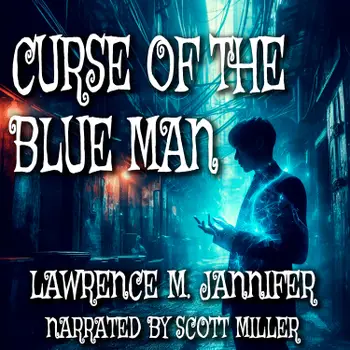
Jerome Black wakes with an iron bar in his hand and no memory of how it got there. By noon, a young woman is dead in an alley, and police are hunting a figure witnesses describe as a “blue man.” The newspapers treat the claim as a joke. Black does not.
At first he tells himself it is coincidence. A dream, nothing more. But the pattern continues. Each morning brings exhaustion, dread, and another headline. Each night steals more from him. He begins setting traps around his bed, determined to catch himself in the act. The traps are undone before sunrise. When he finally remembers what happens after dark, the fear that once ruled him turns into something worse — anticipation. The city tightens its watch. Patrols increase. A decoy walks alone under streetlights. The hunter runs straight into it.
Curse of the Blue Man is a tense psychological descent into divided identity and unstoppable impulse. It moves quickly, but the horror is intimate. The most dangerous thing in this story is not a creature in the shadows. It is the possibility that you may wake up and discover you were the shadow all along.
Lawrence M. Jannifer (often published as Laurence M. Janifer) built a wide-ranging career in science fiction and fantasy during the 1950s and 1960s. He wrote both short fiction and novels, contributed to magazines such as Amazing Stories and Fantastic, and collaborated frequently with Randall Garrett under the joint pseudonym “Mark Phillips” on the Psi-Power series, including Brain Twister and The Impossibles. Janifer was known for blending psychological tension with speculative ideas, and Curse of the Blue Man stands out as one of his darker explorations of transformation and identity.