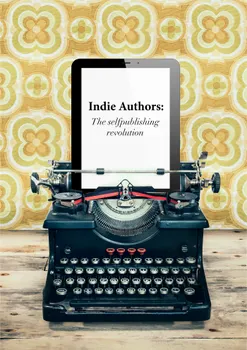
Indie Authors : The Self-Publishing Revolution

Self-publishing is not a new phenomenon. Indeed, it was commonly practiced in the 19th and 20th centuries; the fact that Dostoyevski (incidentally, one of the pioneers of crowdfunding) asked his friends for money to finance his books, that Nietzsche paid for the self-publishing of 50 copies of "Thus spoke Zarathustra" out of his own pocket and that Lewis Carroll did the same thing with "Alice in Wonderland", as did Marcel Proust, Alexandre Dumas, Rudyard Kipling, Mark Twain, Edgar Alan Poe, George Bernard Shaw and Ernest Hemingway, is not something to be overlooked. All of these writers started off as independent authors in the days when paying for the publication of books out of one's own pocket was not looked down on and those who wished to make their work known could use their own means, without shame, to reach a limited audience without being treated with contempt. First and foremost, because it was considered that the author in question believed in his work to the extent that he was willing to invest in it.

Self-publishing platforms cannot be overlooked. They are technological companies that publish, distribute and promote on demand. They are fast and have a large portfolio of authors. One of the key elements of this decade (2010-2020) will be the consolidation of self-publishing in the book world. In this context of change, the objective of the study "Indie Authors: The Self-publishing Revolution" is to provide professionals in the book world - be they publishers, agents, authors, booksellers or librarians - with a broad analysis of the impact of self-publishing in the publishing sector so that each one may establish the business opportunities and advantages of self-publishing.
Over dit boek

Self-publishing is not a new phenomenon. Indeed, it was commonly practiced in the 19th and 20th centuries; the fact that Dostoyevski (incidentally, one of the pioneers of crowdfunding) asked his friends for money to finance his books, that Nietzsche paid for the self-publishing of 50 copies of "Thus spoke Zarathustra" out of his own pocket and that Lewis Carroll did the same thing with "Alice in Wonderland", as did Marcel Proust, Alexandre Dumas, Rudyard Kipling, Mark Twain, Edgar Alan Poe, George Bernard Shaw and Ernest Hemingway, is not something to be overlooked. All of these writers started off as independent authors in the days when paying for the publication of books out of one's own pocket was not looked down on and those who wished to make their work known could use their own means, without shame, to reach a limited audience without being treated with contempt. First and foremost, because it was considered that the author in question believed in his work to the extent that he was willing to invest in it.

Self-publishing platforms cannot be overlooked. They are technological companies that publish, distribute and promote on demand. They are fast and have a large portfolio of authors. One of the key elements of this decade (2010-2020) will be the consolidation of self-publishing in the book world. In this context of change, the objective of the study "Indie Authors: The Self-publishing Revolution" is to provide professionals in the book world - be they publishers, agents, authors, booksellers or librarians - with a broad analysis of the impact of self-publishing in the publishing sector so that each one may establish the business opportunities and advantages of self-publishing.

Begin vandaag nog met dit boek voor € 0

  • Krijg volledige toegang tot alle boeken in de app tijdens de proefperiode
  • Geen verplichtingen, op elk moment annuleren
Probeer nu gratis
Meer dan 52.000 mensen hebben Nextory 5 sterren gegeven in de App store en op Google Play.

  1. AC/E Digital Culture Annual Report 2016 : Smart Culture: Impact of the Internet on Artistic Creation. Focus: Use of New Digital Technologies at Cultural Festivals.

    Javier Celaya, Iván Martínez, Montecarlo, Mariana Moura Santos, Pau Waelder, Lara Sánchez Coterón, Pepe Zapata

  2. Evolución de las startups en el mundo del libro : Actualización 2017

    Javier Celaya, Kershama St. Luce, José Antonio Vázquez

  3. III Edition of the Spanish Markets Digital Evolution Report 2017

    Javier Celaya, Margarita Guerrero

  4. Consolidación de los modelos de negocio en la era digital : Un estudio elaborado por dosdoce.com para CEDRO

    Javier Celaya, José Antonio Vázquez, María Jesús Rojas, Elisa Yuste, Maribel Riaza

  5. Spanish markets ebook evolution report 2016

    Javier Celaya, Manuel Gil, Margarita Guerrero

  6. Evolución del libro electrónico en América Latina y España : Informe 2016

    Javier Celaya, Manuel Gil, Margarita Guerrero

  7. Anuario AC/E 2016 de cultura digital : Cultura inteligente: Impacto de Internet en la creación artística. Focus: Uso de nuevas tecnologías digitales en festivales culturales

    Javier Celaya, Iván Martínez, Montecarlo, Mariana Moura Santos, Pau Waelder, Lara Sánchez Coterón, Pepe Zapata

  8. How the new business models in the digital age have evolved

    Javier Celaya, José Antonio Vázquez, María Jesús Rojas, Elisa Yuste, Maribel Riaza

  9. Evolución de los nuevos modelos de negocio en la era digital

    Javier Celaya, María Jesús Rojas, Elisa Yuste, Maribel Riaza, José Antonio Vázquez

  10. #2

    Autores indies : El auge de la autoedición.

    Javier Celaya, Beatriz Celaya, Elena Sierra

  11. #4

    New Business Models in the Digital Age

    Javier Celaya, María Jesús Rojas, Elisa Yuste, José Antonio Vázquez

  12. #4

    Nuevos modelos de negocio en la era digital : Más allá de la gratuidad en Internet

    Javier Celaya


Gerelateerde categorieën