2.0(2)

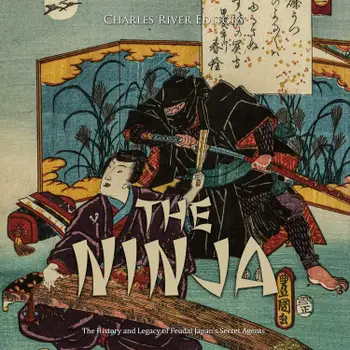
The Ninja: The History and Legacy of Feudal Japan’s Secret Agents

To most people in the West, particularly the youth, the mere mention of Japan immediately evokes various images. A delectable rainbow of sushi, hand-rolled temaki, and platters of crispy, golden-brown tempura. An idyllic, crystal-clear lake flanked by trees covered with delicate, cotton-candy-pink sakura blossoms. A montage of unique, hand-drawn cartoons that are a masterful mix of delightfully exaggerated proportions, features, and colors, and elements of arresting realism, collectively known as “anime.”

Then, of course, there's the ninja, a willowy, graceful figure decked out in black from head to toe, his glinting eyes peering out from the window of his balaclava. He flits from rooftop to rooftop in stunning somersaults and slinks into the shadows, watching his unsuspecting marks from afar and calculating their every move. Then, as quickly as he came, he strikes, hurling throwing stars, twirling his nunchucks, and hacking away with his trusty sword, exterminating his targets with dizzying, lightning-quick speed and superhuman precision. At least, this is how those unfamiliar with the ancient art of ninjutsu, or shinobi-jutsu, see them.

Ninjas are, without a doubt, one of the most timeless and far-reaching cultural staples ever to emerge from Japan. They have become a global phenomenon, and there are countless depictions of ninjas in comic books, films, TV shows, video games, toys, and other forms of popular culture around the world, not to mention their continued relevance as a “conventional” go-to Halloween costume. Kids across the world are intimately familiar with Teenage Mutant Ninja Turtles, Snake Eyes from the G.I. Joe franchise, Scorpion from Mortal Kombat, and Black Noir from The Boys. Ninjas have also been featured in a slew of other international movies and TV shows.


Over dit boek

To most people in the West, particularly the youth, the mere mention of Japan immediately evokes various images. A delectable rainbow of sushi, hand-rolled temaki, and platters of crispy, golden-brown tempura. An idyllic, crystal-clear lake flanked by trees covered with delicate, cotton-candy-pink sakura blossoms. A montage of unique, hand-drawn cartoons that are a masterful mix of delightfully exaggerated proportions, features, and colors, and elements of arresting realism, collectively known as “anime.”

Then, of course, there's the ninja, a willowy, graceful figure decked out in black from head to toe, his glinting eyes peering out from the window of his balaclava. He flits from rooftop to rooftop in stunning somersaults and slinks into the shadows, watching his unsuspecting marks from afar and calculating their every move. Then, as quickly as he came, he strikes, hurling throwing stars, twirling his nunchucks, and hacking away with his trusty sword, exterminating his targets with dizzying, lightning-quick speed and superhuman precision. At least, this is how those unfamiliar with the ancient art of ninjutsu, or shinobi-jutsu, see them.

Ninjas are, without a doubt, one of the most timeless and far-reaching cultural staples ever to emerge from Japan. They have become a global phenomenon, and there are countless depictions of ninjas in comic books, films, TV shows, video games, toys, and other forms of popular culture around the world, not to mention their continued relevance as a “conventional” go-to Halloween costume. Kids across the world are intimately familiar with Teenage Mutant Ninja Turtles, Snake Eyes from the G.I. Joe franchise, Scorpion from Mortal Kombat, and Black Noir from The Boys. Ninjas have also been featured in a slew of other international movies and TV shows.

Begin vandaag nog met dit boek voor € 0

  • Krijg volledige toegang tot alle boeken in de app tijdens de proefperiode
  • Geen verplichtingen, op elk moment annuleren
Probeer nu gratis
Meer dan 52.000 mensen hebben Nextory 5 sterren gegeven in de App store en op Google Play.

  1. Niels Bohr and J. Robert Oppenheimer: The Lives and Careers of the Physicists Who Pioneered Atomic Energy

    Charles River Editors

  2. 3.0

    Cosa Nostra: The Notorious History and Legacy of the Sicilian Mafia

    Charles River Editors

  3. Nostradamus and Baba Vanga: The Controversial Lives and Prophecies of the Modern Era’s Most Famous Seers

    Charles River Editors

  4. The Wars that Forged Ancient Rome: The History of the Military Campaigns that Established Antiquity’s Greatest Empire

    Charles River Editors

  5. The Myths of India: The History and Legacy of Mythology across the Indian Subcontinent

    Charles River Editors

  6. Eleanor of Aquitaine and Richard the Lionheart: The History of the Mother and Son Who Shaped Medieval Europe

    Charles River Editors

  7. 4.0

    The Rise and Fall of the Banate of Bosnia: The History of Bosnia’s Struggle for Independence in the Middle Ages

    Charles River Editors

  8. The Napoleonic Wars: The History of the Conflicts that Shaped Europe in the 19th Century

    Charles River Editors

  9. Social Experiments in the 20th Century: The History of the World’s Most Famous and Infamous Psychological Experiments

    Charles River Editors

  10. The Fighting in Flanders Fields: The History of the Major Battles across the Region during World War I

    Charles River Editors

  11. The Making of Modern China: The History of the World’s Most Populous Country from the Qing Dynasty to Today

    Charles River Editors

  12. 3.6

    The Battle of Kosovo: The History and Legacy of the Battle Between the Serbs and Ottomans that Forged Serbia's National Identity

    Charles River Editors