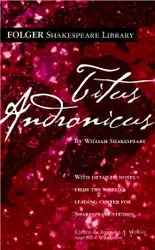
Titus Andronicus

Titus Andronicus is a tragedy by William Shakespeare, believed to have been written between 1588 and 1593. It is thought to be Shakespeare's first tragedy, and is often seen as his attempt to emulate the violent and bloody revenge plays of his contemporaries, which were extremely popular with audiences throughout the 16th century.

The play is set during the latter days of the Roman Empire and tells the fictional story of Titus, a general in the Roman army, who is engaged in a cycle of revenge with Tamora, Queen of the Goths.

It is Shakespeare's bloodiest and most violent work and traditionally was one of his least respected plays. Although it was extremely popular in its day, by the later 17th century it had fallen out of favour. In the Victorian era, it was disapproved of primarily because of what was considered to be a distasteful use of graphic violence, but from around the middle of the 20th century its reputation began to improve.

William Shakespeare (1564-1616) was an English poet, playwright and actor, widely regarded as the greatest writer in the English language and the world's pre-eminent dramatist. His extant works, including some collaborations, consist of about 38 plays, 154 sonnets, two long narrative poems, and a few other verses. His plays have been translated into every major living language and are performed more often than those of any other playwright.

Shakespeare was a respected poet and playwright in his own day, but his reputation did not rise to its present heights until the 19th century. His plays remain highly popular today and are constantly studied, performed, and reinterpreted in diverse cultural and political contexts throughout the world.

In 2016, celebrations will commence in the United Kingdom and across the world to honour The Bard's 400th anniversary.

Over dit boek

Titus Andronicus is a tragedy by William Shakespeare, believed to have been written between 1588 and 1593. It is thought to be Shakespeare's first tragedy, and is often seen as his attempt to emulate the violent and bloody revenge plays of his contemporaries, which were extremely popular with audiences throughout the 16th century.

The play is set during the latter days of the Roman Empire and tells the fictional story of Titus, a general in the Roman army, who is engaged in a cycle of revenge with Tamora, Queen of the Goths.

It is Shakespeare's bloodiest and most violent work and traditionally was one of his least respected plays. Although it was extremely popular in its day, by the later 17th century it had fallen out of favour. In the Victorian era, it was disapproved of primarily because of what was considered to be a distasteful use of graphic violence, but from around the middle of the 20th century its reputation began to improve.

William Shakespeare (1564-1616) was an English poet, playwright and actor, widely regarded as the greatest writer in the English language and the world's pre-eminent dramatist. His extant works, including some collaborations, consist of about 38 plays, 154 sonnets, two long narrative poems, and a few other verses. His plays have been translated into every major living language and are performed more often than those of any other playwright.

Shakespeare was a respected poet and playwright in his own day, but his reputation did not rise to its present heights until the 19th century. His plays remain highly popular today and are constantly studied, performed, and reinterpreted in diverse cultural and political contexts throughout the world.

In 2016, celebrations will commence in the United Kingdom and across the world to honour The Bard's 400th anniversary.
Begin vandaag nog met dit boek voor € 0

  • Krijg volledige toegang tot alle boeken in de app tijdens de proefperiode
  • Geen verplichtingen, op elk moment annuleren
Probeer nu gratis
Meer dan 52.000 mensen hebben Nextory 5 sterren gegeven in de App store en op Google Play.

  1. 4.0

    Develop your General Culture in 500 Quotes

    Winston Churchill, Confucius, Albert Einstein, William Shakespeare, Sun Tzu

  2. Nieuw

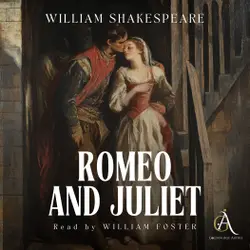
    Romeo and Juliet

    William Shakespeare

  3. 3.8

    Macbeth

    William Shakespeare

  4. 4.0

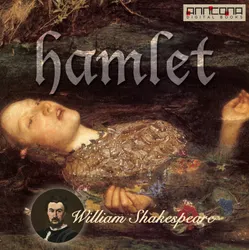
    Hamlet

    William Shakespeare

  5. 2.7

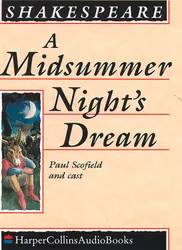
    A Midsummer Night’s Dream

    William Shakespeare

  6. Romeo & Juliet

    William Shakespeare

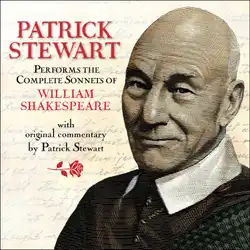
  7. Patrick Stewart Performs the Complete Sonnets of William Shakespeare : With Original Commentary by Patrick Stewart

    William Shakespeare, Patrick Stewart

  8. Voor jou en jou alleen : De sonnetten

    William Shakespeare

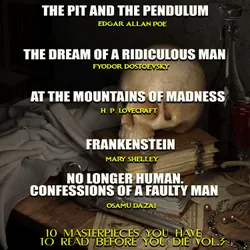
  9. 10 Masterpieces You Have to Read Before You Die, Vol. 3

    Edgar Allan Poe, William Shakespeare, H.P. Lovecraft, Mary W. Shelley, Osamu Dazai, Jack London, Fyodor Dostoyevsky, Nathaniel Hawthorne, Frances Hodgson Burnett, Robert Louis Stevenson

  10. 3.0

    Romeo and Juliet - Audiobook

    William Shakespeare

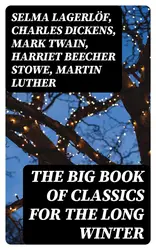
  11. The Big Book of Classics for the Long Winter

    Selma Lagerlöf, Charles Dickens, Mark Twain, Harriet Beecher Stowe, Martin Luther, William Shakespeare, Henry Wadsworth Longfellow, Max Brand, William Wordsworth, Carolyn Wells, Sophie May, Louisa May Alcott, Henry van Dyke, William John Locke, Walter Scott, Anthony Trollope, Rudyard Kipling, Beatrix Potter, Emily Dickinson, Lucas Malet, Thomas Nelson Page, O.Henry, Alice Hale Burnett, Walter Crane, Amy Ella Blanchard, Amanda M. Douglas), Ernest Ingersoll, L. Frank Baum, J.M. Barrie, Eleanor H. Porter, Annie F. Johnston, Jacob A. Riis, Edward A. Rand, Florence L. Barclay, E T A Hoffmann, Hans Christian Andersen, William Butler Yeats, Lucy Maud Montgomery, Leo Tolstoy, Fyodor Dostoevsky, Alfred Lord Tennyson, George MacDonald, A. S. Boyd, Juliana Horatia Ewing, Brothers Grimm, Clement Moore, Susan Anne Livingston, Ridley Sedgwick, Nora A. Smith, Louis Stevenson

  12. 4.0

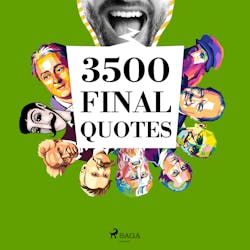
    3500 Final Quotes

    Marcus Aurelius, Jane Austen, Beaumarchais, Napoleon Bonaparte, Buddha, Winston Churchill, Cicero, Confucius, Nicolas de Chamfort, Charles de Gaulle, Antoine de Saint-Exupéry, Denis Diderot, Fyodor Dostoevsky, Albert Einstein, Ralph Waldo Emerson, Anne Frank, Mahatma Gandhi, Immanuel Kant, Søren Kierkegaard, Martin Luther King, Georg Christoph Lichtenberg, Abraham Lincoln, Montesquieu, Friedrich Nietzsche, Plato, Marcel Proust, Arthur Schopenhauer, William Shakespeare, Socrates, Baruch Spinoza, Henry David Thoreau, Leonardo da Vinci, Voltaire, Oscar Wilde, Laozi