A Journal of the Plague Year : "Illustrated"

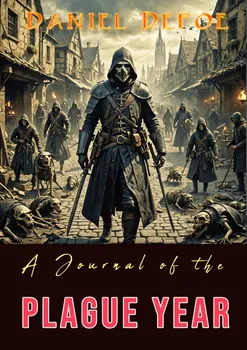
This is the Illustrated version of the "A Journal of the Plague Year", A work that is often read as if it were non-fiction is his account of the Great Plague of London in 1665: A Journal of the Plague Year, a complex historical novel published in 1722.

Bring out your dead! The ceaseless chant of doom echoed through a city of emptied streets and filled grave pits. For this was London in the year of 1665, the Year of the Great Plague....In 1721, when the Black Death again threatened the European Continent, Daniel Defoe wrote "A Journal of the Plague Year" to alert an indifferent populace to the horror that was almost upon them. Through the eyes of a saddler who had chosen to remain while multitudes fled, the master realist vividly depicted a plague-stricken city. He re-enacted the terror of a helpless people caught in a tragedy they could not comprehend: the weak preying on the dying, the strong administering to the sick, the sinful orgies of the cynical, the quiet faith of the pious. With dramatic insight he captured for all time the death throes of a great city.

In this Illustrated book, Noted all of Defoe's pamphlet writing was political. One pamphlet (originally published anonymously) entitled "A True Relation of the Apparition of One Mrs. Veal the Next Day after her Death to One Mrs. Bargrave at Canterbury the 8th of September, 1705," deals with interaction between the spiritual realm and the physical realm. It was most likely written in support of Charles Drelincourt's The Christian Defense against the Fears of Death (1651). It describes Mrs. Bargrave's encounter with an old friend Mrs. Veal, after she had died. It is clear from this piece and other writings, that while the political portion of

Defoe's life was fairly dominant, it was by no means the only aspect:

"Wherever God erects a house of prayer

the Devil always builds a chapel there;

And 't will be found, upon examination,

the latter has the largest congregation."

— Defoe's The True-Born Englishman, 1701

Copyright & Illustrated by e-Kitap Projesi

ABOUT AUTHOR:

Daniel Defoe ( 1660 – 1731), born Daniel Foe, was an English trader, writer, journalist, pamphleteer, and spy, now most famous for his novel Robinson Crusoe.

Über dieses Buch

This is the Illustrated version of the "A Journal of the Plague Year", A work that is often read as if it were non-fiction is his account of the Great Plague of London in 1665: A Journal of the Plague Year, a complex historical novel published in 1722.

Bring out your dead! The ceaseless chant of doom echoed through a city of emptied streets and filled grave pits. For this was London in the year of 1665, the Year of the Great Plague....In 1721, when the Black Death again threatened the European Continent, Daniel Defoe wrote "A Journal of the Plague Year" to alert an indifferent populace to the horror that was almost upon them. Through the eyes of a saddler who had chosen to remain while multitudes fled, the master realist vividly depicted a plague-stricken city. He re-enacted the terror of a helpless people caught in a tragedy they could not comprehend: the weak preying on the dying, the strong administering to the sick, the sinful orgies of the cynical, the quiet faith of the pious. With dramatic insight he captured for all time the death throes of a great city.

In this Illustrated book, Noted all of Defoe's pamphlet writing was political. One pamphlet (originally published anonymously) entitled "A True Relation of the Apparition of One Mrs. Veal the Next Day after her Death to One Mrs. Bargrave at Canterbury the 8th of September, 1705," deals with interaction between the spiritual realm and the physical realm. It was most likely written in support of Charles Drelincourt's The Christian Defense against the Fears of Death (1651). It describes Mrs. Bargrave's encounter with an old friend Mrs. Veal, after she had died. It is clear from this piece and other writings, that while the political portion of

Defoe's life was fairly dominant, it was by no means the only aspect:

"Wherever God erects a house of prayer

the Devil always builds a chapel there;

And 't will be found, upon examination,

the latter has the largest congregation."

— Defoe's The True-Born Englishman, 1701

Copyright & Illustrated by e-Kitap Projesi

ABOUT AUTHOR:

Daniel Defoe ( 1660 – 1731), born Daniel Foe, was an English trader, writer, journalist, pamphleteer, and spy, now most famous for his novel Robinson Crusoe.

Starte noch heute mit diesem Buch für 0 €

  • Hole dir während der Testphase vollen Zugriff auf alle Bücher in der App
  • Keine Verpflichtungen, jederzeit kündbar
Jetzt kostenlos testen
Mehr als 52 000 Menschen haben Nextory im App Store und auf Google Play 5 Sterne gegeben.

  1. 3.0

    200 Meisterwerke der Literaturgeschichte : Die größten Klassiker der Weltliteratur

    Franz Kafka, Victor Hugo, Fjodor Michailowitsch Dostojewski, Lord Byron, Giacomo Leopardi, Marcel Proust, Henrik Ibsen, Percy Bysshe Shelley, Charles Dickens, Jane Austen, Mary Shelley, Emily Brontë, Charlotte Brontë, Anne Brontë, William Makepeace Thackeray, Bram Stoker, Henry Fielding, George Eliot, William Shakespeare, D. H. Lawrence, Walt Whitman, Herman Melville, Thomas Wolfe, Virginia Woolf, Joseph Conrad, Sinclair Lewis, Lewis Carrol, Edgar Allan Poe, Edward Bulwer-Lytton, Oscar Wilde, H.G. Wells, Daniel Defoe, James Fenimore Cooper, Lew Wallace, Jonathan Swift, Robert Louis Stevenson, Mark Twain, Walter Scott, Nathaniel Hawthorne, Harriet Beecher Stowe, Laurence Sterne, Frances Hodgson Burnett, Arthur Conan Doyle, Wilkie Collins, Edgar Wallace, Jack London, Henry David Thoreau, John Galsworthy, F. Scott Fitzgerald, Rudyard Kipling, G.K. Chesterton, Washington Irvin, O.Henry, Ambrose Bierce, Alexander Sergejewitsch Puschkin, Michail Lermontow, Iwan Sergejewitsch Turgenew, Leo Tolstoi, Nikolai Gogol, Iwan Gontscharow, Nikolai Leskow, Anton Pawlowitsch Tschechow, Maxim Gorki, François Rabelais, Jean De Fontaine, Blaise Pascal, Pierre Corneille, Moliere, Jean Baptiste Racine, Charles Perrault, Voltaire, Denis Diderot, Jean-Jacques Rousseau, Pierre Ambroise Laclos, Antoine-François Prévost, Marquis De Sade, François René Chateaubriand, Stendhal, Honoré de Balzac, Alexandre Dumas, Alphonse de Lamartine, George Sand, Gustave Flaubert, Emile Zola, Guy De Maupassant, Alphonse Daudet, Jules Verne, Joris-Karl Huysmans, Prosper Mérimée, Charles Baudelaire, Stéphane Mallarmé, Arthur Rimbaud, André Gide, Arthur Schopenhauer, Heinrich Heine, Friedrich Schiller, Johann Wolfgang Goethe, Jacob Grimm, Gottfried von Straßburg, Wolfram von Eschenbach, E. T. Hoffmann, Annette von Droste-Hülshoff, Heinrich von Kleist, Friedrich Hölderlin, Theodor Fontane, Gustav Freytag, Gottfried Keller, Theodor Storm, Stefan Zweig, Joseph von Eichendorff, Klaus Mann, Rainer Maria Rilke, Johanna Spyri, Joseph Roth, Karl May, Robert Musil, Heinrich Mann, Sigmund Freud, Friedrich Nietzsche, Dante Alighieri, Giovanni Boccaccio, Giacomo Casanova, Luigi Pirandello, Giosuè Carducci, Gabriele D’Annunzio, Niccolo Machiavelli, Miguel Cervantes Saavedra, Pedro Calderón Barca, Vicente Blasco Ibañez, Knut Hamsun, Homer, Äsop, Herodot, Thukydides, Xenophon, Platon, - Aristoteles, - Sophokles, Euripides, - Aristophanes, Lao Tse, - Konfuzius, Siddhartha Gautama Buddha, Titus Livius, Tacitus, Marcus Tullius Cicero, Vergil, Ovid, Lukian, Petronius, Apuleius, Longos von Lesbos, Mark Aurel, Aurelius Augustinus

  2. 100 Meisterwerke der englischen Literatur - Klassiker, die man kennen muss : Hamlet, 1984, Ulysses...

    George Orwell, Charles Dickens, Jane Austen, Katherine Mansfield, H.P. Lovecraft, William Wordsworth, John Keats, Percy Bysshe Shelley, Robert Burns, John Milton, William Shakespeare, Christopher Marlowe, Geoffrey Chaucer, Laurence Sterne, Henry Fielding, Mary Shelley, Emily Brontë, Charlotte Brontë, Anne Brontë, William Makepeace Thackeray, George Eliot, D. H. Lawrence, Herman Melville, Thomas Wolfe, Virginia Woolf, Joseph Conrad, Sinclair Lewis, Walt Whitman, Edgar Allan Poe, Oscar Wilde, Jerome K Jerome, Washington Irving, Bram Stoker, H.G. Wells, Daniel Defoe, Lew Wallace, James Fenimore Cooper, Jonathan Swift, Robert Louis Stevenson, Mark Twain, Lewis Carrol, Edward Bulwer-Lytton, F. Scott Fitzgerald, Arthur Conan Doyle, Jack London, Henry David Thoreau, G.K. Chesterton, Edith Wharton, Henry James, Thomas Hardy, Margaret Mitchell, Kate Chopin, Willa Cather, Charlotte Perkins Gilman, James Joyce, John Galsworthy, Francis Hodgson Burnett, Lucy Maud Montgomery, Louisa May Alcott, Rudyard Kipling

  3. Die größten weiblichen Bildungsromane : Moll Flanders, Gabriele, Jane Eyre, Heidi, Brigitta, Netotschka Njeswanowa, Aus guter Familie, Emma

    Charlotte Brontë, Johanna Schopenhauer, Johanna Spyri, Jane Austen, Marianne Ehrmann, Caroline von Wolzogen, Gabriele Reuter, Charles Dickens, Fjodor Michailowitsch Dostojewski, Daniel Defoe, Lou Andreas-Salomé, John Cleland, Adalbert Stifter, Charles-Louis Philippe, D. H. Lawrence

  4. 3.0
    #2

    The Further Adventures of Robinson Crusoe

    Daniel Defoe

  5. 5.0

    Aventures surprenantes de Robinson Crusoé - Livre Audio

    Daniel Defoe, Livres audio en français

  6. Die größten Heldinnen der Literatur (50 Romane in einem Band) : Jane Eyre, Tess von den d'Urbervilles, Anne auf Green Gables, Johanna D'Arc, Klein-Dorrit, Lelia, Maria Stuart, Effi Briest, Kleine Frauen

    Charlotte Brontë, Jane Austen, Louisa May Alcott, Leo Tolstoi, Virginia Woolf, Thomas Hardy, Sinclair Lewis, Hedwig Dohm, Charlotte Perkins Gilman, Elizabeth Burgoyne Corbett, Daniel Defoe, Anne Brontë, L.M. Montgomery, Victor Hugo, Wilhelmine von Hillern, Adalbert Stifter, Luise Ahlborn, George Eliot, Lou Andreas-Salomé, Stefan Zweig, D. H. Lawrence, Henry James, Margaret Mitchell, Edith Wharton, Miles Franklin, Willa Cather, Elizabeth Gaskell, Nikolai Semjonowitsch Leskow, Theodore Dreiser, Elizabeth von Arnim, Colette, Honoré de Balzac, William Makepeace Thackeray, Gustave Flaubert, Emile Zola, Theodor Fontane, Ada Langworthy Collier, Joseph Sheridan Fanu, Johanna Schopenhauer, Nathaniel Hawthorne, Charles Dickens

  7. #1

    The Life and Adventures of Robinson Crusoe

    Daniel Defoe

  8. Die größten Liebesgeschichten der britischen Literatur : Romeo und Julia, Stolz und Vorurteil, Emma, Cecilia, Überredung, Jane Eyre, Große Erwartungen, Die Braut von Lammermoor

    Jane Austen, Charlotte Brontë, William Shakespeare, Walter Scott, Frances Burney, Emily Brontë, Anne Brontë, Charles Dickens, Rudyard Kipling, George Eliot, Nathaniel Hawthorne, D. H. Lawrence, Daniel Defoe, Lew Wallace, F. Scott Fitzgerald

  9. HALLOWEEN Ultimate Collection: 200+ Mysteries, Horror Classics & Supernatural Tales

    Wilhelm Hauff, Charles Dickens, Mark Twain, Harriet Beecher Stowe, Edgar Allan Poe, William Hope Hodgson, John Buchan, George MacDonald, Bram Stoker, Anatole France, Jack London, Henry James, Théophile Gautier, Arthur Conan Doyle, Richard Le Gallienne, Ralph Adams Cram, Guy De Maupassant, Thomas Hardy, William Archer, Daniel Defoe, Brander Matthews, Lafcadio Hearn, Ambrose Bierce, Ellis Parker Butler, Washington Irving, Nathaniel Hawthorne, Grant Allen, Arthur Machen, Wilkie Collins, Thomas Peckett Prest, James Malcolm Rymer, Fergus Hume, Walter Hubbell, Leopold Kompert, Florence Marryat, John William Polidori, Vincent O'Sullivan, W. W. Jacobs, M.P. Shiel, E F Benson, M. R. James, H.P. Lovecraft, Francis Marion Crawford, Mary Shelley, Margaret Oliphant, Frank R. Stockton, A. T. Quiller-Couch, Leonard Kip, Katherine Rickford, Bithia Mary Croker, Catherine L. Pirkis, Pedro De Alarçon, Pliny the Younger, Helena Blavatsky, Villiers de Adam, William F. Harvey, Fiona Macleod, William T. Stead, Gambier Bolton, Andrew Jackson Davis, Nizida, Walter F. Prince, Chester Bailey Fernando

  10. Die größten Meisterwerke der Weltliteratur : 200 Klassiker die man kennen muss

    Fjodor Michailowitsch Dostojewski, Lord Byron, Franz Kafka, Victor Hugo, Giacomo Leopardi, Marcel Proust, Henrik Ibsen, Percy Bysshe Shelley, Charles Dickens, Jane Austen, Mary Shelley, Emily Brontë, Charlotte Brontë, Anne Brontë, William Makepeace Thackeray, Bram Stoker, Henry Fielding, George Eliot, William Shakespeare, D. H. Lawrence, Walt Whitman, Herman Melville, Thomas Wolfe, Virginia Woolf, Joseph Conrad, Sinclair Lewis, Lewis Carrol, Edgar Allan Poe, Edward Bulwer-Lytton, Oscar Wilde, H.G. Wells, Daniel Defoe, James Fenimore Cooper, Lew Wallace, Jonathan Swift, Robert Louis Stevenson, Mark Twain, Walter Scott, Nathaniel Hawthorne, Harriet Beecher Stowe, Laurence Sterne, Frances Hodgson Burnett, Arthur Conan Doyle, Washington Irving, O.Henry, Ambrose Bierce, Alexander Sergejewitsch Puschkin, Michail Lermontow, Iwan Sergejewitsch Turgenew, Leo Tolstoi, Nikolai Gogol, Iwan Gontscharow, Nikolai Leskow, Anton Pawlowitsch Tschechow, Maxim Gorki, François Rabelais, Jean De Fontaine, Blaise Pascal, Pierre Corneille, Moliere, Pierre Ambroise Laclos, Antoine-François Prévost, Marquis De Sade

  11. Die großen Klassiker der englischen Literatur (40+ Titel in einem Buch) : Bereicherte Ausgabe. Literarische Vielfalt von Romantik bis Sozialkritik erleben

    Charles Dickens, Mark Twain, Harriet Beecher Stowe, Oscar Wilde, Robert Louis Stevenson, Edgar Allan Poe, Charlotte Brontë, Emily Brontë, Henry David Thoreau, Arthur Conan Doyle, Frances Hodgson Burnett, Joseph Conrad, Jane Austen, Herman Melville, George Eliot, Walter Scott, Laurence Sterne, Jonathan Swift, Daniel Defoe, Henry Fielding, Rudyard Kipling, Bret Harte, Ambrose Bierce, Washington Irving, Nathaniel Hawthorne, Wilkie Collins, O.Henry, William Makepeace Thackeray, Edgar Wallace, G.K. Chesterton, Thomas Wolfe, T. E. Lawrence, Lewis Carrol

  12. Echos des Schlachtfelds : Krieg und Frieden, Der Zusammenbruch, Der letzte Mohikaner, Schach von Wuthenow

    Lew Tolstoi, Emile Zola, Henryk Sienkiewicz, Daniel Defoe, Oskar Meding, Hermann Stegemann, Charles Sealsfield, James Fenimore Cooper, Conrad Ferdinand Meyer, Hendrik Conscience