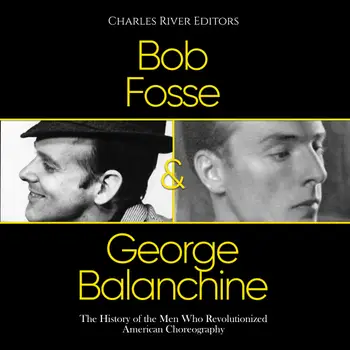
Bob Fosse & George Balanchine: The History of the Men Who Revolutionized American Choreography

By the turn of the 20th century, American entertainment was still preoccupied with European-style operetta, as embodied in the works of cellist-composer Victor Herbert. Traditional dance forms moved from European stories to the American prairie in Oklahoma by the late 1940s, and what was once the property of Bavarian princes became the singing standards of cowboys riding through the corn fields in Oh What a Beautiful Morning and Out of My Dreams. At the time, the availability of classical ballet in America was scant. In contrast to the evolution of an American style in musical theater, Broadway, and film, ballet in the United States was ushered in largely through the efforts of an individual who brought with him a strong traditional sense from Russia and the rest of Europe but was intent on producing a distinctly American style. Other experimentalists appeared, such as Isadora Duncan, but it was George Balanchine who managed to institutionalize and fund both a hybrid traditional as well as experimental form.

In the 1960s, Bob Fosse emerged as one of the leading dancers, actors, choreographers, directors, screenwriters and film directors on Broadway and in Hollywood. He became famous for conquering several fields on the musical stage and film simultaneously in a way that no one has before or since. It is said that “only Busby Berkeley compares” to Fosse despite the fact that Berkeley was never a dancer, and that Fosse enjoyed eight Broadway hits to Berkeley’s one. Fosse forever changed the way the modern audience viewed dance on stage and film. Coupling his rise with the sexual freedom movement, he is known for an “intense, unbelievably driven, provocative, entertaining…sexual, physically demanding” choreographic style. Difficult for even the best dancers, the range of expression encompasses “joyous humor, as well as bleak cynicism.”


Über dieses Buch

By the turn of the 20th century, American entertainment was still preoccupied with European-style operetta, as embodied in the works of cellist-composer Victor Herbert. Traditional dance forms moved from European stories to the American prairie in Oklahoma by the late 1940s, and what was once the property of Bavarian princes became the singing standards of cowboys riding through the corn fields in Oh What a Beautiful Morning and Out of My Dreams. At the time, the availability of classical ballet in America was scant. In contrast to the evolution of an American style in musical theater, Broadway, and film, ballet in the United States was ushered in largely through the efforts of an individual who brought with him a strong traditional sense from Russia and the rest of Europe but was intent on producing a distinctly American style. Other experimentalists appeared, such as Isadora Duncan, but it was George Balanchine who managed to institutionalize and fund both a hybrid traditional as well as experimental form.

In the 1960s, Bob Fosse emerged as one of the leading dancers, actors, choreographers, directors, screenwriters and film directors on Broadway and in Hollywood. He became famous for conquering several fields on the musical stage and film simultaneously in a way that no one has before or since. It is said that “only Busby Berkeley compares” to Fosse despite the fact that Berkeley was never a dancer, and that Fosse enjoyed eight Broadway hits to Berkeley’s one. Fosse forever changed the way the modern audience viewed dance on stage and film. Coupling his rise with the sexual freedom movement, he is known for an “intense, unbelievably driven, provocative, entertaining…sexual, physically demanding” choreographic style. Difficult for even the best dancers, the range of expression encompasses “joyous humor, as well as bleak cynicism.”

Starte noch heute mit diesem Buch für 0 €

  • Hole dir während der Testphase vollen Zugriff auf alle Bücher in der App
  • Keine Verpflichtungen, jederzeit kündbar
Jetzt kostenlos testen
Mehr als 52 000 Menschen haben Nextory im App Store und auf Google Play 5 Sterne gegeben.

  1. 2.0

    Die Panzer: Die Geschichte und das Vermächtnis von Nazideutschlands berühmtesten Panzern des Zweiten Weltkriegs

    Charles River Editors

  2. The Iranian Revolution and Iran Hostage Crisis: The History of the Events that Broke American Relations with Iran

    Charles River Editors

  3. Imperial Germany’s Colonization in Africa: The History of the German Efforts and Conflicts to Colonize Parts of Africa

    Charles River Editors

  4. Die Han-Dynastie: Geschichte und Erbe des einflussreichsten Reiches des alten China

    Charles River Editors

  5. Japan in the World Wars: The History of the Imperial Japanese Empire during World War I and World War II

    Charles River Editors

  6. Ada Lovelace: The Life and Legacy of the Math Prodigy Who Pioneered Computer Science

    Charles River Editors

  7. 3.9

    Hans-Ulrich Rudel: The Life and Legacy of the Luftwaffe’s Deadliest Stuka Pilot

    Charles River Editors

  8. The Byzantines and Ottomans: The History of the Medieval Middle East’s Most Influential Empires

    Charles River Editors

  9. Das mittelalterliche Russland: Die Geschichte und das Erbe der Gruppen, die den russischen Staat im Mittelalter entwickelten

    Charles River Editors

  10. The Texas Revolution and Mexican-American War: The History and Legacy of the Conflicts that Led to Mexico’s Cession of the American Southwest

    Charles River Editors

  11. Eleanor of Aquitaine and Richard the Lionheart: The History of the Mother and Son Who Shaped Medieval Europe

    Charles River Editors

  12. The Carlist Wars and the Spanish Civil War: The History of the Conflicts that Divided Spain in the Last 200 Years

    Charles River Editors