3.9(122)

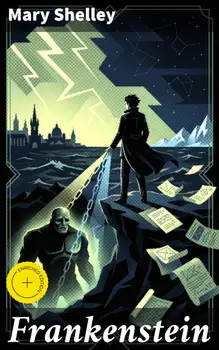
Frankenstein : Enriched edition. The Original 1818 'Uncensored' Edition

Mary Shelley's "Frankenstein" emerges as a seminal work within the Gothic literary tradition, intertwining elements of horror, science fiction, and philosophical discourse. Set against the backdrop of the early 19th century, the novel delves into the consequences of unchecked ambition and the quest for knowledge, examining the moral implications of creation through the narrative of Victor Frankenstein and his monstrous progeny. Shelley's elegant prose and intricate character development invite readers to grapple with profound existential questions about humanity, isolation, and the ethical boundaries of scientific exploration. Mary Shelley, often regarded as the mother of science fiction, penned "Frankenstein" at the tender age of eighteen, influenced by the Romantic movement and her own turbulent experiences, which included the profound loss of her mother and the complexities of her relationship with poet Percy Bysshe Shelley. Encouraged by her unique circle of literary companions'Äîincluding Lord Byron'Äîshe crafted a tale that explores not only the darker sides of human ambition but also the fragility of human connection, making her narrative both a personal and cultural commentary on the Enlightenment's obsession with reason. "Frankenstein" is highly recommended for readers who seek a profound narrative that transcends its time, inviting contemplation on the intersection of science and ethics. As relevant today as it was in the 19th century, this work challenges us to reflect on our responsibilities towards creation and the consequences of our pursuit of knowledge.

In this enriched edition, we have carefully created added value for your reading experience:

- A succinct Introduction situates the work's timeless appeal and themes.

- The Synopsis outlines the central plot, highlighting key developments without spoiling critical twists.

- A detailed Historical Context immerses you in the era's events and influences that shaped the writing.

- An Author Biography reveals milestones in the author's life, illuminating the personal insights behind the text.

- A thorough Analysis dissects symbols, motifs, and character arcs to unearth underlying meanings.

- Reflection questions prompt you to engage personally with the work's messages, connecting them to modern life.

- Hand‐picked Memorable Quotes shine a spotlight on moments of literary brilliance.

- Interactive footnotes clarify unusual references, historical allusions, and archaic phrases for an effortless, more informed read.

Über dieses Buch

Mary Shelley's "Frankenstein" emerges as a seminal work within the Gothic literary tradition, intertwining elements of horror, science fiction, and philosophical discourse. Set against the backdrop of the early 19th century, the novel delves into the consequences of unchecked ambition and the quest for knowledge, examining the moral implications of creation through the narrative of Victor Frankenstein and his monstrous progeny. Shelley's elegant prose and intricate character development invite readers to grapple with profound existential questions about humanity, isolation, and the ethical boundaries of scientific exploration. Mary Shelley, often regarded as the mother of science fiction, penned "Frankenstein" at the tender age of eighteen, influenced by the Romantic movement and her own turbulent experiences, which included the profound loss of her mother and the complexities of her relationship with poet Percy Bysshe Shelley. Encouraged by her unique circle of literary companions'Äîincluding Lord Byron'Äîshe crafted a tale that explores not only the darker sides of human ambition but also the fragility of human connection, making her narrative both a personal and cultural commentary on the Enlightenment's obsession with reason. "Frankenstein" is highly recommended for readers who seek a profound narrative that transcends its time, inviting contemplation on the intersection of science and ethics. As relevant today as it was in the 19th century, this work challenges us to reflect on our responsibilities towards creation and the consequences of our pursuit of knowledge.

In this enriched edition, we have carefully created added value for your reading experience:

- A succinct Introduction situates the work's timeless appeal and themes.

- The Synopsis outlines the central plot, highlighting key developments without spoiling critical twists.

- A detailed Historical Context immerses you in the era's events and influences that shaped the writing.

- An Author Biography reveals milestones in the author's life, illuminating the personal insights behind the text.

- A thorough Analysis dissects symbols, motifs, and character arcs to unearth underlying meanings.

- Reflection questions prompt you to engage personally with the work's messages, connecting them to modern life.

- Hand‐picked Memorable Quotes shine a spotlight on moments of literary brilliance.

- Interactive footnotes clarify unusual references, historical allusions, and archaic phrases for an effortless, more informed read.
Starte noch heute mit diesem Buch für 0 €

  • Hole dir während der Testphase vollen Zugriff auf alle Bücher in der App
  • Keine Verpflichtungen, jederzeit kündbar
Jetzt kostenlos testen
Mehr als 52 000 Menschen haben Nextory im App Store und auf Google Play 5 Sterne gegeben.

  1. 1.0

    100 Meisterwerke der Weltliteratur - Klassiker die man kennen muss : Bereicherte Ausgabe. Ein literarisches Panorama: Meisterwerke, Klassiker und Autoren der Weltliteratur

    Johann Wolfgang Goethe, Jules Verne, Gustave Flaubert, Franz Kafka, Lewis Carroll, Selma Lagerlöf, Sigmund Freud, Johanna Spyri, Theodor Storm, Rainer Maria Rilke, Charles Dickens, Stefan Zweig, Heinrich Heine, Honoré de Balzac, Theodor Fontane, Karl May, Gottfried Keller, Mark Twain, Heinrich Mann, Else Lasker-Schüler, Robert Musil, Walt Whitman, Oscar Wilde, Annette von Droste-Hülshoff, Arthur Schopenhauer, Robert Louis Stevenson, Gustav Freytag, James Fenimore Cooper, Edgar Allan Poe, Heinrich von Kleist, William Shakespeare, Dante Alighieri, Charlotte Brontë, Emily Brontë, Jack London, Arthur Conan Doyle, Joseph Conrad, Jane Austen, Herman Melville, Guy De Maupassant, Walter Scott, Jonathan Swift, Jacob Grimm, Wilhelm Grimm, Alexandre Dumas, Rudyard Kipling, Nathaniel Hawthorne, Homer, O.Henry, Voltaire, Lew Wallace, John Galsworthy, E. T. Hoffmann, Marcus Aurelius, Hans Christian Andersen, Anton Pawlowitsch Tschechow, Platon, Friedrich Nietzsche, Iwan Sergejewitsch Turgenew, Tacitus, Nikolai Gogol, Miguel de Cervantes, Mary Shelley, Thomas Wolfe, Emile Zola, Fjodor Michailowitsch Dostojewski, Leo Tolstoi, Joseph Roth, Joseph von Eichendorff, Kurt Tucholsky, Iwan Alexandrowitsch Gontscharow, Oswald Spengler, Moliere, Alfred Adler, Sophie von Roche, Klaus Mann, Rumi

  2. 3.0

    200 Meisterwerke der Literaturgeschichte : Die größten Klassiker der Weltliteratur

    Franz Kafka, Victor Hugo, Fjodor Michailowitsch Dostojewski, Lord Byron, Giacomo Leopardi, Marcel Proust, Henrik Ibsen, Percy Bysshe Shelley, Charles Dickens, Jane Austen, Mary Shelley, Emily Brontë, Charlotte Brontë, Anne Brontë, William Makepeace Thackeray, Bram Stoker, Henry Fielding, George Eliot, William Shakespeare, D. H. Lawrence, Walt Whitman, Herman Melville, Thomas Wolfe, Virginia Woolf, Joseph Conrad, Sinclair Lewis, Lewis Carrol, Edgar Allan Poe, Edward Bulwer-Lytton, Oscar Wilde, H.G. Wells, Daniel Defoe, James Fenimore Cooper, Lew Wallace, Jonathan Swift, Robert Louis Stevenson, Mark Twain, Walter Scott, Nathaniel Hawthorne, Harriet Beecher Stowe, Laurence Sterne, Frances Hodgson Burnett, Arthur Conan Doyle, Wilkie Collins, Edgar Wallace, Jack London, Henry David Thoreau, John Galsworthy, F. Scott Fitzgerald, Rudyard Kipling, G.K. Chesterton, Washington Irvin, O.Henry, Ambrose Bierce, Alexander Sergejewitsch Puschkin, Michail Lermontow, Iwan Sergejewitsch Turgenew, Leo Tolstoi, Nikolai Gogol, Iwan Gontscharow, Nikolai Leskow, Anton Pawlowitsch Tschechow, Maxim Gorki, François Rabelais, Jean de la Fontaine, Blaise Pascal, Pierre Corneille, Moliere, Jean Baptiste Racine, Charles Perrault, Voltaire, Denis Diderot, Jean-Jacques Rousseau, Pierre-Ambroise Choderlos de Laclos, Antoine-François Prévost, Marquis De Sade, François René Chateaubriand, Stendhal, Honoré de Balzac, Alexandre Dumas, Alphonse de Lamartine, George Sand, Gustave Flaubert, Emile Zola, Guy De Maupassant, Alphonse Daudet, Jules Verne, Joris-Karl Huysmans, Prosper Mérimée, Charles Baudelaire, Stéphane Mallarmé, Arthur Rimbaud, André Gide, Arthur Schopenhauer, Heinrich Heine, Friedrich Schiller, Johann Wolfgang von Goethe, Jacob Grimm, Gottfried von Straßburg, Wolfram von Eschenbach, E T A Hoffmann, Annette von Droste-Hülshoff, Heinrich von Kleist, Friedrich Hölderlin, Theodor Fontane, Gustav Freytag, Gottfried Keller, Theodor Storm, Stefan Zweig, Joseph von Eichendorff, Klaus Mann, Rainer Maria Rilke, Johanna Spyri, Joseph Roth, Karl May, Robert Musil, Heinrich Mann, Sigmund Freud, Friedrich Nietzsche, Dante Alighieri, Giovanni Boccaccio, Giacomo Casanova, Luigi Pirandello, Giosuè Carducci, Gabriele D’Annunzio, Niccolo Machiavelli, Miguel Cervantes de Saavedra, Pedro Calderón de la Barca, Vicente Blasco Ibañez, Knut Hamsun, Homer, Äsop, Herodot, Thukydides, Xenophon, Platon, - Aristoteles, - Sophokles, Euripides, - Aristophanes, Lao Tse, - Konfuzius, Siddhartha Gautama Buddha, Titus Livius, Tacitus, Marcus Tullius Cicero, Vergil, Ovid, Lukian, Petronius, Apuleius, Longos von Lesbos, Mark Aurel, Aurelius Augustinus

  3. Halloween Horrorfest – 100 Meisterwerke des Grauens : Die Maske des Roten Todes, Die Ratten in den Wänden, Die Legende von Sleepy Hollow, Die Mumie, Allerseelennacht, Das Schloss von Otranto...

    Hugh Walpole, H.P. Lovecraft, Mary Shelley, Henry James, Edgar Allan Poe, Jeremias Gotthelf, Washington Irving, Nikolai Gogol, Joseph Sheridan Le Fanu, Bram Stoker, Algernon Blackwood, Fjodor M Dostojewski, Prosper Mérimée, Honoré de Balzac, Robert W. Chambers, Gaston Leroux, Charlotte Perkins Gilman, H.G. Wells, Franz Kafka, Arthur Conan Doyle, Oscar Wilde, Emily Brontë, Octave Mirbeau, Carolyn Wells, Edith Wharton, H. Rider Haggard

  4. 50 Meisterwerke Musst Du Lesen, Bevor Du Stirbst: Vol. 1

    Voltaire, Johann Wolfgang von Goethe, Joseph von Eichendorff, Mary Shelley, Sir Walter Scott, Honoré de Balzac, Jonathan Swift, Stendhal, Franz Kafka, James Fenimore Cooper, Edgar Allan Poe, Nikolai Gogol, Charles Dickens, Charlotte Brontë, Alexandre Dumas, Arthur Schopenhauer, Nathaniel Hawthorne, Christian Johann Heinrich Heine, Herman Melville, Gustave Flaubert, Iwan Alexandrowitsch Gontscharow, Fyodor Dostoyevsky, Lewis Carroll, Jules Verne, Emile Zola, Friedrich Nietzsche, Guy De Maupassant, Mark Twain, Molière, Robert Louis Stevenson, Karl May, Rudyard Kipling, Theodore Fontane, Joseph Conrad, Dietrich Theden, Arthur Schnitzler, August Strindberg, Oscar Wilde, Robert Musil, Stefan Zweig, Joseph Roth, Kurt Tucholsk, BookTime

  5. 100 Meisterwerke des Horrors - Klassiker, die man kennen muss : Der Sandmann, Lebendig begraben, Der Vampyr, Frankenstein, Carmilla, Dracula, Die Katzen von Ulthar, Der Käfer, Die Drehung der Schraube

    H.P. Lovecraft, Richard Marsh, E T A Hoffmann, Bram Stoker, Edgar Allan Poe, Mary Shelley, Fjodor M Dostojewski, Hugh Walpole, Franz Kafka, Horace Walpole, Henry James, R. Ryan, James Malcolm Rymer, Prosper Mérimée, Wladyslaw Stanislaw Reymont, Algernon Blackwood, Ann Radcliffe, Marjorie Bowen, Robert W. Chambers, Gaston Leroux, Honoré de Balzac, Robert Louis Stevenson, Charlotte Perkins Gilman, H.G. Wells, Stanislaw Przybyszewski, Arthur Conan Doyle, Oscar Wilde, Octave Mirbeau, Emily Brontë, August Strindberg, Edith Wharton, H. Rider Haggard, Jodocus Temme

  6. 100 Meisterwerke der englischen Literatur - Klassiker, die man kennen muss

    George Orwell, Charles Dickens, Jane Austen, Katherine Mansfield, H.P. Lovecraft, William Wordsworth, John Keats, Percy Bysshe Shelley, Robert Burns, John Milton, William Shakespeare, Christopher Marlowe, Geoffrey Chaucer, Laurence Sterne, Henry Fielding, Mary Shelley, Emily Brontë, Charlotte Brontë, Anne Brontë, William Makepeace Thackeray, George Eliot, D. H. Lawrence, Herman Melville, Thomas Wolfe, Virginia Woolf, Joseph Conrad, Sinclair Lewis, Walt Whitman, Edgar Allan Poe, Oscar Wilde, Jerome K Jerome, Washington Irving, Bram Stoker, H.G. Wells, Daniel Defoe, Lew Wallace, James Fenimore Cooper, Jonathan Swift, Robert Louis Stevenson, Mark Twain, Lewis Carrol, Edward Bulwer-Lytton, F. Scott Fitzgerald, Arthur Conan Doyle, Jack London, Henry David Thoreau, G.K. Chesterton, Edith Wharton, Henry James, Thomas Hardy, Margaret Mitchell, Kate Chopin, Willa Cather, Charlotte Perkins Gilman, James Joyce, John Galsworthy, Francis Hodgson Burnett, Lucy Maud Montgomery, Louisa May Alcott, Rudyard Kipling

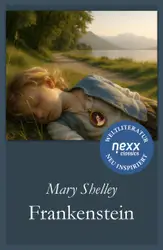
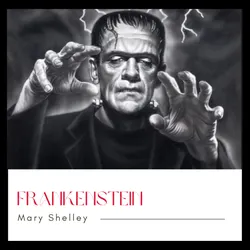
  7. Frankenstein : nexx classics – WELTLITERATUR NEU INSPIRIERT

    Mary Shelley

  8. 4.0

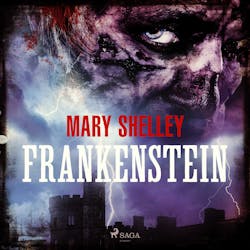
    Frankenstein

    Mary Shelley

  9. Anti-Helden der Literatur: Klassiker, die man kennen muss : Moby Dick, Faust, Das Bildnis des Dorian Gray, Frankenstein, Jahrmarkt der Eitelkeit, Othello, Die Abenteuer des Huckleberry Finn

    Fjodor Dostojewski, Herman Melville, Jack London, Andre Gide, Emily Brontë, Nathaniel Hawthorne, Charles Dickens, Mark Twain, Oscar Wilde, Mary Shelley, Arthur Conan Doyle, Miguel de Cervantes Saavedra, Joseph Conrad, William Makepeace Thackeray, Euripides, William Shakespeare, Johann Wolfgang von Goethe, Homer

  10. 3.9

    Frankenstein

    Mary Shelley

  11. Die schönste Zeit - Weihnachten mit Meisterwerken der Weltliteratur : Bereicherte Ausgabe. Eine literarische Reise durch die Weihnachtszeit

    Franz Kafka, Sigmund Freud, Charles Dickens, Stefan Zweig, Karl May, Walt Whitman, Arthur Schopenhauer, Robert Louis Stevenson, James Fenimore Cooper, Edgar Allan Poe, Arthur Conan Doyle, Joseph Conrad, Jacob Grimm, Wilhelm Grimm, Alexandre Dumas, Homer, O.Henry, Marcus Aurelius, Hans Christian Andersen, Platon, Friedrich Nietzsche, Tacitus, Mary Shelley, Fjodor Michailowitsch Dostojewski, Oswald Spengler, Alfred Adler, Rumi