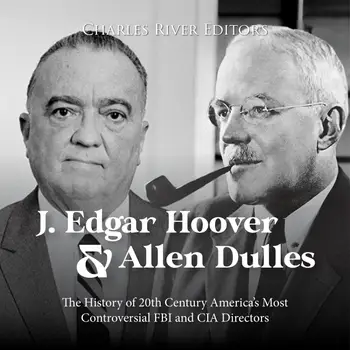
J. Edgar Hoover and Allen Dulles: The History of 20th Century America’s Most Controversial FBI and CIA Directors

No single figure in 20th century American history inspires such opposing opinions as J. Edgar Hoover, the iconic first director of the Federal Bureau of Investigation. In his time, he was arguably the most powerful non-elected figure in the U.S. government. Serving under 8 presidents (and outliving 2 of them), he remains the longest-serving head of a major government office. In essence, Hoover died as he began - a civil servant, having been appointed by the Attorney General and serving at the pleasure of the president.

By the 1960s and 1970s Hoover the hero had become Hoover the villain. Various exposes and investigations revealed a darker side to the legend, one that included serious violations of the civil liberties of individuals. Hoover’s G-Men, it was discovered, engaged in illegal break-ins and wiretaps of suspected subversives; they wrote fake letters that undermined the reputations of public individuals; they paid informants for information and push the groups they belonged to into committing illegal acts. It was alleged that Hoover led a personal vendetta against Martin Luther King, Jr., and the entire civil rights movement. Hoover, it was said, had stayed in office so long by gathering secret files of damaging information about politicians (including presidents).

To this day, Allen Dulles’ eight-year tenure in that office is the longest, and as one of the country’s leading experts in international law, intelligence, and spycraft, he became renowned for his unwavering anti-communist ideology and readiness to take decisive measures to counter what he perceived as a menace to American safety. As such, it would be Dulles who sanctioned many of the CIA’s most notorious operations, including the ousting of Iran's democratically elected government in 1953, spying and experimentation on American citizens, and the disastrous Bay of Pigs.

Über dieses Buch

No single figure in 20th century American history inspires such opposing opinions as J. Edgar Hoover, the iconic first director of the Federal Bureau of Investigation. In his time, he was arguably the most powerful non-elected figure in the U.S. government. Serving under 8 presidents (and outliving 2 of them), he remains the longest-serving head of a major government office. In essence, Hoover died as he began - a civil servant, having been appointed by the Attorney General and serving at the pleasure of the president.

By the 1960s and 1970s Hoover the hero had become Hoover the villain. Various exposes and investigations revealed a darker side to the legend, one that included serious violations of the civil liberties of individuals. Hoover’s G-Men, it was discovered, engaged in illegal break-ins and wiretaps of suspected subversives; they wrote fake letters that undermined the reputations of public individuals; they paid informants for information and push the groups they belonged to into committing illegal acts. It was alleged that Hoover led a personal vendetta against Martin Luther King, Jr., and the entire civil rights movement. Hoover, it was said, had stayed in office so long by gathering secret files of damaging information about politicians (including presidents).

To this day, Allen Dulles’ eight-year tenure in that office is the longest, and as one of the country’s leading experts in international law, intelligence, and spycraft, he became renowned for his unwavering anti-communist ideology and readiness to take decisive measures to counter what he perceived as a menace to American safety. As such, it would be Dulles who sanctioned many of the CIA’s most notorious operations, including the ousting of Iran's democratically elected government in 1953, spying and experimentation on American citizens, and the disastrous Bay of Pigs.

Starte noch heute mit diesem Buch für 0 €

  • Hole dir während der Testphase vollen Zugriff auf alle Bücher in der App
  • Keine Verpflichtungen, jederzeit kündbar
Jetzt kostenlos testen
Mehr als 52 000 Menschen haben Nextory im App Store und auf Google Play 5 Sterne gegeben.

  1. 2.0

    Die Panzer: Die Geschichte und das Vermächtnis von Nazideutschlands berühmtesten Panzern des Zweiten Weltkriegs

    Charles River Editors

  2. The Iranian Revolution and Iran Hostage Crisis: The History of the Events that Broke American Relations with Iran

    Charles River Editors

  3. Imperial Germany’s Colonization in Africa: The History of the German Efforts and Conflicts to Colonize Parts of Africa

    Charles River Editors

  4. The Byzantines and Ottomans: The History of the Medieval Middle East’s Most Influential Empires

    Charles River Editors

  5. The Carlist Wars and the Spanish Civil War: The History of the Conflicts that Divided Spain in the Last 200 Years

    Charles River Editors

  6. Eleanor of Aquitaine and Richard the Lionheart: The History of the Mother and Son Who Shaped Medieval Europe

    Charles River Editors

  7. 3.4

    Mustafa Kemal Atatürk and the Republic of Turkey: The History of the Ottoman Empire’s Collapse and the Establishment of a New State

    Charles River Editors

  8. The Ancient Kingdoms of Africa: The History and Legacy of the African Continent’s Most Prominent Kingdoms in Antiquity

    Charles River Editors

  9. The Spanish Empire in the Americas: The History of Spain’s Colonization across Central America and South America

    Charles River Editors

  10. Ada Lovelace: The Life and Legacy of the Math Prodigy Who Pioneered Computer Science

    Charles River Editors

  11. Die Han-Dynastie: Geschichte und Erbe des einflussreichsten Reiches des alten China

    Charles River Editors

  12. Japan in the World Wars: The History of the Imperial Japanese Empire during World War I and World War II

    Charles River Editors