4.4(7)

Northanger Abbey

Though Northanger Abbey is one of Jane Austen's earliest novels, it was not published until after her death - well after she'd established her reputation with works such as Pride and Prejudice, Emma, and Sense and Sensibility.

Consider Austen's introduction of her heroine: we are told on the very first page that "no one who had ever seen Catherine Morland in her infancy, would have supposed her born to be an heroine." The author goes on to explain that Miss Morland's father is a clergyman with "a considerable independence, besides two good livings - and he was not in the least addicted to locking up his daughters."

Furthermore, her mother does not die giving birth to her, and Catherine herself, far from engaging in "the more heroic enjoyments of infancy, nursing a dormouse, feeding a canary-bird, or watering a rose-bush" vastly prefers playing cricket with her brothers to any girlish pastimes.

Catherine grows up to be a passably pretty girl and is invited to spend a few weeks in Bath with a family friend. While there she meets Henry Tilney and his sister Eleanor, who invite her to visit their family estate, Northanger Abbey. Once there, Austen amuses herself and us as Catherine, a great reader of Gothic romances, allows her imagination to run wild, finding dreadful portents in the most wonderfully prosaic events. But Austen is after something more than mere parody; she uses her rapier wit to mock not only the essential silliness of "horrid" novels, but to expose the even more horrid workings of polite society, for nothing Catherine imagines could possibly rival the hypocrisy she experiences at the hands of her supposed friends.

In many respects Northanger Abbey is the most lighthearted of Jane Austen's novels, yet at its core is a serious, unsentimental commentary on love and marriage, 19th-century British style.

An Author's Republic audio production.
Über dieses Buch

Though Northanger Abbey is one of Jane Austen's earliest novels, it was not published until after her death - well after she'd established her reputation with works such as Pride and Prejudice, Emma, and Sense and Sensibility.

Consider Austen's introduction of her heroine: we are told on the very first page that "no one who had ever seen Catherine Morland in her infancy, would have supposed her born to be an heroine." The author goes on to explain that Miss Morland's father is a clergyman with "a considerable independence, besides two good livings - and he was not in the least addicted to locking up his daughters."

Furthermore, her mother does not die giving birth to her, and Catherine herself, far from engaging in "the more heroic enjoyments of infancy, nursing a dormouse, feeding a canary-bird, or watering a rose-bush" vastly prefers playing cricket with her brothers to any girlish pastimes.

Catherine grows up to be a passably pretty girl and is invited to spend a few weeks in Bath with a family friend. While there she meets Henry Tilney and his sister Eleanor, who invite her to visit their family estate, Northanger Abbey. Once there, Austen amuses herself and us as Catherine, a great reader of Gothic romances, allows her imagination to run wild, finding dreadful portents in the most wonderfully prosaic events. But Austen is after something more than mere parody; she uses her rapier wit to mock not only the essential silliness of "horrid" novels, but to expose the even more horrid workings of polite society, for nothing Catherine imagines could possibly rival the hypocrisy she experiences at the hands of her supposed friends.

In many respects Northanger Abbey is the most lighthearted of Jane Austen's novels, yet at its core is a serious, unsentimental commentary on love and marriage, 19th-century British style.

An Author's Republic audio production.
Starte noch heute mit diesem Buch für 0 €

  • Hole dir während der Testphase vollen Zugriff auf alle Bücher in der App
  • Keine Verpflichtungen, jederzeit kündbar
Jetzt kostenlos testen
Mehr als 52 000 Menschen haben Nextory im App Store und auf Google Play 5 Sterne gegeben.

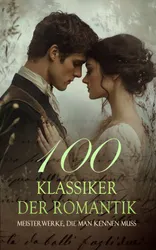
  1. 100 Klassiker der Romantik - Meisterwerke, die man kennen muss : Epische Liebesdramen und große Erwartungen in zeitlosen Geschichten

    Jane Austen, Louisa May Alcott, D. H. Lawrence, Fjodor Dostojewski, William Shakespeare, Hedwig Courths-Mahler, Frances Burney, Charlotte Brontë, Alexandre Dumas, Margaret Mitchell, Charles Dickens, L.M. Montgomery, Eugenie Marlitt, Wilhelmine Heimburg, Elisabeth Bürstenbinder, Stendhal, Johann Wolfgang Goethe, Walter Scott, Guy De Maupassant, Victor Hugo, George Sand, Leo Tolstoi, Gabriele D’Annunzio, Rudyard Kipling, Gustave Flaubert, Nathaniel Hawthorne, Jean-Jacques Rousseau, Bernardin de Saint-Pierre, F. Scott Fitzgerald, Prosper Mérimée, Edith Wharton, Lena Christ, François-René de Chateaubriand, Stefan Zweig, Alexander Sergejewitsch Puschkin, Ida Boy-Ed, Arthur Schnitzler, Anatole France, Johanna Spyri, George Eliot, Gaston Leroux, Nataly von Eschstruth, Gottfried von Straßburg, Sophie Mereau, Caroline von Wolzogen, Benedikte Naubert, Henry De Stacpoole, Levin Schücking

  2. 4.1

    Verstand und Gefühl - Sonderedition (Ungekürzte Fassung)

    Jane Austen

  3. 4.6

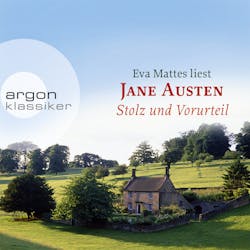
    Stolz und Vorurteil (Ungekürzte Fassung)

    Jane Austen

  4. Neu

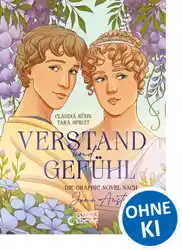
    Verstand und Gefühl : Der Klassiker als liebevoll umgesetzte Graphic Novel - Slow-Burn-Lovestory in der Regency-Zeit

    Jane Austen, Claudia Kühn

  5. 1.0

    100 Meisterwerke der Weltliteratur - Klassiker die man kennen muss : Bereicherte Ausgabe. Ein literarisches Panorama: Meisterwerke, Klassiker und Autoren der Weltliteratur

    Johann Wolfgang Goethe, Jules Verne, Gustave Flaubert, Franz Kafka, Lewis Carroll, Selma Lagerlöf, Sigmund Freud, Johanna Spyri, Theodor Storm, Rainer Maria Rilke, Charles Dickens, Stefan Zweig, Heinrich Heine, Honoré de Balzac, Theodor Fontane, Karl May, Gottfried Keller, Mark Twain, Heinrich Mann, Else Lasker-Schüler, Robert Musil, Walt Whitman, Oscar Wilde, Annette von Droste-Hülshoff, Arthur Schopenhauer, Robert Louis Stevenson, Gustav Freytag, James Fenimore Cooper, Edgar Allan Poe, Heinrich von Kleist, William Shakespeare, Dante Alighieri, Charlotte Brontë, Emily Brontë, Jack London, Arthur Conan Doyle, Joseph Conrad, Jane Austen, Herman Melville, Guy De Maupassant, Walter Scott, Jonathan Swift, Jacob Grimm, Wilhelm Grimm, Alexandre Dumas, Rudyard Kipling, Nathaniel Hawthorne, Homer, O.Henry, Voltaire, Lew Wallace, John Galsworthy, E. T. Hoffmann, Marcus Aurelius, Hans Christian Andersen, Anton Pawlowitsch Tschechow, Platon, Friedrich Nietzsche, Iwan Sergejewitsch Turgenew, Tacitus, Nikolai Gogol, Miguel de Cervantes, Mary Shelley, Thomas Wolfe, Emile Zola, Fjodor Michailowitsch Dostojewski, Leo Tolstoi, Joseph Roth, Joseph von Eichendorff, Kurt Tucholsky, Iwan Alexandrowitsch Gontscharow, Oswald Spengler, Moliere, Alfred Adler, Sophie von Roche, Klaus Mann, Rumi

  6. 3.0

    200 Meisterwerke der Literaturgeschichte (Kommentiert) : Erweiterte Ausgabe. Die größten Klassiker der Weltliteratur

    Franz Kafka, Victor Hugo, Fjodor Michailowitsch Dostojewski, Lord Byron, Giacomo Leopardi, Marcel Proust, Henrik Ibsen, Percy Bysshe Shelley, Charles Dickens, Jane Austen, Mary Shelley, Emily Brontë, Charlotte Brontë, Anne Brontë, William Makepeace Thackeray, Bram Stoker, Henry Fielding, George Eliot, William Shakespeare, D. H. Lawrence, Walt Whitman, Herman Melville, Thomas Wolfe, Virginia Woolf, Joseph Conrad, Sinclair Lewis, Lewis Carrol, Edgar Allan Poe, Edward Bulwer-Lytton, Oscar Wilde, H.G. Wells, Daniel Defoe, James Fenimore Cooper, Lew Wallace, Jonathan Swift, Mark Twain, Walter Scott, Nathaniel Hawthorne, Harriet Beecher Stowe, Laurence Sterne, Frances Hodgson Burnett, Arthur Conan Doyle, Wilkie Collins, Edgar Wallace, Robert Louis Stevenson, Jack London, Henry David Thoreau, John Galsworthy, F. Scott Fitzgerald, Rudyard Kipling, G.K. Chesterton, Washington Irvin, O.Henry, Ambrose Bierce, Alexander Sergejewitsch Puschkin, Michail Lermontow, Iwan Sergejewitsch Turgenew, Leo Tolstoi, Nikolai Gogol, Iwan Gontscharow, Nikolai Leskow, Anton Pawlowitsch Tschechow, Maxim Gorki, François Rabelais, Jean De Fontaine, Blaise Pascal, Pierre Corneille, Moliere, Jean Baptiste Racine, Charles Perrault, Voltaire, Denis Diderot, Jean-Jacques Rousseau, Pierre Ambroise Laclos, Antoine-François Prévost, Marquis De Sade, François René Chateaubriand, Stendhal, Honoré de Balzac, Alexandre Dumas, Alphonse de Lamartine, George Sand, Gustave Flaubert, Emile Zola, Guy De Maupassant, Alphonse Daudet, Jules Verne, Joris-Karl Huysmans, Prosper Mérimée, Charles Baudelaire, Stéphane Mallarmé, Arthur Rimbaud, André Gide, Arthur Schopenhauer, Heinrich Heine, Friedrich Schiller, Johann Wolfgang Goethe, Jacob Grimm, Gottfried von Straßburg, Wolfram von Eschenbach, E. T. Hoffmann, Annette von Droste-Hülshoff, Heinrich von Kleist, Friedrich Hölderlin, Theodor Fontane, Gustav Freytag, Gottfried Keller, Theodor Storm, Stefan Zweig, Joseph von Eichendorff, Klaus Mann, Rainer Maria Rilke, Johanna Spyri, Joseph Roth, Karl May, Robert Musil, Heinrich Mann, Sigmund Freud, Friedrich Nietzsche, Dante Alighieri, Giovanni Boccaccio, Giacomo Casanova, Luigi Pirandello, Giosuè Carducci, Gabriele D’Annunzio, Niccolo Machiavelli, Miguel Cervantes Saavedra, Pedro Calderón Barca, Vicente Blasco Ibañez, Knut Hamsun, Homer, Äsop, Herodot, Thukydides, Xenophon, Platon, - Aristoteles, - Sophokles, Euripides, - Aristophanes, Lao Tse, - Konfuzius, Siddhartha Gautama Buddha, Titus Livius, Tacitus, Marcus Tullius Cicero, Vergil, Ovid, Lukian, Petronius, Apuleius, Longos von Lesbos, Mark Aurel, Aurelius Augustinus

  7. 100 Meisterwerke der englischen Literatur - Klassiker, die man kennen muss (Kommentiert) : Erweiterte Ausgabe. Hamlet, 1984, Ulysses...

    George Orwell, Charles Dickens, Jane Austen, Katherine Mansfield, H.P. Lovecraft, William Wordsworth, John Keats, Percy Bysshe Shelley, Robert Burns, John Milton, William Shakespeare, Christopher Marlowe, Geoffrey Chaucer, Laurence Sterne, Henry Fielding, Mary Shelley, Emily Brontë, Charlotte Brontë, Anne Brontë, William Makepeace Thackeray, George Eliot, D. H. Lawrence, Herman Melville, Thomas Wolfe, Virginia Woolf, Joseph Conrad, Sinclair Lewis, Walt Whitman, Edgar Allan Poe, Oscar Wilde, Jerome K Jerome, Washington Irving, Bram Stoker, H.G. Wells, Daniel Defoe, Lew Wallace, James Fenimore Cooper, Jonathan Swift, Robert Louis Stevenson, Mark Twain, Lewis Carrol, Edward Bulwer-Lytton, F. Scott Fitzgerald, Arthur Conan Doyle, Jack London, Henry David Thoreau, G.K. Chesterton, Edith Wharton, Henry James, Thomas Hardy, Margaret Mitchell, Kate Chopin, Willa Cather, Charlotte Perkins Gilman, James Joyce, John Galsworthy, Francis Hodgson Burnett, Lucy Maud Montgomery, Louisa May Alcott, Rudyard Kipling

  8. 4.3

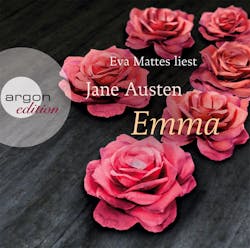
    Emma (Ungekürzt)

    Jane Austen

  9. 4.4

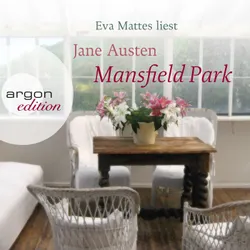
    Mansfield Park (Ungekürzte Fassung)

    Jane Austen

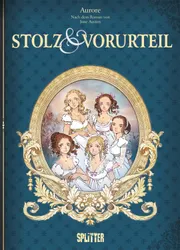
  10. Stolz und Vorurteil (Graphic Novel) : Nach dem Roman von Jane Austen

    Jane Austen

  11. 4.4

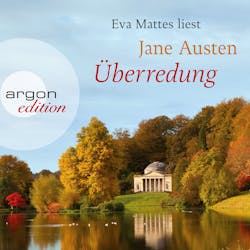
    Überredung (Ungekürzte Lesung)

    Jane Austen

  12. Neu

    Verstand und Gefühl : Der Klassiker als liebevoll umgesetzte Graphic Novel - Slow-Burn-Lovestory in der Regency-Zeit

    Jane Austen, Claudia Kühn