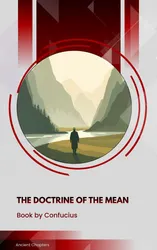
Shu King : Enriched edition. The Book of Documents

The "Shu King," also known as the "Book of Documents," is a foundational text in Chinese literature and philosophy, embodying the moral and ethical teachings of Confucius. Written in a concise and formal style, it presents a collection of historical documents that reflect the political and social values of early Chinese civilization. Through its archaic language and rich allegorical narratives, the "Shu King" invites readers to reflect on virtue, governance, and the responsibilities of leadership, making it a vital work in understanding the evolution of Confucian thought and its impact on the moral fabric of Chinese society. Confucius, a philosopher born in 551 BCE, dedicated his life to the pursuit of wisdom and the cultivation of virtue. His experiences in a society rife with political turbulence and moral decay inspired him to articulate a vision for a harmonious society governed by ethical principles. The "Shu King" emerged from his belief in the importance of historical precedent and moral lessons as guides for contemporary governance, revealing the interplay between history, philosophy, and culture in his thought. This text is highly recommended for readers interested in the foundations of Eastern philosophy and political theory. As both a historical treasure and a philosophical treatise, the "Shu King" provides profound insights into the human condition and serves as a timeless guide for ethical leadership and responsible governance.

In this enriched edition, we have carefully created added value for your reading experience:

- A succinct Introduction situates the work's timeless appeal and themes.

- The Synopsis outlines the central plot, highlighting key developments without spoiling critical twists.

- A detailed Historical Context immerses you in the era's events and influences that shaped the writing.

- An Author Biography reveals milestones in the author's life, illuminating the personal insights behind the text.

- A thorough Analysis dissects symbols, motifs, and character arcs to unearth underlying meanings.

- Reflection questions prompt you to engage personally with the work's messages, connecting them to modern life.

- Hand‐picked Memorable Quotes shine a spotlight on moments of literary brilliance.

- Interactive footnotes clarify unusual references, historical allusions, and archaic phrases for an effortless, more informed read.
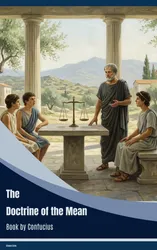
Über dieses Buch

The "Shu King," also known as the "Book of Documents," is a foundational text in Chinese literature and philosophy, embodying the moral and ethical teachings of Confucius. Written in a concise and formal style, it presents a collection of historical documents that reflect the political and social values of early Chinese civilization. Through its archaic language and rich allegorical narratives, the "Shu King" invites readers to reflect on virtue, governance, and the responsibilities of leadership, making it a vital work in understanding the evolution of Confucian thought and its impact on the moral fabric of Chinese society. Confucius, a philosopher born in 551 BCE, dedicated his life to the pursuit of wisdom and the cultivation of virtue. His experiences in a society rife with political turbulence and moral decay inspired him to articulate a vision for a harmonious society governed by ethical principles. The "Shu King" emerged from his belief in the importance of historical precedent and moral lessons as guides for contemporary governance, revealing the interplay between history, philosophy, and culture in his thought. This text is highly recommended for readers interested in the foundations of Eastern philosophy and political theory. As both a historical treasure and a philosophical treatise, the "Shu King" provides profound insights into the human condition and serves as a timeless guide for ethical leadership and responsible governance.

In this enriched edition, we have carefully created added value for your reading experience:

- A succinct Introduction situates the work's timeless appeal and themes.

- The Synopsis outlines the central plot, highlighting key developments without spoiling critical twists.

- A detailed Historical Context immerses you in the era's events and influences that shaped the writing.

- An Author Biography reveals milestones in the author's life, illuminating the personal insights behind the text.

- A thorough Analysis dissects symbols, motifs, and character arcs to unearth underlying meanings.

- Reflection questions prompt you to engage personally with the work's messages, connecting them to modern life.

- Hand‐picked Memorable Quotes shine a spotlight on moments of literary brilliance.

- Interactive footnotes clarify unusual references, historical allusions, and archaic phrases for an effortless, more informed read.

Starte noch heute mit diesem Buch für 0 €

  • Hole dir während der Testphase vollen Zugriff auf alle Bücher in der App
  • Keine Verpflichtungen, jederzeit kündbar
Jetzt kostenlos testen
Mehr als 52 000 Menschen haben Nextory im App Store und auf Google Play 5 Sterne gegeben.

  1. 2000 Final Quotations

    Marcus Aurelius, Jane Austen, Buddha, Anton Chekhov, Cicero, Emil Cioran, Confucius, Albert Einstein, Anne Frank, Mahatma Gandhi, Johann Wolfgang Goethe, Carl Jung, Immanuel Kant, Friedrich Nietzsche, Marcel Proust, Arthur Schopenhauer, William Shakespeare, Baruch Spinoza, Leonardo da Vinci, Laozi

  2. 33 Human Science Masterpieces You Must Read Before You Die. Illustrated : The Art of Public Speaking, The Meditations, The Kama Sutra and other masterpieces

    Edwin A. Abbott, Aristotle, Dale Carnegie, Gilbert Chesterton, René Descartes, Epictetus, Marcus Aurelius Antoninus, Sigmund Freud, Hermann Hesse, David Hume, Lao Tzu, Confucius, Swami Abhedananda, Anonimous, David Herbert Lawrence, Niccolò Machiavelli, Benedictus de Spinoza, John Mill, Prentice Mulford, Thomas More, Friedrich Nietzsche, J. Allanson Picton, Plato, Sun Tzu, Vatsyayana, Voltaire, H.G. Wells, Frances Bacon

  3. The Analects of Confucius

    Confucius

  4. Neu

    The Doctrine of the Mean

    Confucius

  5. The Confucius Collection

    Confucius

  6. The Analects

    Confucius

  7. The Complete Works of Confucius : Teachings of the Great Sage of Harmony and Virtue

    Confucius

  8. The Analects of Confucius : Ancient Wisdom for Modern Life — Timeless Teachings on Ethics, Harmony, and Virtue

    Confucius

  9. 5.0

    Comprendre Confucius

    Confucius

  10. 1800 Citations de philosophes

    Aristote, Épicure, Platon, Thalès de Milet, – Socrate, Protagoras, Anaximandre, Épictète, Héraclite, Marc Aurèle, René Descartes, Michel de Montaigne, Alexis de Tocqueville, Voltaire, Charles De Montesquieu, Jean-Jacques Rousseau, Emmanuel Kant, Hannah Arendt, Gottfried Wilhelm Leibniz, Georg Wilhelm Friedrich Hegel, Friedrich Nietzsche, Arthur Schopenhauer, David Hume, John Locke, Francis Bacon, Thomas Hobbes, Thomas More, Confucius, Érasme, Lao Tseu, Baruch Spinoza, Søren Kierkegaard, Nicolas Machiavel, Thomas d'Aquin, Henry David Thoreau

  11. 50 citations de Confucius

    Confucius

  12. 400 citations de philosophes essentiels

    Confucius, Érasme, Lao Tseu, Baruch Spinoza, Søren Kierkegaard, Nicolas Machiavel, Thomas d'Aquin, Henry David Thoreau