5.0(1)

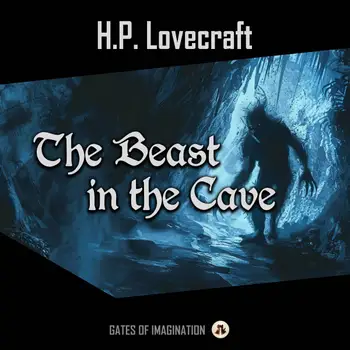
The Beast in the Cave :

This audiobook is narrated by an AI Voice. Between 1903 and 1908, Lovecraft created many stories and sketches, about which we know nothing today beyond the fact that they existed. Almost all met the same fate: death in the flames at the hands of their creator. Lovecraft saved only two texts – "The Alchemist" (1908) and "The Beast in the Cave."

The sketch of the story was created as early as the spring of 1904, but Lovecraft needed some time in the Providence Public Library to get to know the location where he set the story, i.e., Mammoth Cave in Kentucky (now a national park). The plot can be summarized in one sentence: a tourist gets lost in a vast cave, where he encounters the titular beast.

It is immediately apparent how much Lovecraft had progressed in prose writing since he penned the weak "The Mysterious Ship" three years earlier. The story is mature, with a well-developed psychology of the main character. In the 1930s, the author considered "The Beast in the Cave" to be the first of his works, chronologically, that held any value for him. It is the first story that bears such a clear resemblance to the writer's later works. I particularly note the fact that Lovecraft uses for the first time the phenomenon of the so-called "terminal climax," where the climax coincides with the last sentence of the story. Another striking example of this technique can be found in "Pickman's Model."

The story was not published until 1918, just after Lovecraft returned to writing prose (from 1908 to 1917 he was exclusively engaged in studies and poetry). Lovecraft was convinced to publish it by his friend from the amateur writers' society, W. Paul Cook.
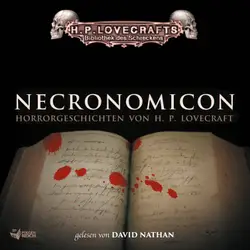
Über dieses Buch

This audiobook is narrated by an AI Voice. Between 1903 and 1908, Lovecraft created many stories and sketches, about which we know nothing today beyond the fact that they existed. Almost all met the same fate: death in the flames at the hands of their creator. Lovecraft saved only two texts – "The Alchemist" (1908) and "The Beast in the Cave."

The sketch of the story was created as early as the spring of 1904, but Lovecraft needed some time in the Providence Public Library to get to know the location where he set the story, i.e., Mammoth Cave in Kentucky (now a national park). The plot can be summarized in one sentence: a tourist gets lost in a vast cave, where he encounters the titular beast.

It is immediately apparent how much Lovecraft had progressed in prose writing since he penned the weak "The Mysterious Ship" three years earlier. The story is mature, with a well-developed psychology of the main character. In the 1930s, the author considered "The Beast in the Cave" to be the first of his works, chronologically, that held any value for him. It is the first story that bears such a clear resemblance to the writer's later works. I particularly note the fact that Lovecraft uses for the first time the phenomenon of the so-called "terminal climax," where the climax coincides with the last sentence of the story. Another striking example of this technique can be found in "Pickman's Model."

The story was not published until 1918, just after Lovecraft returned to writing prose (from 1908 to 1917 he was exclusively engaged in studies and poetry). Lovecraft was convinced to publish it by his friend from the amateur writers' society, W. Paul Cook.

Starte noch heute mit diesem Buch für 0 €

  • Hole dir während der Testphase vollen Zugriff auf alle Bücher in der App
  • Keine Verpflichtungen, jederzeit kündbar
Jetzt kostenlos testen
Mehr als 52 000 Menschen haben Nextory im App Store und auf Google Play 5 Sterne gegeben.

  1. Gekürzt
    4.1

    Lovecraft: Necronomicon

    H.P. Lovecraft

  2. 5.0
    #197

    Gruselkabinett, Folge 197: Das Grauen von Dunwich (unabridged)

    H.P. Lovecraft

  3. 3.8

    The Colour Out Of Space

    H.P. Lovecraft

  4. 50 Vintage Sci-Fi Short Stories 6 - More than 23 hours of Vintage Science Fiction : From the Shadows of Lovecraft to the Stars of Clarke—A Classic Sci-Fi Odyssey

    Isaac Asimov, Philip K Dick, Arthur C. Clarke, Ray Bradbury, H.P. Lovecraft, lord Dunsany, Robert E. Howard, Robert Silverberg, Walter M. Miller, Ray Cummings, Lester del Rey, Alfred Bester, Murray Leinster, Miriam Allen deFord, Fredric Brown, Donald A. Wollheim, Frank Herbert, Robert Sheckley, Lynn Venable, Evelyn E. Smith, Donald E. Westlake, Frederik Pohl, C. M. Kornbluth, J. F. Bone, Roger D. Aycock, Frank Belknap Long, Clark Ashton Smith, Alan E. Nourse, Mack Reynolds, Randall Garrett, Mary Carlson, Richard R. Smith, David Mason, John Victor Peterson, Joseph Slotkin, George R. Hahn, Alfred Coppel, William Brittain

  5. Christoph Hackenberg liest H. P. Lovecraft

    H.P. Lovecraft

  6. 100 Meisterwerke des Horrors - Klassiker, die man kennen muss : Der Sandmann, Lebendig begraben, Der Vampyr, Frankenstein, Carmilla, Dracula, Die Katzen von Ulthar, Der Käfer, Die Drehung der Schraube

    H.P. Lovecraft, Richard Marsh, E T A Hoffmann, Bram Stoker, Edgar Allan Poe, Mary Shelley, Fjodor M Dostojewski, Hugh Walpole, Franz Kafka, Horace Walpole, Henry James, R. Ryan, James Malcolm Rymer, Prosper Mérimée, Wladyslaw Stanislaw Reymont, Algernon Blackwood, Ann Radcliffe, Marjorie Bowen, Robert W. Chambers, Gaston Leroux, Honoré de Balzac, Robert Louis Stevenson, Charlotte Perkins Gilman, H.G. Wells, Stanislaw Przybyszewski, Arthur Conan Doyle, Oscar Wilde, Octave Mirbeau, Emily Brontë, August Strindberg, Edith Wharton, H. Rider Haggard, Jodocus Temme

  7. Der Baum

    H.P. Lovecraft

  8. 100 Meisterwerke der englischen Literatur - Klassiker, die man kennen muss

    George Orwell, Charles Dickens, Jane Austen, Katherine Mansfield, H.P. Lovecraft, William Wordsworth, John Keats, Percy Bysshe Shelley, Robert Burns, John Milton, William Shakespeare, Christopher Marlowe, Geoffrey Chaucer, Laurence Sterne, Henry Fielding, Mary Shelley, Emily Brontë, Charlotte Brontë, Anne Brontë, William Makepeace Thackeray, George Eliot, D. H. Lawrence, Herman Melville, Thomas Wolfe, Virginia Woolf, Joseph Conrad, Sinclair Lewis, Walt Whitman, Edgar Allan Poe, Oscar Wilde, Jerome K Jerome, Washington Irving, Bram Stoker, H.G. Wells, Daniel Defoe, Lew Wallace, James Fenimore Cooper, Jonathan Swift, Robert Louis Stevenson, Mark Twain, Lewis Carrol, Edward Bulwer-Lytton, F. Scott Fitzgerald, Arthur Conan Doyle, Jack London, Henry David Thoreau, G.K. Chesterton, Edith Wharton, Henry James, Thomas Hardy, Margaret Mitchell, Kate Chopin, Willa Cather, Charlotte Perkins Gilman, James Joyce, John Galsworthy, Francis Hodgson Burnett, Lucy Maud Montgomery, Louisa May Alcott, Rudyard Kipling

  9. Gruselkabinett, Box 48: Folgen 190, 191, 192, 193

    Jacob & Wilhelm Grimm, H.P. Lovecraft, E. & H. Heron

  10. Grusel, Horror und Schauer: Die große Hörbuch Box : Klassiker der Weltliteratur

    Robert Louis Stevenson, Nathaniel Hawthorne, E T A Hoffmann, Anton Tschechow, Georg Heym, W. Jacobs, Rudyard Kipling, Guy De Maupassant, H.P. Lovecraft, John Polidori, Edgar Allan Poe, H.G. Wells, Theodor Storm, A. J. Mordtmann

  11. Der Cthulhu-Mythos Sammelband : Ausgabe in neuer Übersetzung und Rechtschreibung

    H.P. Lovecraft

  12. 10 Masterpieces You Have to Read Before You Die, Vol. 3

    Edgar Allan Poe, William Shakespeare, H.P. Lovecraft, Mary W. Shelley, Osamu Dazai, Jack London, Fyodor Dostoyevsky, Nathaniel Hawthorne, Frances Hodgson Burnett, Robert Louis Stevenson