The Cherry Orchard

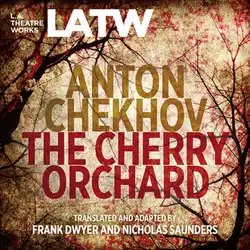
The Cherry Orchard is one of the best known plays by the prolific Russian dramatist Anton Chekhov. It has been translated into practically all languages and is part of the classic repertoire of all world stages. Chekhov is known for his art of subtlety, humour, stream of consciousness technique, and fine balance which is often difficult to get right. Chekhov described the play as a comedy, with some elements of farce, though Stanislavski treated it as a tragedy. Since its first production, directors have contended with its dual nature. The play concerns an aristocratic Russian landowner who returns to her family estate just before it is auctioned to pay the mortgage. Unresponsive to offers to save the estate, she allows its sale to the son of a former serf. The story presents themes of cultural futility – both the futile attempts of the aristocracy to maintain its status and of the bourgeoisie to find meaning in its newfound materialism. It dramatises the rise of the middle class after the abolition of serfdom in the mid-19th century and the decline of the power of the aristocracy.

Über dieses Buch

The Cherry Orchard is one of the best known plays by the prolific Russian dramatist Anton Chekhov. It has been translated into practically all languages and is part of the classic repertoire of all world stages. Chekhov is known for his art of subtlety, humour, stream of consciousness technique, and fine balance which is often difficult to get right. Chekhov described the play as a comedy, with some elements of farce, though Stanislavski treated it as a tragedy. Since its first production, directors have contended with its dual nature. The play concerns an aristocratic Russian landowner who returns to her family estate just before it is auctioned to pay the mortgage. Unresponsive to offers to save the estate, she allows its sale to the son of a former serf. The story presents themes of cultural futility – both the futile attempts of the aristocracy to maintain its status and of the bourgeoisie to find meaning in its newfound materialism. It dramatises the rise of the middle class after the abolition of serfdom in the mid-19th century and the decline of the power of the aristocracy.

Starte noch heute mit diesem Buch für 0 €

  • Hole dir während der Testphase vollen Zugriff auf alle Bücher in der App
  • Keine Verpflichtungen, jederzeit kündbar
Jetzt kostenlos testen
Mehr als 52 000 Menschen haben Nextory im App Store und auf Google Play 5 Sterne gegeben.

Andere haben auch gelesen

Liste überspringen
  1. You Don't Know Me but You Don't Like Me: Phish, Insane Clown Posse, and My Misadventures with Two of Music's Most Maligned Tribes

    Nathan Rabin

  2. Im Namen der Bäume : Meine Lebensreise von uralter keltischer Weisheit zu einer heilenden Anschauung des Waldes

    Diana Beresford-Kroeger

  3. 5.0

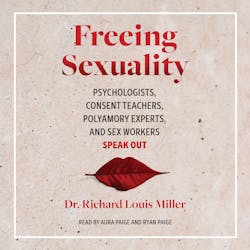
    Freeing Sexuality : Psychologists, Consent Teachers, Polyamory Experts, and Sex Workers Speak Out

    Richard Louis Miller

  4. #36

    Spurensuche : Jüdische Familiengeschichten in Wernigerode

    Peter Lehmann

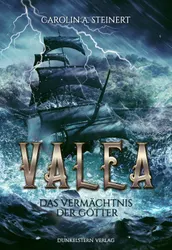
  5. Valea - Das Vermächtnis der Götter : Band 2 der Piraten Romantasy - Dilogie

    Carolin A. Steinert

  6. Dionysus in Exile: : The Theatre of Theodoros Terzopoulos

  7. Die spannendsten Seeabenteuer zum Abschalten (50+ Packende Abenteuer-Klassiker & 70 Seegeschichten) : Epische Reisen über sieben Meere: Abenteuerklassiker und fesselnde Seegeschichten

    Jules Verne, Karl May, Amalie Schoppe, Robert Louis Stevenson, James Fenimore Cooper, Edgar Allan Poe, Victor Hugo, Joseph Conrad, Herman Melville, Jonathan Swift, Pierre Loti, Daniel Defoe, Alexandre Dumas, Rudyard Kipling, Emilio Salgari, Franz Treller, Robert Kraft, Frederick Kapitän Marryat, Alexander von Ungern-Sternberg, Walther Kabel, Heinrich Smidt

  8. Through The Body : A Practical Guide to Physical Theatre

    Dymphna Callery

  9. The Active Text : Unlocking Plays Through Physical Theatre

    Dymphna Callery

  10. 4.0

    Hook's Tale: Being the Account of an Unjustly Villainized Pirate Written by Himself

    John Leonard Pielmeier

  11. Getting Directions : A Fly-on-the-Wall Guide for Emerging Theatre Directors

    Russ Hope

  12. Designer Relationships : A Guide to Happy Monogamy, Positive Polyamory, and Optimistic Open Relationships

    Mark Michaels

  1. 4.0

    25+ The World's Greatest Short Stories. Vol. 1 : The Legend of Sleepy Hollow, The Gold Bug, Daisy Miller, The Yellow Wallpaper, The Call of Cthulhu and other

    Washington Irving, Edgar Allan Poe, Herman Melville, Bret Harte, Leo Tolstoy, Fyodor Dostoevsky, Rudyard Kipling, Charlotte Perkins Gilman, Anton Chekhov, David Herbert Lawrence, James Joyce, Ivan Turgenev, Nikolai Gogol, Mikhail Bulgakov, Ivan Bunin, Joseph Sheridan Le Fanu, O.Henry, Ambrose Gwinnett Bierce, Robert Louis Stevenson, Herbert George Wells, William Wymark Jacobs, Arthur Conan Doyle, Henry James, Howard Phillips Lovecraft, Alexander Pushkin, Gilbert Keith Chesterton

  2. Uncle Vanya

    Anton Chekhov

  3. A Defenceless Creature

    Anton Chekhov

  4. 2000 Final Quotations

    Marcus Aurelius, Jane Austen, Buddha, Anton Chekhov, Cicero, Emil Cioran, Confucius, Albert Einstein, Anne Frank, Mahatma Gandhi, Johann Wolfgang Goethe, Carl Jung, Immanuel Kant, Friedrich Nietzsche, Marcel Proust, Arthur Schopenhauer, William Shakespeare, Baruch Spinoza, Leonardo da Vinci, Laozi

  5. Difficult People

    Anton Chekhov

  6. Uncle Vanya

    Anton Chekhov

  7. 4.7

    The Lady with the Dog

    Anton Chekhov

  8. Gooseberries

    Anton Chekhov

  9. The Seagull

    Anton Chekhov

  10. 50 Stories from Russia's Greatest Authors

    Fyodor Dostoevsky, Ivan Turgenev, Aleksandr Kuprin, Alexander Pushkin, Leo Tolstoy, Anton Chekhov, Leonid Andreyev, Maxim Gorky, Mikhail Bulgakov, Nikolai Gogol

  11. 50 Great Russian Short Stories : Notes From The Underground, The Death Of Ivan Ilyich, The Lady With The Dog, First Love, The Mantle, The Queen Of Spades, The Embroidered Towel And Others Stories

    Leo Tolstoy, Anton Chekhov, Ivan Turgenev, Nikolay Gogol, Alexsandr Pushkin, Maxim Gorky, Leonid Andreyev, Aleksandr Kuprin, Mikhail Bulgakov, Ivan Bunin, Mikhail Saltykov-Shchedrin

  12. 50 Stories from Russia's Greatest Authors

    Fyodor Dostoyevsky, Ivan Turgenev, Aleksandr Kuprin, Alexander Pushkin, Leo Tolstoy, Anton Chekhov, Leonid Andreyev, Maxim Gorky, Mikhail Bulgakov, Nikolai Gogol