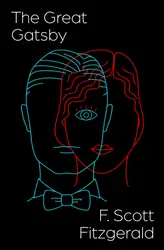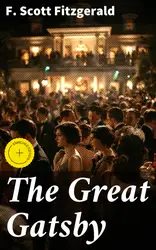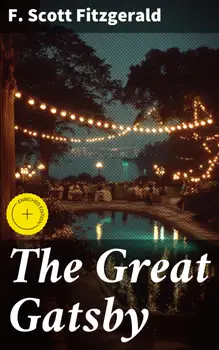
The Great Gatsby : Enriched edition. Exploring the illusion of wealth and love in the Roaring Twenties: A timeless American commentary on class dynamics and individual identity

F. Scott Fitzgerald's "The Great Gatsby" is a masterful exploration of the American Dream during the Roaring Twenties, a period marked by excess and disillusionment. Through the eyes of the enigmatic narrator, Nick Carraway, Fitzgerald employs lush, lyrical prose and vivid imagery to illuminate the opulence and moral decay of 1920s America. The intricate interplay of wealth, love, and social status is encapsulated in the tragic tale of Jay Gatsby, whose obsessive pursuit of the elusive Daisy Buchanan becomes a poignant critique of the era's materialism. This novel's rich symbolism and innovative narrative structure situate it as a pivotal work in American literature, encapsulating both the hopeful dreams and sobering realities of its time. Fitzgerald himself was a keen observer of the American upper class, drawing on his experiences in the East Coast elite circles and his tumultuous marriage to Zelda Sayre. The discontent and yearning for identity mirrored in Gatsby's journey reflect Fitzgerald's own struggles with success, love, and the societal expectations of his time. The author's exposure to wealth and its ephemeral nature deeply informs the narrative, shedding light on the contradictions of his characters' lives. "The Great Gatsby" is essential reading for anyone seeking to understand the complexities of early 20th-century America and the paradoxes of the American Dream. With its timeless themes and expertly crafted prose, this novel resonates with contemporary discussions of identity, aspiration, and the hollowness of wealth. Readers are invited to journey into Gatsby's world'—a testament to hope, tragedy, and the often unattainable nature of dreams.

In this enriched edition, we have carefully created added value for your reading experience:

- A succinct Introduction situates the work's timeless appeal and themes.

- The Synopsis outlines the central plot, highlighting key developments without spoiling critical twists.

- A detailed Historical Context immerses you in the era's events and influences that shaped the writing.

- An Author Biography reveals milestones in the author's life, illuminating the personal insights behind the text.

- A thorough Analysis dissects symbols, motifs, and character arcs to unearth underlying meanings.

- Reflection questions prompt you to engage personally with the work's messages, connecting them to modern life.

- Hand‐picked Memorable Quotes shine a spotlight on moments of literary brilliance.

- Interactive footnotes clarify unusual references, historical allusions, and archaic phrases for an effortless, more informed read.
Über dieses Buch

F. Scott Fitzgerald's "The Great Gatsby" is a masterful exploration of the American Dream during the Roaring Twenties, a period marked by excess and disillusionment. Through the eyes of the enigmatic narrator, Nick Carraway, Fitzgerald employs lush, lyrical prose and vivid imagery to illuminate the opulence and moral decay of 1920s America. The intricate interplay of wealth, love, and social status is encapsulated in the tragic tale of Jay Gatsby, whose obsessive pursuit of the elusive Daisy Buchanan becomes a poignant critique of the era's materialism. This novel's rich symbolism and innovative narrative structure situate it as a pivotal work in American literature, encapsulating both the hopeful dreams and sobering realities of its time. Fitzgerald himself was a keen observer of the American upper class, drawing on his experiences in the East Coast elite circles and his tumultuous marriage to Zelda Sayre. The discontent and yearning for identity mirrored in Gatsby's journey reflect Fitzgerald's own struggles with success, love, and the societal expectations of his time. The author's exposure to wealth and its ephemeral nature deeply informs the narrative, shedding light on the contradictions of his characters' lives. "The Great Gatsby" is essential reading for anyone seeking to understand the complexities of early 20th-century America and the paradoxes of the American Dream. With its timeless themes and expertly crafted prose, this novel resonates with contemporary discussions of identity, aspiration, and the hollowness of wealth. Readers are invited to journey into Gatsby's world'—a testament to hope, tragedy, and the often unattainable nature of dreams.

In this enriched edition, we have carefully created added value for your reading experience:

- A succinct Introduction situates the work's timeless appeal and themes.

- The Synopsis outlines the central plot, highlighting key developments without spoiling critical twists.

- A detailed Historical Context immerses you in the era's events and influences that shaped the writing.

- An Author Biography reveals milestones in the author's life, illuminating the personal insights behind the text.

- A thorough Analysis dissects symbols, motifs, and character arcs to unearth underlying meanings.

- Reflection questions prompt you to engage personally with the work's messages, connecting them to modern life.

- Hand‐picked Memorable Quotes shine a spotlight on moments of literary brilliance.

- Interactive footnotes clarify unusual references, historical allusions, and archaic phrases for an effortless, more informed read.
Starte noch heute mit diesem Buch für 0 €

  • Hole dir während der Testphase vollen Zugriff auf alle Bücher in der App
  • Keine Verpflichtungen, jederzeit kündbar
Jetzt kostenlos testen
Mehr als 52 000 Menschen haben Nextory im App Store und auf Google Play 5 Sterne gegeben.

  1. 100 Meisterwerke der englischen Literatur - Klassiker, die man kennen muss : Hamlet, 1984, Ulysses...

    George Orwell, Charles Dickens, Jane Austen, Katherine Mansfield, H.P. Lovecraft, William Wordsworth, John Keats, Percy Bysshe Shelley, Robert Burns, John Milton, William Shakespeare, Christopher Marlowe, Geoffrey Chaucer, Laurence Sterne, Henry Fielding, Mary Shelley, Emily Brontë, Charlotte Brontë, Anne Brontë, William Makepeace Thackeray, George Eliot, D. H. Lawrence, Herman Melville, Thomas Wolfe, Virginia Woolf, Joseph Conrad, Sinclair Lewis, Walt Whitman, Edgar Allan Poe, Oscar Wilde, Jerome K Jerome, Washington Irving, Bram Stoker, H.G. Wells, Daniel Defoe, Lew Wallace, James Fenimore Cooper, Jonathan Swift, Robert Louis Stevenson, Mark Twain, Lewis Carrol, Edward Bulwer-Lytton, F. Scott Fitzgerald, Arthur Conan Doyle, Jack London, Henry David Thoreau, G.K. Chesterton, Edith Wharton, Henry James, Thomas Hardy, Margaret Mitchell, Kate Chopin, Willa Cather, Charlotte Perkins Gilman, James Joyce, John Galsworthy, Francis Hodgson Burnett, Lucy Maud Montgomery, Louisa May Alcott, Rudyard Kipling

  2. 3.0

    200 Meisterwerke der Literaturgeschichte : Die größten Klassiker der Weltliteratur

    Franz Kafka, Victor Hugo, Fjodor Michailowitsch Dostojewski, Lord Byron, Giacomo Leopardi, Marcel Proust, Henrik Ibsen, Percy Bysshe Shelley, Charles Dickens, Jane Austen, Mary Shelley, Emily Brontë, Charlotte Brontë, Anne Brontë, William Makepeace Thackeray, Bram Stoker, Henry Fielding, George Eliot, William Shakespeare, D. H. Lawrence, Walt Whitman, Herman Melville, Thomas Wolfe, Virginia Woolf, Joseph Conrad, Sinclair Lewis, Lewis Carrol, Edgar Allan Poe, Edward Bulwer-Lytton, Oscar Wilde, H.G. Wells, Daniel Defoe, James Fenimore Cooper, Lew Wallace, Jonathan Swift, Robert Louis Stevenson, Mark Twain, Walter Scott, Nathaniel Hawthorne, Harriet Beecher Stowe, Laurence Sterne, Frances Hodgson Burnett, Arthur Conan Doyle, Wilkie Collins, Edgar Wallace, Jack London, Henry David Thoreau, John Galsworthy, F. Scott Fitzgerald, Rudyard Kipling, G.K. Chesterton, Washington Irvin, O.Henry, Ambrose Bierce, Alexander Sergejewitsch Puschkin, Michail Lermontow, Iwan Sergejewitsch Turgenew, Leo Tolstoi, Nikolai Gogol, Iwan Gontscharow, Nikolai Leskow, Anton Pawlowitsch Tschechow, Maxim Gorki, François Rabelais, Jean De Fontaine, Blaise Pascal, Pierre Corneille, Moliere, Jean Baptiste Racine, Charles Perrault, Voltaire, Denis Diderot, Jean-Jacques Rousseau, Pierre Ambroise Laclos, Antoine-François Prévost, Marquis De Sade, François René Chateaubriand, Stendhal, Honoré de Balzac, Alexandre Dumas, Alphonse de Lamartine, George Sand, Gustave Flaubert, Emile Zola, Guy De Maupassant, Alphonse Daudet, Jules Verne, Joris-Karl Huysmans, Prosper Mérimée, Charles Baudelaire, Stéphane Mallarmé, Arthur Rimbaud, André Gide, Arthur Schopenhauer, Heinrich Heine, Friedrich Schiller, Johann Wolfgang Goethe, Jacob Grimm, Gottfried von Straßburg, Wolfram von Eschenbach, E. T. Hoffmann, Annette von Droste-Hülshoff, Heinrich von Kleist, Friedrich Hölderlin, Theodor Fontane, Gustav Freytag, Gottfried Keller, Theodor Storm, Stefan Zweig, Joseph von Eichendorff, Klaus Mann, Rainer Maria Rilke, Johanna Spyri, Joseph Roth, Karl May, Robert Musil, Heinrich Mann, Sigmund Freud, Friedrich Nietzsche, Dante Alighieri, Giovanni Boccaccio, Giacomo Casanova, Luigi Pirandello, Giosuè Carducci, Gabriele D’Annunzio, Niccolo Machiavelli, Miguel Cervantes Saavedra, Pedro Calderón Barca, Vicente Blasco Ibañez, Knut Hamsun, Homer, Äsop, Herodot, Thukydides, Xenophon, Platon, - Aristoteles, - Sophokles, Euripides, - Aristophanes, Lao Tse, - Konfuzius, Siddhartha Gautama Buddha, Titus Livius, Tacitus, Marcus Tullius Cicero, Vergil, Ovid, Lukian, Petronius, Apuleius, Longos von Lesbos, Mark Aurel, Aurelius Augustinus

  3. 3.2

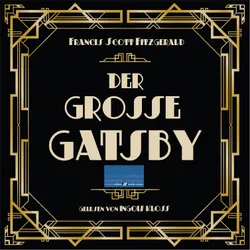
    Der große Gatsby

    F. Scott Fitzgerald

  4. 3.6

    The Great Gatsby

    F. Scott Fitzgerald

  5. 3.2

    Der große Gatsby

    F. Scott Fitzgerald

  6. 100 Amerikanische Klassiker - Meisterwerke, die man kennen muss : Der große Gatsby, Die Abenteuer Tom Sawyers, Kleine Frauen, Zeit der Unschuld, Porträt einer Dame, Der Rabe, Moby-Dick, Wolfsblut...

    Mark Twain, Louisa May Alcott, Jack London, Stephen Crane, L. Frank Baum, Walt Whitman, Herman Melville, Henry David Thoreau, Elbert Hubbard, Ralph Waldo Emerson, Ambrose Bierce, Frances Hodgson Burnett, Lew Wallace, Nathaniel Hawthorne, James Norman Hall, Edgar Allan Poe, O.Henry, H.P. Lovecraft, James Fenimore Cooper, Edward Bellamy, Bret Harte, Max Brand, Zane Grey, Willa Cather, F. Scott Fitzgerald, Kate Chopin, Charlotte Perkins Gilman, Edith Wharton, Margaret Mitchell, Henry James, Theodor Dreiser, Gertrude Stein, Sinclair Lewis, Warwick Deeping, Thomas Wolfe, Harriet Beecher Stowe

  7. Zärtlich ist die Nacht

    F. Scott Fitzgerald

  8. #5

    Zärtlich ist die Nacht (Fünftes Buch)

    F. Scott Fitzgerald

  9. #2

    Zärtlich ist die Nacht (Zweites Buch)

    F. Scott Fitzgerald

  10. #1

    Zärtlich ist die Nacht (Erstes Buch)

    F. Scott Fitzgerald

  11. 100 Klassiker der Romantik - Meisterwerke, die man kennen muss : Epische Liebesdramen und große Erwartungen in zeitlosen Geschichten

    Jane Austen, Louisa May Alcott, D. H. Lawrence, Fjodor Dostojewski, William Shakespeare, Hedwig Courths-Mahler, Frances Burney, Charlotte Brontë, Alexandre Dumas, Margaret Mitchell, Charles Dickens, L.M. Montgomery, Eugenie Marlitt, Wilhelmine Heimburg, Elisabeth Bürstenbinder, Stendhal, Johann Wolfgang Goethe, Walter Scott, Guy De Maupassant, Victor Hugo, George Sand, Leo Tolstoi, Gabriele D’Annunzio, Rudyard Kipling, Gustave Flaubert, Nathaniel Hawthorne, Jean-Jacques Rousseau, Bernardin de Saint-Pierre, F. Scott Fitzgerald, Prosper Mérimée, Edith Wharton, Lena Christ, François-René de Chateaubriand, Stefan Zweig, Alexander Sergejewitsch Puschkin, Ida Boy-Ed, Arthur Schnitzler, Anatole France, Johanna Spyri, George Eliot, Gaston Leroux, Nataly von Eschstruth, Gottfried von Straßburg, Sophie Mereau, Caroline von Wolzogen, Benedikte Naubert, Henry De Stacpoole, Levin Schücking

  12. Die Schönen und Verdammten : Die Liebschaften der New Yorker Elite (Ausgabe in neuer Übersetzung und Rechtschreibung)

    F. Scott Fitzgerald