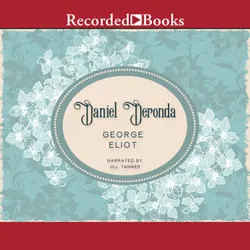
Über dieses Buch

The Mill on the Floss is a novel by George Eliot, first published in three volumes in 1860 by William Blackwood. The first American edition was published by Thomas Y. Crowell Co., New York. The novel spans a period of 10 to 15 years and details the lives of Tom and Maggie Tulliver, siblings growing up at Dorlcote Mill on the River Floss at its junction with the more minor River Ripple near the village of St. Ogg's in Lincolnshire, England. Both the river and the village are fictional. The novel is initially set in the late 1820s or early 1830s – a number of historical references place the events in the book after the Napoleonic Wars but before the Reform Act of 1832. (In chapter 3, the character Mr. Riley is described as an "auctioneer and appraiser thirty years ago," placing the opening events of the novel in approximately 1829, thirty years before the novel's composition in 1859. Additionally, in chapter 8, Mr. Tulliver and Mr. Deane discuss the Duke of Wellington and his "conduct in the Catholic Question," a conversation that could only take place after 1828 when Wellington became Prime Minister and supported a bill for Catholic Emancipation). The novel includes autobiographical elements, and reflects the disgrace that George Eliot (Mary Ann Evans) herself experienced while in a lengthy relationship with a married man, George Henry Lewes. Maggie Tulliver is the central character of the book. The story begins when she is 9 years old, 13 years into her parents' marriage. Her relationship with her older brother Tom, and her romantic relationships with Philip Wakem (a hunchbacked, sensitive, and intellectual friend) and with Stephen Guest (a vivacious young socialite in St. Ogg's and assumed fiancé of Maggie's cousin Lucy Deane) constitute the most significant narrative threads. Tom and Maggie have a close yet complex bond, which continues throughout the novel.

Starte noch heute mit diesem Buch für 0 €

  • Hole dir während der Testphase vollen Zugriff auf alle Bücher in der App
  • Keine Verpflichtungen, jederzeit kündbar
Jetzt kostenlos testen
Mehr als 52 000 Menschen haben Nextory im App Store und auf Google Play 5 Sterne gegeben.

  1. 3.0

    200 Meisterwerke der Literaturgeschichte (Kommentiert) : Erweiterte Ausgabe. Die größten Klassiker der Weltliteratur

    Franz Kafka, Victor Hugo, Fjodor Michailowitsch Dostojewski, Lord Byron, Giacomo Leopardi, Marcel Proust, Henrik Ibsen, Percy Bysshe Shelley, Charles Dickens, Jane Austen, Mary Shelley, Emily Brontë, Charlotte Brontë, Anne Brontë, William Makepeace Thackeray, Bram Stoker, Henry Fielding, George Eliot, William Shakespeare, D. H. Lawrence, Walt Whitman, Herman Melville, Thomas Wolfe, Virginia Woolf, Joseph Conrad, Sinclair Lewis, Lewis Carrol, Edgar Allan Poe, Edward Bulwer-Lytton, Oscar Wilde, H.G. Wells, Daniel Defoe, James Fenimore Cooper, Lew Wallace, Jonathan Swift, Mark Twain, Walter Scott, Nathaniel Hawthorne, Harriet Beecher Stowe, Laurence Sterne, Frances Hodgson Burnett, Arthur Conan Doyle, Wilkie Collins, Edgar Wallace, Robert Louis Stevenson, Jack London, Henry David Thoreau, John Galsworthy, F. Scott Fitzgerald, Rudyard Kipling, G.K. Chesterton, Washington Irvin, O.Henry, Ambrose Bierce, Alexander Sergejewitsch Puschkin, Michail Lermontow, Iwan Sergejewitsch Turgenew, Leo Tolstoi, Nikolai Gogol, Iwan Gontscharow, Nikolai Leskow, Anton Pawlowitsch Tschechow, Maxim Gorki, François Rabelais, Jean De Fontaine, Blaise Pascal, Pierre Corneille, Moliere, Jean Baptiste Racine, Charles Perrault, Voltaire, Denis Diderot, Jean-Jacques Rousseau, Pierre Ambroise Laclos, Antoine-François Prévost, Marquis De Sade, François René Chateaubriand, Stendhal, Honoré de Balzac, Alexandre Dumas, Alphonse de Lamartine, George Sand, Gustave Flaubert, Emile Zola, Guy De Maupassant, Alphonse Daudet, Jules Verne, Joris-Karl Huysmans, Prosper Mérimée, Charles Baudelaire, Stéphane Mallarmé, Arthur Rimbaud, André Gide, Arthur Schopenhauer, Heinrich Heine, Friedrich Schiller, Johann Wolfgang Goethe, Jacob Grimm, Gottfried von Straßburg, Wolfram von Eschenbach, E. T. Hoffmann, Annette von Droste-Hülshoff, Heinrich von Kleist, Friedrich Hölderlin, Theodor Fontane, Gustav Freytag, Gottfried Keller, Theodor Storm, Stefan Zweig, Joseph von Eichendorff, Klaus Mann, Rainer Maria Rilke, Johanna Spyri, Joseph Roth, Karl May, Robert Musil, Heinrich Mann, Sigmund Freud, Friedrich Nietzsche, Dante Alighieri, Giovanni Boccaccio, Giacomo Casanova, Luigi Pirandello, Giosuè Carducci, Gabriele D’Annunzio, Niccolo Machiavelli, Miguel Cervantes Saavedra, Pedro Calderón Barca, Vicente Blasco Ibañez, Knut Hamsun, Homer, Äsop, Herodot, Thukydides, Xenophon, Platon, - Aristoteles, - Sophokles, Euripides, - Aristophanes, Lao Tse, - Konfuzius, Siddhartha Gautama Buddha, Titus Livius, Tacitus, Marcus Tullius Cicero, Vergil, Ovid, Lukian, Petronius, Apuleius, Longos von Lesbos, Mark Aurel, Aurelius Augustinus

  2. 100 Klassiker der Romantik - Meisterwerke, die man kennen muss : Epische Liebesdramen und große Erwartungen in zeitlosen Geschichten

    Jane Austen, Louisa May Alcott, D. H. Lawrence, Fjodor Dostojewski, William Shakespeare, Hedwig Courths-Mahler, Frances Burney, Charlotte Brontë, Alexandre Dumas, Margaret Mitchell, Charles Dickens, L.M. Montgomery, Eugenie Marlitt, Wilhelmine Heimburg, Elisabeth Bürstenbinder, Stendhal, Johann Wolfgang Goethe, Walter Scott, Guy De Maupassant, Victor Hugo, George Sand, Leo Tolstoi, Gabriele D’Annunzio, Rudyard Kipling, Gustave Flaubert, Nathaniel Hawthorne, Jean-Jacques Rousseau, Bernardin de Saint-Pierre, F. Scott Fitzgerald, Prosper Mérimée, Edith Wharton, Lena Christ, François-René de Chateaubriand, Stefan Zweig, Alexander Sergejewitsch Puschkin, Ida Boy-Ed, Arthur Schnitzler, Anatole France, Johanna Spyri, George Eliot, Gaston Leroux, Nataly von Eschstruth, Gottfried von Straßburg, Sophie Mereau, Caroline von Wolzogen, Benedikte Naubert, Henry De Stacpoole, Levin Schücking

  3. 100 Meisterwerke der englischen Literatur - Klassiker, die man kennen muss (Kommentiert) : Erweiterte Ausgabe. Hamlet, 1984, Ulysses...

    George Orwell, Charles Dickens, Jane Austen, Katherine Mansfield, H.P. Lovecraft, William Wordsworth, John Keats, Percy Bysshe Shelley, Robert Burns, John Milton, William Shakespeare, Christopher Marlowe, Geoffrey Chaucer, Laurence Sterne, Henry Fielding, Mary Shelley, Emily Brontë, Charlotte Brontë, Anne Brontë, William Makepeace Thackeray, George Eliot, D. H. Lawrence, Herman Melville, Thomas Wolfe, Virginia Woolf, Joseph Conrad, Sinclair Lewis, Walt Whitman, Edgar Allan Poe, Oscar Wilde, Jerome K Jerome, Washington Irving, Bram Stoker, H.G. Wells, Daniel Defoe, Lew Wallace, James Fenimore Cooper, Jonathan Swift, Robert Louis Stevenson, Mark Twain, Lewis Carrol, Edward Bulwer-Lytton, F. Scott Fitzgerald, Arthur Conan Doyle, Jack London, Henry David Thoreau, G.K. Chesterton, Edith Wharton, Henry James, Thomas Hardy, Margaret Mitchell, Kate Chopin, Willa Cather, Charlotte Perkins Gilman, James Joyce, John Galsworthy, Francis Hodgson Burnett, Lucy Maud Montgomery, Louisa May Alcott, Rudyard Kipling

  4. Bestbewertet
    4.8

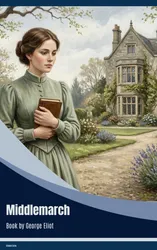
    Middlemarch

    George Eliot

  5. Bestbewertet
    4.8

    Middlemarch

    George Eliot

  6. Die größten Heldinnen der Literatur (50 Romane in einem Band) : Jane Eyre, Tess von den d'Urbervilles, Anne auf Green Gables, Johanna D'Arc, Klein-Dorrit, Lelia, Maria Stuart, Effi Briest, Kleine Frauen

    Charlotte Brontë, Jane Austen, Louisa May Alcott, Leo Tolstoi, Virginia Woolf, Thomas Hardy, Sinclair Lewis, Hedwig Dohm, Charlotte Perkins Gilman, Elizabeth Burgoyne Corbett, Daniel Defoe, Anne Brontë, L.M. Montgomery, Victor Hugo, Wilhelmine von Hillern, Adalbert Stifter, Luise Ahlborn, George Eliot, Lou Andreas-Salomé, Stefan Zweig, D. H. Lawrence, Henry James, Margaret Mitchell, Edith Wharton, Miles Franklin, Willa Cather, Elizabeth Gaskell, Nikolai Semjonowitsch Leskow, Theodore Dreiser, Elizabeth von Arnim, Colette, Honoré de Balzac, William Makepeace Thackeray, Gustave Flaubert, Emile Zola, Theodor Fontane, Ada Langworthy Collier, Joseph Sheridan Fanu, Johanna Schopenhauer, Nathaniel Hawthorne, Charles Dickens

  7. 4.2

    100 Quotes That Will Change Your life

    Napoleon Hill, Steve Jobs, Lao Tzu, Sam Levenson, Winston Churchill, George Eliot, Franklin D. Roosevelt, Theodore Roosevelt, Henry Ford, Buddha, Norman Vincent Peale, John D. Rockefeller, Oscar Wilde, Elon Musk, Mahatma Gandhi, Stephen King, Vincent van Gogh, Andrew Carnegie, Paulo Coelho, Muhammad Ali

  8. Die größten Liebesgeschichten der britischen Literatur (Kommentiert) : Erweiterte Ausgabe. Romeo und Julia, Stolz und Vorurteil, Emma, Cecilia, Überredung, Jane Eyre, Große Erwartungen, Die Braut von Lammermoor

    Jane Austen, Charlotte Brontë, William Shakespeare, Walter Scott, Frances Burney, Emily Brontë, Anne Brontë, Charles Dickens, Rudyard Kipling, George Eliot, Nathaniel Hawthorne, D. H. Lawrence, Daniel Defoe, Lew Wallace, F. Scott Fitzgerald

  9. Zwischen Fiktion und Geschichte : Alexander in Babylon, Johanna D'Arc, Borgia, Leonardo da Vinci, Katharina II., Rasputin, Verdi

    Alexandre Dumas, Stefan Zweig, George Eliot, Alfred Schirokauer, Heinrich Vollrat Schumacher, Julius Wolff, Klabund, Jakob Wassermann, Dmitri Mereschkowski, Leopold von Sacher-Masoch, Arthur Schurig, Ida Gräfin Hahn-Hahn, Franz Werfel, Dora Duncker, Walter Scott, August Sperl, Richard von Kralik, John Erskine

  10. Geschichtsträger : Historische Romane: Borgia, Alexander in Babylon, Johanna D'Arc, Lord Byron, Leonardo da Vinci

    Alexandre Dumas, Stefan Zweig, George Eliot, Alfred Schirokauer, Heinrich Vollrat Schumacher, Julius Wolff, Klabund, Jakob Wassermann, Dmitri Mereschkowski, Leopold von Sacher-Masoch, Arthur Schurig, Ida Gräfin Hahn-Hahn, Franz Werfel, Dora Duncker, Walter Scott, August Sperl, Richard von Kralik, John Erskine

  11. Daniel Deronda

    George Eliot

  12. Daniel Deronda

    George Eliot