The Night Land

The Night Land is a classic horror novel by William Hope Hodgson, first published in 1912. As a work of fantasy it belongs to the Dying Earth subgenre.

The importance of The Night Land was recognised by its later revival in paperback by Ballantine Books, which republished the work in two parts as the 49th and 50th volumes of its celebrated Ballantine Adult Fantasy series in July 1972.

H. P. Lovecraft's essay "Supernatural Horror in Literature" describes the novel as "one of the most potent pieces of macabre imagination ever written". Clark Ashton Smith wrote of it that "In all literature, there are few works so sheerly remarkable, so purely creative, as The Night Land. Whatever faults this book may possess, however inordinate its length may seem, it impresses the reader as being the ultimate saga of a perishing cosmos, the last epic of a world beleaguered by eternal night and by the unvisageable spawn of darkness. Only a great poet could have conceived and written this story; and it is perhaps not illegitimate to wonder how much of actual prophecy may have been mingled with the poesy."

When the book was written, the nature of the energy source that powers stars was not known: Lord Kelvin had published calculations based on the hypothesis that the energy came from the gravitational collapse of the gas cloud that had formed the sun and found that this mechanism gave the Sun a lifetime of only a few tens of million of years. Starting from this premise, Hodgson wrote a novel describing a time, millions of years in the future, when the Sun has gone dark.

Unabridged version - 584 pages.

William Hope Hodgson (1877-1918) was an English author. He produced a large body of work, spanning several overlapping genres including horror, fantastic fiction and science fiction. Hodgson used his experiences at sea to lend authentic detail to his short horror stories, many of which are set on the ocean, including his series of linked tales forming the "Sargasso Sea Mythos". He died in World War I at the age of 40.

Hodgson is most widely known for two works. The House on the Borderland is a novel of which H. P. Lovecraft wrote "but for a few touches of commonplace sentimentality [it] would be a classic of the first water". The Night Land is a much longer novel, written in an archaic style and expressing a sombre vision of a sunless far-future world. These works both contain elements of science fiction, although they also partake of horror and the occult. According to critical consensus, in these works, Hodgson achieves a deep power of expression, which focuses on a sense not only of terror but of the ubiquity of potential terror, of the thinness of the invisible boundary between the world of normality and an underlying, unaccountable reality for which humans are not suited.

Über dieses Buch

The Night Land is a classic horror novel by William Hope Hodgson, first published in 1912. As a work of fantasy it belongs to the Dying Earth subgenre.

The importance of The Night Land was recognised by its later revival in paperback by Ballantine Books, which republished the work in two parts as the 49th and 50th volumes of its celebrated Ballantine Adult Fantasy series in July 1972.

H. P. Lovecraft's essay "Supernatural Horror in Literature" describes the novel as "one of the most potent pieces of macabre imagination ever written". Clark Ashton Smith wrote of it that "In all literature, there are few works so sheerly remarkable, so purely creative, as The Night Land. Whatever faults this book may possess, however inordinate its length may seem, it impresses the reader as being the ultimate saga of a perishing cosmos, the last epic of a world beleaguered by eternal night and by the unvisageable spawn of darkness. Only a great poet could have conceived and written this story; and it is perhaps not illegitimate to wonder how much of actual prophecy may have been mingled with the poesy."

When the book was written, the nature of the energy source that powers stars was not known: Lord Kelvin had published calculations based on the hypothesis that the energy came from the gravitational collapse of the gas cloud that had formed the sun and found that this mechanism gave the Sun a lifetime of only a few tens of million of years. Starting from this premise, Hodgson wrote a novel describing a time, millions of years in the future, when the Sun has gone dark.

Unabridged version - 584 pages.

William Hope Hodgson (1877-1918) was an English author. He produced a large body of work, spanning several overlapping genres including horror, fantastic fiction and science fiction. Hodgson used his experiences at sea to lend authentic detail to his short horror stories, many of which are set on the ocean, including his series of linked tales forming the "Sargasso Sea Mythos". He died in World War I at the age of 40.

Hodgson is most widely known for two works. The House on the Borderland is a novel of which H. P. Lovecraft wrote "but for a few touches of commonplace sentimentality [it] would be a classic of the first water". The Night Land is a much longer novel, written in an archaic style and expressing a sombre vision of a sunless far-future world. These works both contain elements of science fiction, although they also partake of horror and the occult. According to critical consensus, in these works, Hodgson achieves a deep power of expression, which focuses on a sense not only of terror but of the ubiquity of potential terror, of the thinness of the invisible boundary between the world of normality and an underlying, unaccountable reality for which humans are not suited.
Starte noch heute mit diesem Buch für 0 €

  • Hole dir während der Testphase vollen Zugriff auf alle Bücher in der App
  • Keine Verpflichtungen, jederzeit kündbar
Jetzt kostenlos testen
Mehr als 52 000 Menschen haben Nextory im App Store und auf Google Play 5 Sterne gegeben.

  1. Carnacki, der Geisterdetektiv : Unheimliche Geschichten

    William Hope Hodgson

  2. Gruselkabinett, Box 39: Folgen 153, 154, 155, 156

    Theodor Storm, William Hope Hodgson, E. Heron, H. Heron

  3. The Reign of Darkness (Dystopian Collection)

    H.G. Wells, Jack London, Edward Bulwer-Lytton, Jonathan Swift, Edgar Allan Poe, Owen Gregory, Hugh Benson, Edward Bellamy, Mary Shelley, William Hope Hodgson, Stanley G. Weinbaum, Fred M. White, Ignatius Donnelly, Ernest Bramah, Arthur Dudley Vinton, Richard Jefferies, Samuel Butler, Edwin A. Abbott, Anthony Trollope, Cleveland Moffett

  4. 30 Occult and Supernatural masterpieces in one book

    Washington Irving, Mary Shelley, Charles Dickens, Joseph Sheridan Le Fanu, Elizabeth Cleghorn Gaskell, Louisa May Alcott, Oscar Wilde, Rudyard Kipling, Edith Nesbit, John Meade Falkner, Henry James, H.G. Wells, Montague Rhodes James, Arnold Bennett, Henry Rider Haggard, William Hope Hodgson, Virginia Woolf, Master Hendrick Hudson Certain, Pastor Tappau's, Lefebvre, De Lacy

  5. The Ghost Pirates

    William Hope Hodgson

  6. Carnacki, The Ghost Finder

    William Hope Hodgson

  7. 11 Tales of the Unknown Before Lovecraft : Early Science Fiction, Weird Tales & Speculative Fiction

    Algernon Blackwood, William Hope Hodgson, E. M. Forster, Ambrose Bierce, Jack London, H.G. Wells, Arthur Machen, Nathaniel Hawthorne

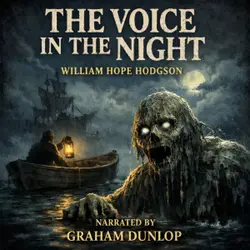
  8. The Voice in the Night :

    William Hope Hodgson

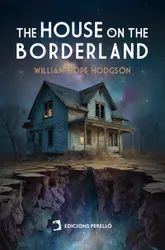
  9. The House on the Borderland

    William Hope Hodgson

  10. #17

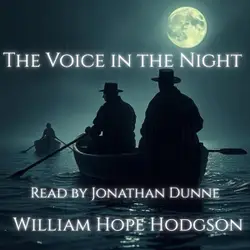
    The Voice in the Night

    William Hope Hodgson

  11. 1.0

    World's Greatest Horror Stories

    E. M. Delafield, Mark Twain, Edgar Allan Poe, M. R. James, F. Harvey, H.P. Lovecraft, Nathaniel Hawthorne, Franz Kafka, Charles Dickens, William Hope Hodgson, Algernon Blackwood, Charlotte Perkins Gilman, J. Sheridan Le Fanu, Arthur Conan Doyle, Margaret Oliphant, Walter de la Mare, Achmed Abdullah, Eleanor Scott, Harriet Prescott Spofford, E F Benson, Fitz-James O’Brien, E T A Hoffmann

  12. The House on the Borderland

    William Hope Hodgson