2.0(2)

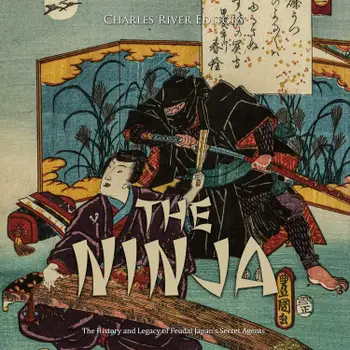
The Ninja: The History and Legacy of Feudal Japan’s Secret Agents

To most people in the West, particularly the youth, the mere mention of Japan immediately evokes various images. A delectable rainbow of sushi, hand-rolled temaki, and platters of crispy, golden-brown tempura. An idyllic, crystal-clear lake flanked by trees covered with delicate, cotton-candy-pink sakura blossoms. A montage of unique, hand-drawn cartoons that are a masterful mix of delightfully exaggerated proportions, features, and colors, and elements of arresting realism, collectively known as “anime.”

Then, of course, there's the ninja, a willowy, graceful figure decked out in black from head to toe, his glinting eyes peering out from the window of his balaclava. He flits from rooftop to rooftop in stunning somersaults and slinks into the shadows, watching his unsuspecting marks from afar and calculating their every move. Then, as quickly as he came, he strikes, hurling throwing stars, twirling his nunchucks, and hacking away with his trusty sword, exterminating his targets with dizzying, lightning-quick speed and superhuman precision. At least, this is how those unfamiliar with the ancient art of ninjutsu, or shinobi-jutsu, see them.

Ninjas are, without a doubt, one of the most timeless and far-reaching cultural staples ever to emerge from Japan. They have become a global phenomenon, and there are countless depictions of ninjas in comic books, films, TV shows, video games, toys, and other forms of popular culture around the world, not to mention their continued relevance as a “conventional” go-to Halloween costume. Kids across the world are intimately familiar with Teenage Mutant Ninja Turtles, Snake Eyes from the G.I. Joe franchise, Scorpion from Mortal Kombat, and Black Noir from The Boys. Ninjas have also been featured in a slew of other international movies and TV shows.
Über dieses Buch

To most people in the West, particularly the youth, the mere mention of Japan immediately evokes various images. A delectable rainbow of sushi, hand-rolled temaki, and platters of crispy, golden-brown tempura. An idyllic, crystal-clear lake flanked by trees covered with delicate, cotton-candy-pink sakura blossoms. A montage of unique, hand-drawn cartoons that are a masterful mix of delightfully exaggerated proportions, features, and colors, and elements of arresting realism, collectively known as “anime.”

Then, of course, there's the ninja, a willowy, graceful figure decked out in black from head to toe, his glinting eyes peering out from the window of his balaclava. He flits from rooftop to rooftop in stunning somersaults and slinks into the shadows, watching his unsuspecting marks from afar and calculating their every move. Then, as quickly as he came, he strikes, hurling throwing stars, twirling his nunchucks, and hacking away with his trusty sword, exterminating his targets with dizzying, lightning-quick speed and superhuman precision. At least, this is how those unfamiliar with the ancient art of ninjutsu, or shinobi-jutsu, see them.

Ninjas are, without a doubt, one of the most timeless and far-reaching cultural staples ever to emerge from Japan. They have become a global phenomenon, and there are countless depictions of ninjas in comic books, films, TV shows, video games, toys, and other forms of popular culture around the world, not to mention their continued relevance as a “conventional” go-to Halloween costume. Kids across the world are intimately familiar with Teenage Mutant Ninja Turtles, Snake Eyes from the G.I. Joe franchise, Scorpion from Mortal Kombat, and Black Noir from The Boys. Ninjas have also been featured in a slew of other international movies and TV shows.
Starte noch heute mit diesem Buch für 0 €

  • Hole dir während der Testphase vollen Zugriff auf alle Bücher in der App
  • Keine Verpflichtungen, jederzeit kündbar
Jetzt kostenlos testen
Mehr als 52 000 Menschen haben Nextory im App Store und auf Google Play 5 Sterne gegeben.

  1. Ada Lovelace: The Life and Legacy of the Math Prodigy Who Pioneered Computer Science

    Charles River Editors

  2. 2.0

    Die Panzer: Die Geschichte und das Vermächtnis von Nazideutschlands berühmtesten Panzern des Zweiten Weltkriegs

    Charles River Editors

  3. The Colonization of South Africa: The History and Legacy of the European Subjugation of South Africa

    Charles River Editors

  4. 3.8

    Hans-Ulrich Rudel: The Life and Legacy of the Luftwaffe’s Deadliest Stuka Pilot

    Charles River Editors

  5. The Colonies of British South Africa: The History and Legacy of British Imperialism in Modern South Africa and Zimbabwe

    Charles River Editors

  6. 4.5

    The Great Schism: The History and Legacy of the Split Between the Catholic and Eastern Orthodox Churches in 1054

    Charles River Editors

  7. The Texas Revolution and Mexican-American War: The History and Legacy of the Conflicts that Led to Mexico’s Cession of the American Southwest

    Charles River Editors

  8. Das mittelalterliche Russland: Die Geschichte und das Erbe der Gruppen, die den russischen Staat im Mittelalter entwickelten

    Charles River Editors

  9. Imperial Germany’s Colonization in Africa: The History of the German Efforts and Conflicts to Colonize Parts of Africa

    Charles River Editors

  10. Eleanor of Aquitaine and Richard the Lionheart: The History of the Mother and Son Who Shaped Medieval Europe

    Charles River Editors

  11. The Biggest Tank Battles of the World Wars: Tank Warfare in History’s Deadliest Conflicts

    Charles River Editors

  12. The Age of Sail’s Most Famous Battles: The History of the Naval Engagements that Shaped Europe in the Early Modern Period

    Charles River Editors