5.0(1)

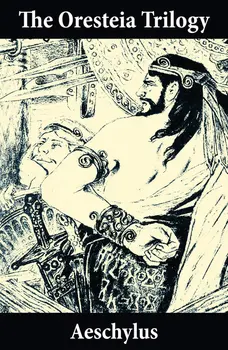
The Oresteia Trilogy (Unabridged English Translation) (Annotated) : Enriched Edition. Blood Feud, Divine Justice, and the Origins of Civic Law in Ancient Greek Tragedy

Aeschylus' The Oresteia Trilogy—comprising Agamemnon, The Libation Bearers, and The Eumenides—traces the bloody inheritance of the House of Atreus from the murder of Agamemnon to the trial of Orestes in Athens. In solemn, image-rich verse, the trilogy transforms private vengeance into public justice, setting archaic blood-feud against civic law. As the only complete surviving trilogy from Greek tragedy, it stands at the center of classical drama and political thought. Aeschylus, often called the father of tragedy, fought at Marathon and lived through the rise of democratic Athens, experiences that profoundly shaped his imagination. His drama is marked by moral grandeur, religious seriousness, and a fascination with divine order emerging through human suffering. The Oresteia, first performed in 458 BCE, reflects a society negotiating between ancestral custom, heroic violence, and the institutions of the polis. This unabridged English translation is recommended for readers seeking not merely a foundational work of Western literature, but a searching meditation on guilt, justice, gender, power, and civilization itself. It rewards careful reading, theatrical attention, and philosophical reflection.

This enriched edition has been carefully crafted to add value to your reading experience.

- A comprehensive Introduction outlines these selected works' unifying features, themes, or stylistic evolutions.

- The Author Biography highlights personal milestones and literary influences that shape the entire body of writing.

- A Historical Context section situates the works in their broader era—social currents, cultural trends, and key events that underpin their creation.

- A concise Synopsis (Selection) offers an accessible overview of the included texts, helping readers navigate plotlines and main ideas without revealing critical twists.

- A unified Analysis examines recurring motifs and stylistic hallmarks across the collection, tying the stories together while spotlighting the different work's strengths.

- Reflection questions inspire deeper contemplation of the author's overarching message, inviting readers to draw connections among different texts and relate them to modern contexts.

- Lastly, our hand‐picked Memorable Quotes distill pivotal lines and turning points, serving as touchstones for the collection's central themes.

Über dieses Buch

Aeschylus' The Oresteia Trilogy—comprising Agamemnon, The Libation Bearers, and The Eumenides—traces the bloody inheritance of the House of Atreus from the murder of Agamemnon to the trial of Orestes in Athens. In solemn, image-rich verse, the trilogy transforms private vengeance into public justice, setting archaic blood-feud against civic law. As the only complete surviving trilogy from Greek tragedy, it stands at the center of classical drama and political thought. Aeschylus, often called the father of tragedy, fought at Marathon and lived through the rise of democratic Athens, experiences that profoundly shaped his imagination. His drama is marked by moral grandeur, religious seriousness, and a fascination with divine order emerging through human suffering. The Oresteia, first performed in 458 BCE, reflects a society negotiating between ancestral custom, heroic violence, and the institutions of the polis. This unabridged English translation is recommended for readers seeking not merely a foundational work of Western literature, but a searching meditation on guilt, justice, gender, power, and civilization itself. It rewards careful reading, theatrical attention, and philosophical reflection.

This enriched edition has been carefully crafted to add value to your reading experience.

- A comprehensive Introduction outlines these selected works' unifying features, themes, or stylistic evolutions.

- The Author Biography highlights personal milestones and literary influences that shape the entire body of writing.

- A Historical Context section situates the works in their broader era—social currents, cultural trends, and key events that underpin their creation.

- A concise Synopsis (Selection) offers an accessible overview of the included texts, helping readers navigate plotlines and main ideas without revealing critical twists.

- A unified Analysis examines recurring motifs and stylistic hallmarks across the collection, tying the stories together while spotlighting the different work's strengths.

- Reflection questions inspire deeper contemplation of the author's overarching message, inviting readers to draw connections among different texts and relate them to modern contexts.

- Lastly, our hand‐picked Memorable Quotes distill pivotal lines and turning points, serving as touchstones for the collection's central themes.

Starte noch heute mit diesem Buch für 0 €

  • Hole dir während der Testphase vollen Zugriff auf alle Bücher in der App
  • Keine Verpflichtungen, jederzeit kündbar
Jetzt kostenlos testen
Mehr als 52 000 Menschen haben Nextory im App Store und auf Google Play 5 Sterne gegeben.

  1. The Best of the Playwrights: Tragedies and Comedies by the Masters

    Euripides, Sophocles, Aeschylus, William Shakespeare, Henrik Ibsen, Anton Chekhov, Bernard Shaw

  2. The Best of the Playwrights: Tragedies and Comedies by the Masters. Illustrated

    Euripides, Sophocles, Aeschylus, William Shakespeare, Henrik Ibsen, Anton Chekhov, Bernard Shaw

  3. Ancient Greek Tragedies. Classic collection : Euripides. Medea; Sophocles. Antigone; Aeschylus. The Oresteia

    Euripides, Sophocles, Aeschylus

  4. Masterpieces of Tragedies and Comedies

    Euripides, Sophocles, Aeschylus, William Shakespeare, Henrik Ibsen, Anton Chekhov, Bernard Shaw

  5. 25+ The Big Book of Ancient Classics : The Odyssey by Homer, Meditations by Marcus Aurelius, The Republic by Plato, Poetics by Aristotle and others

    Aristotle, Aeschylus, Marcus Aurelius, Euripides, Hesiod, Homer, Plato, Sappho -, Sophocles

  6. Greek Tragedies II : Tbe Libation Bearers • Electra • Iphigenia in Tauris, Electra, The Trojan Women

    Aeschylus, Sophocles, Euripides

  7. 2.0

    Agamemnon

    Aeschylus

  8. 4.0

    The Choephori

    Aeschylus

  9. 4.0

    Eumenides

    Aeschylus

  10. 10 Masterpieces of Ancient Greek Literature : The Odyssey, The Works and Days, Theogony, The Complete Poems of Sappho, Medea, Antigone, Oresteia, The Odes of Anacreon

    Homer, Hesiod, Sappho -, Euripides, Sophocles, Aeschylus, Anacreon

  11. Yale Required Reading - Collected Works (Vol. 1) : Enriched edition. Exploring the Depths of Ancient Greek Thought

    Aristotle, Plato, Euripides, Gilbert Murray, Epictetus, Pindar, Theocritus, Homer, Plutarch, Aeschylus, Sophocles, - Aristophanes, Herodotus, Anacreon, Sappho -, Thucydides, Hesiod, Demosthenes, Lysias, Alcaeus, Archilochus, Theognis of Megara, Simonides of Ceos, Bacchylides, Apollonius, Callimachus

  12. Yale Classics (Vol. 1) : Enriched edition. Exploring the Essence of Ancient Wisdom and Literary Brilliance in Western Thought

    Aristotle, Plato, Euripides, Gilbert Murray, Epictetus, Pindar, Theocritus, Homer, Plutarch, Aeschylus, Sophocles, - Aristophanes, Herodotus, Anacreon, Sappho -, Thucydides, Hesiod, Demosthenes, Lysias, Alcaeus, Archilochus, Theognis of Megara, Simonides of Ceos, Bacchylides, Apollonius, Callimachus