The Spoils of Poynton

The Spoils of Poynton is a novel by Henry James, first published under the title The Old Things as a serial in The Atlantic Monthly in 1896 and then as a book in 1897.

This novel describes the struggle between Mrs. Gereth, a widow of impeccable taste and iron will, and her son Owen over a houseful of precious antique furniture. The story is largely told from the viewpoint of Fleda Vetch, a young woman in love with Owen but sympathetic to Mrs. Gereth's anguish over losing the antiques she patiently collected.

Adela Gereth, a lover of beauty and passionate collector of fine objects, strikes up a friendship with the young Fleda Vetch, when both of them find themselves guests in the tasteless house of Brigstock family. Mrs. Gereth fears that her son Owen, an honorable but somewhat unimaginative young man, may take up with one of the Brigstock girls, and indeed he presently announces his engagement to Mona, the eldest daughter.

That means that Mrs. Gereth will have to leave Poynton, the beautiful house that she and her husband filled with the furniture, china, tapestries, and other objects that they lovingly collected over the years. It is not so much possessiveness that drives Mrs. Gereth to want to maintain control over them, but rather the sense that she will have failed if Mona, understanding and appreciating nothing of what Poynton contains, should become Owen's wife and take charge.

The story and its developing conflicts are seen largely from the point of view of Fleda Vetch, the young woman who, her moral and aesthetic sensibilities tuned perhaps as finely as any of James's protagonists, finds herself caught in the middle.

Total Running Time (TRT): 7h, 14 min

Henry James, OM (Order of Merit) (1843-1916) was an American-born writer, regarded as one of the key figures of 19th-century literary realism.

He is best known for a number of novels showing Americans encountering Europe and Europeans. His method of writing from a character's point of view allowed him to explore issues related to consciousness and perception, and his style in later works has been compared to impressionist painting. His imaginative use of point of view, interior monologue and unreliable narrators brought a new depth to narrative fiction.

Henry James was nominated for the Nobel Prize in Literature in 1911, 1912, and 1916.
Über dieses Buch

The Spoils of Poynton is a novel by Henry James, first published under the title The Old Things as a serial in The Atlantic Monthly in 1896 and then as a book in 1897.

This novel describes the struggle between Mrs. Gereth, a widow of impeccable taste and iron will, and her son Owen over a houseful of precious antique furniture. The story is largely told from the viewpoint of Fleda Vetch, a young woman in love with Owen but sympathetic to Mrs. Gereth's anguish over losing the antiques she patiently collected.

Adela Gereth, a lover of beauty and passionate collector of fine objects, strikes up a friendship with the young Fleda Vetch, when both of them find themselves guests in the tasteless house of Brigstock family. Mrs. Gereth fears that her son Owen, an honorable but somewhat unimaginative young man, may take up with one of the Brigstock girls, and indeed he presently announces his engagement to Mona, the eldest daughter.

That means that Mrs. Gereth will have to leave Poynton, the beautiful house that she and her husband filled with the furniture, china, tapestries, and other objects that they lovingly collected over the years. It is not so much possessiveness that drives Mrs. Gereth to want to maintain control over them, but rather the sense that she will have failed if Mona, understanding and appreciating nothing of what Poynton contains, should become Owen's wife and take charge.

The story and its developing conflicts are seen largely from the point of view of Fleda Vetch, the young woman who, her moral and aesthetic sensibilities tuned perhaps as finely as any of James's protagonists, finds herself caught in the middle.

Total Running Time (TRT): 7h, 14 min

Henry James, OM (Order of Merit) (1843-1916) was an American-born writer, regarded as one of the key figures of 19th-century literary realism.

He is best known for a number of novels showing Americans encountering Europe and Europeans. His method of writing from a character's point of view allowed him to explore issues related to consciousness and perception, and his style in later works has been compared to impressionist painting. His imaginative use of point of view, interior monologue and unreliable narrators brought a new depth to narrative fiction.

Henry James was nominated for the Nobel Prize in Literature in 1911, 1912, and 1916.
Starte noch heute mit diesem Buch für 0 €

  • Hole dir während der Testphase vollen Zugriff auf alle Bücher in der App
  • Keine Verpflichtungen, jederzeit kündbar
Jetzt kostenlos testen
Mehr als 52 000 Menschen haben Nextory im App Store und auf Google Play 5 Sterne gegeben.

  1. 100 Meisterwerke des Horrors - Klassiker, die man kennen muss : Der Sandmann, Lebendig begraben, Der Vampyr, Frankenstein, Carmilla, Dracula, Die Katzen von Ulthar, Der Käfer, Die Drehung der Schraube

    H.P. Lovecraft, Richard Marsh, E T A Hoffmann, Bram Stoker, Edgar Allan Poe, Mary Shelley, Fjodor M Dostojewski, Hugh Walpole, Franz Kafka, Horace Walpole, Henry James, R. Ryan, James Malcolm Rymer, Prosper Mérimée, Wladyslaw Stanislaw Reymont, Algernon Blackwood, Ann Radcliffe, Marjorie Bowen, Robert W. Chambers, Gaston Leroux, Honoré de Balzac, Robert Louis Stevenson, Charlotte Perkins Gilman, H.G. Wells, Stanislaw Przybyszewski, Arthur Conan Doyle, Oscar Wilde, Octave Mirbeau, Emily Brontë, August Strindberg, Edith Wharton, H. Rider Haggard, Jodocus Temme

  2. 100 Meisterwerke der englischen Literatur - Klassiker, die man kennen muss

    George Orwell, Charles Dickens, Jane Austen, Katherine Mansfield, H.P. Lovecraft, William Wordsworth, John Keats, Percy Bysshe Shelley, Robert Burns, John Milton, William Shakespeare, Christopher Marlowe, Geoffrey Chaucer, Laurence Sterne, Henry Fielding, Mary Shelley, Emily Brontë, Charlotte Brontë, Anne Brontë, William Makepeace Thackeray, George Eliot, D. H. Lawrence, Herman Melville, Thomas Wolfe, Virginia Woolf, Joseph Conrad, Sinclair Lewis, Walt Whitman, Edgar Allan Poe, Oscar Wilde, Jerome K Jerome, Washington Irving, Bram Stoker, H.G. Wells, Daniel Defoe, Lew Wallace, James Fenimore Cooper, Jonathan Swift, Robert Louis Stevenson, Mark Twain, Lewis Carrol, Edward Bulwer-Lytton, F. Scott Fitzgerald, Arthur Conan Doyle, Jack London, Henry David Thoreau, G.K. Chesterton, Edith Wharton, Henry James, Thomas Hardy, Margaret Mitchell, Kate Chopin, Willa Cather, Charlotte Perkins Gilman, James Joyce, John Galsworthy, Francis Hodgson Burnett, Lucy Maud Montgomery, Louisa May Alcott, Rudyard Kipling

  3. Die Rebellinnen der Literatur - Klassiker, die man kennen muss

    George Sand, D. H. Lawrence, Leo Tolstoi, Elizabeth Gaskell, Charlotte Brontë, Virginia Woolf, Thomas Hardy, Sinclair Lewis, Hedwig Dohm, Charlotte Perkins Gilman, Daniel Defoe, Louisa May Alcott, Jane Austen, L.M. Montgomery, Victor Hugo, George Eliot, Stefan Zweig, Henry James, Edith Wharton, Elizabeth von Arnim, Colette, Honoré de Balzac, Gustave Flaubert, Emile Zola, Theodor Fontane, Charles Dickens, William Makepeace Thackeray, Johanna Schopenhauer, Joseph Sheridan Le Fanu

  4. 50 Masterpieces you need to read

    Louisa May Alcott, Jane Austen, Joseph Conrad, D. H. Lawrence, George Eliot, Leo Tolstoy, James Joyce, Charles Dickens, Bram Stoker, Oscar Wilde, Honoré de Balzac, Edgar Rice Burroughs, Anne Brontë, Charlotte Brontë, Emily Brontë, Lewis Carroll, Willa Cather, Miguel de Cervantes, E. Cummings, Fyodor Dostoyevsky, Daniel Defoe, Arthur Conan Doyle, Alexandre Dumas, Gustave Flaubert, Henry James, Victor Hugo

  5. 2.0

    Schaurige Halloween-Klassiker

    Nikolai Wassiljewitsch Gogol, Henry James, Edgar Allan Poe, Oscar Wilde

  6. 50 Masterpieces you have to read

    Louisa May Alcott, Jane Austen, Joseph Conrad, D. H. Lawrence, George Eliot, Leo Tolstoy, James Joyce, Charles Dickens, Bram Stoker, Oscar Wilde, Honoré de Balzac, Edgar Rice Burroughs, Anne Brontë, Charlotte Brontë, Emily Brontë, Lewis Carroll, Willa Cather, Miguel de Cervantes, E. Cummings, Fyodor Dostoyevsky, Daniel Defoe, Arthur Conan Doyle, Alexandre Dumas, Gustave Flaubert, Henry James, Victor Hugo

  7. 2.8

    Spuk in Bly Manor - Schraubendrehungen

    Henry James

  8. Die Drehung der Schraube

    Henry James

  9. 50 Masterpieces you have to read

    Louisa May Alcott, Jane Austen, Joseph Conrad, D. H. Lawrence, George Eliot, Leo Tolstoy, James Joyce, Charles Dickens, Bram Stoker, Oscar Wilde, Honoré de Balzac, Edgar Rice Burroughs, Anne Brontë, Charlotte Brontë, Emily Brontë, Lewis Carroll, Willa Cather, Miguel de Cervantes, E. Cummings, Fyodor Dostoyevsky, Daniel Defoe, Arthur Conan Doyle, Alexandre Dumas, Gustave Flaubert, Henry James, Victor Hugo

  10. The Turn of the Screw

    Henry James

  11. 4.0
    #5

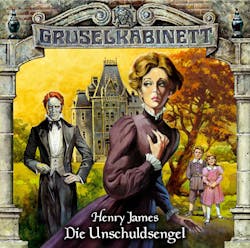
    Gruselkabinett, Folge 5: Die Unschuldsengel

    Henry James

  12. 5.0

    The Wheel Of Time

    Henry James