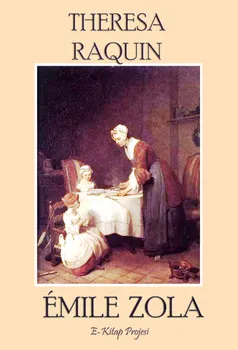
Theresa Raquin

One Thursday, Camille, on returning from his office, brought with him a great fellow with square shoulders, whom he pushed in a familiar manner into the shop.

"Mother," he said to Madame Raquin, pointing to the newcomer, "do you recognise this gentleman?"

The old mercer looked at the strapping blade, seeking among her recollections and finding nothing, while Therese placidly observed the scene.

"What!" resumed Camille, "you don't recognise Laurent, little Laurent, the son of daddy Laurent who owns those beautiful fields of corn out Jeufosse way. Don't you remember? I went to school with him; he came to fetch me of a morning on leaving the house of his uncle, who was our neighbour, and you used to give him slices of bread and jam."

All at once Madame Raquin recollected little Laurent, whom she found very much grown. It was quite ten years since she had seen him. She now did her best to make him forget her lapse of memory in greeting him, by recalling a thousand little incidents of the past, and by adopting a wheedling manner towards him that was quite maternal. Laurent had seated himself. With a peaceful smile on his lips, he replied to the questions addressed to him in a clear voice, casting calm and easy glances around him.

"Just imagine," said Camille, "this joker has been employed at the Orleans-Railway-Station for eighteen months, and it was only to-night that we met and recognised one another—the administration is so vast, so important!"

As the young man made this remark, he opened his eyes wider, and pinched his lips, proud to be a humble wheel in such a large machine. Shaking his head, he continued:

"Oh! but he is in a good position. He has studied. He already earns 1,500 francs a year. His father sent him to college. He had read for the bar, and learnt painting. That is so, is it not, Laurent? You'll dine with us?"

"I am quite willing," boldly replied the other.

He got rid of his hat and made himself comfortable in the shop, while Madame Raquin ran off to her stewpots. Therese, who had not yet pronounced a word, looked at the new arrival. She had never seen such a man before. Laurent, who was tall and robust, with a florid complexion, astonished her. It was with a feeling akin to admiration, that she contemplated his low forehead planted with coarse black hair, his full cheeks, his red lips, his regular features of sanguineous beauty. For an instant her eyes rested on his neck, a neck that was thick and short, fat and powerful. Then she became lost in the contemplation of his great hands which he kept spread out on his knees: the fingers were square; the clenched fist must be enormous and would fell an ox.

Über dieses Buch

One Thursday, Camille, on returning from his office, brought with him a great fellow with square shoulders, whom he pushed in a familiar manner into the shop.

"Mother," he said to Madame Raquin, pointing to the newcomer, "do you recognise this gentleman?"

The old mercer looked at the strapping blade, seeking among her recollections and finding nothing, while Therese placidly observed the scene.

"What!" resumed Camille, "you don't recognise Laurent, little Laurent, the son of daddy Laurent who owns those beautiful fields of corn out Jeufosse way. Don't you remember? I went to school with him; he came to fetch me of a morning on leaving the house of his uncle, who was our neighbour, and you used to give him slices of bread and jam."

All at once Madame Raquin recollected little Laurent, whom she found very much grown. It was quite ten years since she had seen him. She now did her best to make him forget her lapse of memory in greeting him, by recalling a thousand little incidents of the past, and by adopting a wheedling manner towards him that was quite maternal. Laurent had seated himself. With a peaceful smile on his lips, he replied to the questions addressed to him in a clear voice, casting calm and easy glances around him.

"Just imagine," said Camille, "this joker has been employed at the Orleans-Railway-Station for eighteen months, and it was only to-night that we met and recognised one another—the administration is so vast, so important!"

As the young man made this remark, he opened his eyes wider, and pinched his lips, proud to be a humble wheel in such a large machine. Shaking his head, he continued:

"Oh! but he is in a good position. He has studied. He already earns 1,500 francs a year. His father sent him to college. He had read for the bar, and learnt painting. That is so, is it not, Laurent? You'll dine with us?"

"I am quite willing," boldly replied the other.

He got rid of his hat and made himself comfortable in the shop, while Madame Raquin ran off to her stewpots. Therese, who had not yet pronounced a word, looked at the new arrival. She had never seen such a man before. Laurent, who was tall and robust, with a florid complexion, astonished her. It was with a feeling akin to admiration, that she contemplated his low forehead planted with coarse black hair, his full cheeks, his red lips, his regular features of sanguineous beauty. For an instant her eyes rested on his neck, a neck that was thick and short, fat and powerful. Then she became lost in the contemplation of his great hands which he kept spread out on his knees: the fingers were square; the clenched fist must be enormous and would fell an ox.
Starte noch heute mit diesem Buch für 0 €

  • Hole dir während der Testphase vollen Zugriff auf alle Bücher in der App
  • Keine Verpflichtungen, jederzeit kündbar
Jetzt kostenlos testen
Mehr als 52 000 Menschen haben Nextory im App Store und auf Google Play 5 Sterne gegeben.

  1. 3.0

    200 Meisterwerke der Literaturgeschichte : Die größten Klassiker der Weltliteratur

    Franz Kafka, Victor Hugo, Fjodor Michailowitsch Dostojewski, Lord Byron, Giacomo Leopardi, Marcel Proust, Henrik Ibsen, Percy Bysshe Shelley, Charles Dickens, Jane Austen, Mary Shelley, Emily Brontë, Charlotte Brontë, Anne Brontë, William Makepeace Thackeray, Bram Stoker, Henry Fielding, George Eliot, William Shakespeare, D. H. Lawrence, Walt Whitman, Herman Melville, Thomas Wolfe, Virginia Woolf, Joseph Conrad, Sinclair Lewis, Lewis Carrol, Edgar Allan Poe, Edward Bulwer-Lytton, Oscar Wilde, H.G. Wells, Daniel Defoe, James Fenimore Cooper, Lew Wallace, Jonathan Swift, Robert Louis Stevenson, Mark Twain, Walter Scott, Nathaniel Hawthorne, Harriet Beecher Stowe, Laurence Sterne, Frances Hodgson Burnett, Arthur Conan Doyle, Wilkie Collins, Edgar Wallace, Jack London, Henry David Thoreau, John Galsworthy, F. Scott Fitzgerald, Rudyard Kipling, G.K. Chesterton, Washington Irvin, O.Henry, Ambrose Bierce, Alexander Sergejewitsch Puschkin, Michail Lermontow, Iwan Sergejewitsch Turgenew, Leo Tolstoi, Nikolai Gogol, Iwan Gontscharow, Nikolai Leskow, Anton Pawlowitsch Tschechow, Maxim Gorki, François Rabelais, Jean de la Fontaine, Blaise Pascal, Pierre Corneille, Moliere, Jean Baptiste Racine, Charles Perrault, Voltaire, Denis Diderot, Jean-Jacques Rousseau, Pierre-Ambroise Choderlos de Laclos, Antoine-François Prévost, Marquis De Sade, François René Chateaubriand, Stendhal, Honoré de Balzac, Alexandre Dumas, Alphonse de Lamartine, George Sand, Gustave Flaubert, Emile Zola, Guy De Maupassant, Alphonse Daudet, Jules Verne, Joris-Karl Huysmans, Prosper Mérimée, Charles Baudelaire, Stéphane Mallarmé, Arthur Rimbaud, André Gide, Arthur Schopenhauer, Heinrich Heine, Friedrich Schiller, Johann Wolfgang von Goethe, Jacob Grimm, Gottfried von Straßburg, Wolfram von Eschenbach, E T A Hoffmann, Annette von Droste-Hülshoff, Heinrich von Kleist, Friedrich Hölderlin, Theodor Fontane, Gustav Freytag, Gottfried Keller, Theodor Storm, Stefan Zweig, Joseph von Eichendorff, Klaus Mann, Rainer Maria Rilke, Johanna Spyri, Joseph Roth, Karl May, Robert Musil, Heinrich Mann, Sigmund Freud, Friedrich Nietzsche, Dante Alighieri, Giovanni Boccaccio, Giacomo Casanova, Luigi Pirandello, Giosuè Carducci, Gabriele D’Annunzio, Niccolo Machiavelli, Miguel Cervantes de Saavedra, Pedro Calderón de la Barca, Vicente Blasco Ibañez, Knut Hamsun, Homer, Äsop, Herodot, Thukydides, Xenophon, Platon, - Aristoteles, - Sophokles, Euripides, - Aristophanes, Lao Tse, - Konfuzius, Siddhartha Gautama Buddha, Titus Livius, Tacitus, Marcus Tullius Cicero, Vergil, Ovid, Lukian, Petronius, Apuleius, Longos von Lesbos, Mark Aurel, Aurelius Augustinus

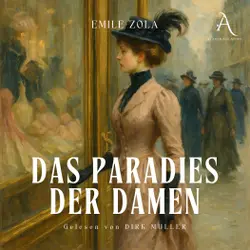
  2. Das Paradies der Damen

    Emile Zola

  3. 1.0

    100 Meisterwerke der Weltliteratur - Klassiker die man kennen muss : Bereicherte Ausgabe. Ein literarisches Panorama: Meisterwerke, Klassiker und Autoren der Weltliteratur

    Johann Wolfgang von Goethe, Jules Verne, Gustave Flaubert, Franz Kafka, Lewis Carroll, Selma Lagerlöf, Sigmund Freud, Johanna Spyri, Theodor Storm, Rainer Maria Rilke, Charles Dickens, Stefan Zweig, Heinrich Heine, Honoré de Balzac, Theodor Fontane, Karl May, Gottfried Keller, Mark Twain, Heinrich Mann, Else Lasker-Schüler, Robert Musil, Walt Whitman, Oscar Wilde, Annette von Droste-Hülshoff, Arthur Schopenhauer, Robert Louis Stevenson, Gustav Freytag, James Fenimore Cooper, Edgar Allan Poe, Heinrich von Kleist, William Shakespeare, Dante Alighieri, Charlotte Brontë, Emily Brontë, Jack London, Arthur Conan Doyle, Joseph Conrad, Jane Austen, Herman Melville, Guy De Maupassant, Walter Scott, Jonathan Swift, Jacob Grimm, Wilhelm Grimm, Alexandre Dumas, Rudyard Kipling, Nathaniel Hawthorne, Homer, O.Henry, Voltaire, Lew Wallace, John Galsworthy, E T A Hoffmann, Marcus Aurelius, Hans Christian Andersen, Anton Pawlowitsch Tschechow, Platon, Friedrich Nietzsche, Iwan Sergejewitsch Turgenew, Tacitus, Nikolai Gogol, Miguel de Cervantes, Mary Shelley, Thomas Wolfe, Emile Zola, Fjodor Michailowitsch Dostojewski, Leo Tolstoi, Joseph Roth, Joseph von Eichendorff, Kurt Tucholsky, Iwan Alexandrowitsch Gontscharow, Oswald Spengler, Moliere, Alfred Adler, Sophie von La Roche, Klaus Mann, Rumi

  4. Das Paradies der Damen

    Emile Zola

  5. Rougon-Macquart Zyklus, Band 8 : Ein Blatt Liebe

    Emile Zola

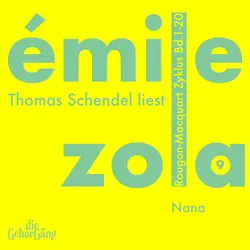
  6. Nana - Hörbuch Klassiker

    Emile Zola, Hörbuch Klassiker

  7. Der Totschläger - Hörbuch Klassiker

    Emile Zola, Hörbuch Klassiker

  8. Das Paradies der Damen - Hörbuch Klassiker

    Emile Zola, Hörbuch Klassiker

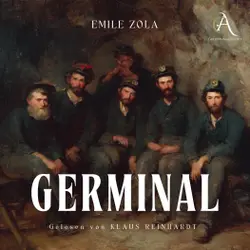
  9. Germinal - Hörbuch Klassiker

    Emile Zola, Hörbuch Klassiker

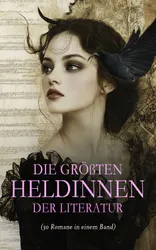
  10. Die größten Heldinnen der Literatur (50 Romane in einem Band)

    Charlotte Brontë, Jane Austen, Louisa May Alcott, Leo Tolstoi, Virginia Woolf, Thomas Hardy, Sinclair Lewis, Hedwig Dohm, Charlotte Perkins Gilman, Elizabeth Burgoyne Corbett, Daniel Defoe, Anne Brontë, L.M. Montgomery, Victor Hugo, Wilhelmine von Hillern, Adalbert Stifter, Luise Ahlborn, George Eliot, Lou Andreas-Salomé, Stefan Zweig, D. H. Lawrence, Henry James, Margaret Mitchell, Edith Wharton, Miles Franklin, Willa Cather, Elizabeth Gaskell, Nikolai Semjonowitsch Leskow, Theodore Dreiser, Elizabeth von Arnim, Colette, Honoré de Balzac, William Makepeace Thackeray, Gustave Flaubert, Emile Zola, Theodor Fontane, Ada Langworthy Collier, Joseph Sheridan Le Fanu, Johanna Schopenhauer, Nathaniel Hawthorne, Charles Dickens

  11. Die Rebellinnen der Literatur - Klassiker, die man kennen muss

    George Sand, D. H. Lawrence, Leo Tolstoi, Elizabeth Gaskell, Charlotte Brontë, Virginia Woolf, Thomas Hardy, Sinclair Lewis, Hedwig Dohm, Charlotte Perkins Gilman, Daniel Defoe, Louisa May Alcott, Jane Austen, L.M. Montgomery, Victor Hugo, George Eliot, Stefan Zweig, Henry James, Edith Wharton, Elizabeth von Arnim, Colette, Honoré de Balzac, Gustave Flaubert, Emile Zola, Theodor Fontane, Charles Dickens, William Makepeace Thackeray, Johanna Schopenhauer, Joseph Sheridan Le Fanu

  12. Die Meisterwerke der Weltliterature : Bereicherte Ausgabe. 100 Klassiker die man kennen muss

    Johann Wolfgang von Goethe, Jules Verne, Gustave Flaubert, Franz Kafka, Lewis Carroll, Selma Lagerlöf, Sigmund Freud, Johanna Spyri, Theodor Storm, Rainer Maria Rilke, Charles Dickens, Stefan Zweig, Heinrich Heine, Honoré de Balzac, Theodor Fontane, Karl May, Gottfried Keller, Mark Twain, Heinrich Mann, Else Lasker-Schüler, Robert Musil, Walt Whitman, Oscar Wilde, Annette von Droste-Hülshoff, Arthur Schopenhauer, Robert Louis Stevenson, Gustav Freytag, James Fenimore Cooper, Edgar Allan Poe, Heinrich von Kleist, William Shakespeare, Dante Alighieri, Charlotte Brontë, Emily Brontë, Jack London, Arthur Conan Doyle, Joseph Conrad, Jane Austen, Herman Melville, Guy De Maupassant, Walter Scott, Jonathan Swift, Jacob Grimm, Wilhelm Grimm, Alexandre Dumas, Rudyard Kipling, Nathaniel Hawthorne, Homer, O.Henry, Voltaire, Lew Wallace, John Galsworthy, E T A Hoffmann, Marcus Aurelius, Hans Christian Andersen, Anton Pawlowitsch Tschechow, Platon, Friedrich Nietzsche, Iwan Sergejewitsch Turgenew, Tacitus, Nikolai Gogol, Miguel de Cervantes, Mary Shelley, Thomas Wolfe, Emile Zola, Fjodor Michailowitsch Dostojewski, Leo Tolstoi, Joseph Roth, Joseph von Eichendorff, Kurt Tucholsky, Iwan Alexandrowitsch Gontscharow, Oswald Spengler, Moliere, Alfred Adler, Sophie von La Roche, Klaus Mann, Rumi