


THE SERIES THAT INSPIRED HEATED RIVALRY • NOW A #1 STREAMING SHOW
Enter the world of Game Changers, the series behind the epic enemies-to-lovers hockey romance Heated Rivalry, streaming on Crave in Canada and on HBO Max in the U.S.
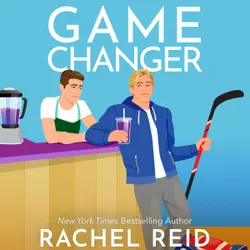
A grumpy hockey player meets his match in a sunny, out-and-proud social media manager, by New York Times and USA TODAY bestselling author Rachel Reid.
The hits just keep coming for Troy Barrett. Traded to the worst team in the league would be bad enough, but coming on the heels of a messy breakup and a recent scandal… Troy just wants to play hockey and be left alone. He definitely doesn’t want to “work on his online presence" with the team’s peppy social media manager.
Harris Drover can tell standoffish Troy isn’t happy about the trade, but Harris doesn’t give up on people easily. Even when he’s developing a crush he’s sure is one-sided. And when he sees Troy’s smile finally crack through his grumpy exterior… That’s a man Harris couldn’t turn his back on if he wanted to.
Suddenly, Troy’s move to the new team feels like an opportunity—for Troy to embrace his true self, and for both men to explore their growing attraction. But being together behind closed doors is one thing, and for Troy, being in a public relationship with Harris will mean facing off with his fears, once and for all.
Game Changers Book 1: Game Changer Book 2: Heated Rivalry Book 3: Tough Guy Book 4: Common Goal Book 5: Role Model Book 6: The Long Game Book 7: Unrivaled
Need more Rachel Reid?! Check out these other standalones from your favorite MM hockey romance writer: Time to Shine The Shots You Take









Karen
20/9/2026
Spoiler-Free Review Role Model was not my favorite book in the series in terms of chemistry or yearning, but I ended up appreciating it a lot for what it explores emotionally. For me, this book is really about shame, the closet, moral responsibility, and the damage that can happen when someone spends years building a version of themselves designed to survive. Troy is not presented as secretly perfect. He has made bad choices, stayed close to the wrong people, failed to be an ally, and hurt others through cowardice and complicity. What made me care about him was watching him finally look at those choices honestly instead of hiding behind them. I also loved the way the book uses Troy’s smile almost as a symbol. At the beginning, he constantly seems to stop himself from smiling, as if even joy could reveal too much. Around Harris, he laughs and smiles more freely. Harris notices that and wants to protect it, which says so much about both of them. Harris is such a caretaker. He is warm, funny, kind, and always thinking about other people, but he also wants to be seen as capable and strong rather than fragile. I liked the contrast between his tenderness and his need to claim agency over his own body and life. This book probably explores the emotional damage of the closet more directly than any of the others in the series. It does not say, “Be yourself and everyone will love you.” It says something much harder: being yourself can cost you people, comfort, safety, and approval, but hiding yourself also has a cost. That is what stayed with me most. 4 stars. I really liked it, and I liked what it had to say even more. ⸻ SPOILERS Troy’s arc worked best for me when I stopped reading it as a romance about whether he and Harris would end up together and started reading it as a story about shame and accountability. Troy knows he made bad choices. He stayed close to Dallas Kent, tolerated homophobic behavior, failed Ryan Price, and used the “bad boy” persona as camouflage for his own sexuality. The book never excuses that. What it does show is how fear, a homophobic father, rigid masculinity, and the need to stay hidden can shape someone into a version of himself he eventually hates. I really liked that Troy’s redemption is not based on being secretly innocent. It is based on deciding that he does not want to keep being that person. His relationship with Harris is sweet, although the romantic conflict frustrated me at times because so much of it exists entirely in Troy’s head. He decides that he is not good enough for Harris and almost ruins something good because he believes shame is the same thing as truth. Harris, meanwhile, is looking at who Troy is becoming rather than reducing him to who he has been. The recurring focus on Troy’s smile became one of my favorite details. He hides it at first. With Harris, he smiles constantly. Harris notices and treasures that part of him. It felt like a quiet representation of Troy slowly allowing himself to exist without a mask. I also appreciated Harris more and more as the book went on. His family has always protected him because of his heart condition, and while that care is loving and necessary, Harris also clearly wants to feel strong, capable, and in control of his own body. His discomfort with his scar and his desire not to be treated as fragile added another layer of vulnerability to him. The Dallas Kent storyline also gave me more closure than I expected. I was genuinely relieved that the accusations were taken seriously and that he did not simply continue on untouched. I also liked seeing Troy refuse blind loyalty to someone he once considered a friend. And, of course, the Ottawa/Ilya scenes were fantastic. Ilya telling Troy that his team did not hate him, taking him to the Kingfisher, creating space for Troy to come out, and then casually revealing that he is bisexual felt very true to who Ilya is: not always nice, but almost always kind. The book’s message, to me, was not “come out and everything will be fine.” It was: you may lose people when you stop hiding, but there is still value in becoming someone you can live with honestly. That is what made the book work for me in the end.
Max
26/4/2026
Love it except ilyas voice
Para dejar una reseña, necesitas descargar la aplicación