A General Introduction to Psychoanalysis : Illustrated

Development of psychoanalysis:

Charcot demonstrates hypnosis on a "hysterical" patient, "Blanche" (Blanche Wittmann). Charcot questioned his own work on hysteria towards the end of his life.

In October 1885, Freud went to Paris on a fellowship to study with Jean-Martin Charcot, a renowned neurologist who was conducting scientific research into hypnosis. He was later to recall the experience of this stay as catalytic in turning him toward the practice of medical psychopathology and away from a less financially promising career in neurology research. Charcot specialized in the study of hysteria and susceptibility to hypnosis, which he frequently demonstrated with patients on stage in front of an audience.

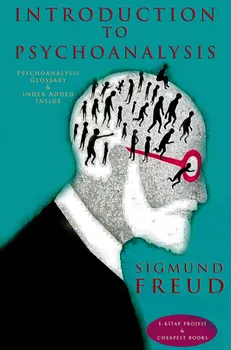
In this Illustrated psychology series, our the first book volume includes that Freud's eventually establishes in the course of his clinical practice that a more consistent and effective pattern of symptom relief could be achieved, without recourse to hypnosis, by encouraging patients to talk freely about whatever ideas or memories occurred to them. In addition to this procedure, which he called "free association", Freud found that patient's dreams could be fruitfully analyzed to reveal the complex structuring of unconscious material and to demonstrate the psychic action of repression which underlay symptom formation. By 1896, Freud had abandoned hypnosis and was using the term "psychoanalysis" to refer to his new clinical method and the theories on which it was based...

Illustrated by Murat Ukray, Copyright by E-Kitap Projesi

ABOUT AUTHOR:

Sigmund Freud (Born Sigismund Schlomo Freud; (1856 – 1939) was an Austrian neurologist who became known as the founding father of psychoanalysis.

Over dit boek

Development of psychoanalysis:

Charcot demonstrates hypnosis on a "hysterical" patient, "Blanche" (Blanche Wittmann). Charcot questioned his own work on hysteria towards the end of his life.

In October 1885, Freud went to Paris on a fellowship to study with Jean-Martin Charcot, a renowned neurologist who was conducting scientific research into hypnosis. He was later to recall the experience of this stay as catalytic in turning him toward the practice of medical psychopathology and away from a less financially promising career in neurology research. Charcot specialized in the study of hysteria and susceptibility to hypnosis, which he frequently demonstrated with patients on stage in front of an audience.

In this Illustrated psychology series, our the first book volume includes that Freud's eventually establishes in the course of his clinical practice that a more consistent and effective pattern of symptom relief could be achieved, without recourse to hypnosis, by encouraging patients to talk freely about whatever ideas or memories occurred to them. In addition to this procedure, which he called "free association", Freud found that patient's dreams could be fruitfully analyzed to reveal the complex structuring of unconscious material and to demonstrate the psychic action of repression which underlay symptom formation. By 1896, Freud had abandoned hypnosis and was using the term "psychoanalysis" to refer to his new clinical method and the theories on which it was based...

Illustrated by Murat Ukray, Copyright by E-Kitap Projesi

ABOUT AUTHOR:

Sigmund Freud (Born Sigismund Schlomo Freud; (1856 – 1939) was an Austrian neurologist who became known as the founding father of psychoanalysis.

Begin vandaag nog met dit boek voor € 0

  • Krijg volledige toegang tot alle boeken in de app tijdens de proefperiode
  • Geen verplichtingen, op elk moment annuleren
Probeer nu gratis
Meer dan 52.000 mensen hebben Nextory 5 sterren gegeven in de App store en op Google Play.

  1. De invloed van ons onbewuste in ons dagelijksch leven

    Sigmund Freud

  2. 500 Quotations from the Great Philosophers of the 20th Century

    Gaston Bachelard, Ambrose Bierce, Emil Cioran, Sigmund Freud, Carl Jung

  3. Introduction to Psychoanalysis

    Sigmund Freud

  4. 5.0

    Leonardo Da Vinci : "A Psychological Study of an Infantile Reminiscence"

    Sigmund Freud

  5. 3.6

    Civilization and Its Discontents

    Sigmund Freud

  6. #2

    On Cocaine

    Sigmund Freud

  7. Nieuw

    Inhibición, Síntoma y Angustia

    Sigmund Freud

  8. Nieuw

    50 Clásicos que Debes Leer Antes de Morir : Un viaje literario por los tesoros de la literatura universal

    Dante Alighieri, Aristóteles, Jane Austen, Charles Baudelaire, Giovanni Boccaccio, Anne Brontë, C. Collodi, James Fenimore Cooper, Fedor Mikhaïlovitch Dostoïevski, Arthur Conan Doyle, Alexandre Dumas, José de Espronceda, Gustave Flaubert, Sigmund Freud, Benito Pérez Galdós, Kahlil Gibran, Johann Wolfgang Goethe, Victor Hugo, Thomas Hardy, Nathaniel Hawthorne, Vicente Blasco Ibáñez, Washington Irving, James Joyce, Mariano José Larra, Jack London, Federico García Lorca, H.P. Lovecraft, Antonio Machado, Gustav Meyrink, John Stuart Mill, Amado Nervo, Friedrich Nietzsche, Solomon Northup, Alexander Sergeyevich Pushkin, Francisco de Quevedo, Walter Scott, William Shakespeare, Robert Louis Stevenson, Harriet Beecher Stowe, Jonathan Swift, Mark Twain, Miguel De Unamuno, Ramón María Valle-Inclán, Julio Verne, Virginia Woolf

  9. Nieuw

    Duelo y Melancolía

    Sigmund Freud

  10. Nieuw

    Hysteri: Psykologiska mekanismer bakom bortträngda minnen

    Sigmund Freud

  11. Nieuw

    The history of the psychoanalytic movement

    Sigmund Freud


Gerelateerde categorieën


3.0

1 beoordeling

Carlijn

24-11-2025

Heel veel. Zelfs voor mij als geïnteresseerde echt moeilijk door te komen. Ook omdat het niet per se bedoeld is als boek volgens mij, het zijn lectures. Zou het niet aanraden, er zijn betere manieren om bekend te raken met het werk van Freud. Ik twijfel ook altijd een beetje aan in hoeverre de theorieën over dromen enzo nou echt overeenkomen met de waarheid.

Om een recensie te schrijven, moet je de app downloaden