3.0(1)

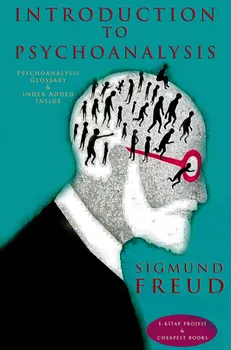
A General Introduction to Psychoanalysis : Illustrated

Development of psychoanalysis:

Charcot demonstrates hypnosis on a "hysterical" patient, "Blanche" (Blanche Wittmann). Charcot questioned his own work on hysteria towards the end of his life.

In October 1885, Freud went to Paris on a fellowship to study with Jean-Martin Charcot, a renowned neurologist who was conducting scientific research into hypnosis. He was later to recall the experience of this stay as catalytic in turning him toward the practice of medical psychopathology and away from a less financially promising career in neurology research. Charcot specialized in the study of hysteria and susceptibility to hypnosis, which he frequently demonstrated with patients on stage in front of an audience.

In this Illustrated psychology series, our the first book volume includes that Freud's eventually establishes in the course of his clinical practice that a more consistent and effective pattern of symptom relief could be achieved, without recourse to hypnosis, by encouraging patients to talk freely about whatever ideas or memories occurred to them. In addition to this procedure, which he called "free association", Freud found that patient's dreams could be fruitfully analyzed to reveal the complex structuring of unconscious material and to demonstrate the psychic action of repression which underlay symptom formation. By 1896, Freud had abandoned hypnosis and was using the term "psychoanalysis" to refer to his new clinical method and the theories on which it was based...

Illustrated by Murat Ukray, Copyright by E-Kitap Projesi

ABOUT AUTHOR:

Sigmund Freud (Born Sigismund Schlomo Freud; (1856 – 1939) was an Austrian neurologist who became known as the founding father of psychoanalysis.

Om denne boken

Development of psychoanalysis:

Charcot demonstrates hypnosis on a "hysterical" patient, "Blanche" (Blanche Wittmann). Charcot questioned his own work on hysteria towards the end of his life.

In October 1885, Freud went to Paris on a fellowship to study with Jean-Martin Charcot, a renowned neurologist who was conducting scientific research into hypnosis. He was later to recall the experience of this stay as catalytic in turning him toward the practice of medical psychopathology and away from a less financially promising career in neurology research. Charcot specialized in the study of hysteria and susceptibility to hypnosis, which he frequently demonstrated with patients on stage in front of an audience.

In this Illustrated psychology series, our the first book volume includes that Freud's eventually establishes in the course of his clinical practice that a more consistent and effective pattern of symptom relief could be achieved, without recourse to hypnosis, by encouraging patients to talk freely about whatever ideas or memories occurred to them. In addition to this procedure, which he called "free association", Freud found that patient's dreams could be fruitfully analyzed to reveal the complex structuring of unconscious material and to demonstrate the psychic action of repression which underlay symptom formation. By 1896, Freud had abandoned hypnosis and was using the term "psychoanalysis" to refer to his new clinical method and the theories on which it was based...

Illustrated by Murat Ukray, Copyright by E-Kitap Projesi

ABOUT AUTHOR:

Sigmund Freud (Born Sigismund Schlomo Freud; (1856 – 1939) was an Austrian neurologist who became known as the founding father of psychoanalysis.
Kom i gang med denne boken i dag for 0 kr

  • Få full tilgang til alle bøkene i appen i prøveperioden
  • Ingen forpliktelser, si opp når du vil
Prøv gratis nå
Mer enn 52 000 personer har gitt Nextory 5 stjerner på App Store og Google Play.

  1. Ny

    100 Clásicos de la Literatura Universal

    Francis Scott Fitzgerald, Mary Shelley, Lyman Frank Baum, Louisa May Alcott, Dante Alighieri, Jane Austen, Ambrose Bierce, Emily Brontë, Edgar Rice Burroughs, Lewis Carroll, Wilkie Collins, René Descartes, Charles Dickens, Emily Dickinson, Alexandre Dumas, Gustave Flaubert, Benito Pérez Galdós, Johann Wolfgang von Goethe, Thomas Hardy, E T A Hoffmann, Washington Irving, Henry James, James Joyce, Franz Kafka, Gaston Leroux, Federico García Lorca, H.P. Lovecraft, Publio Virgilio Marón, Lucy Maud Montgomery, John William Polidori, Marco Polo, Antoine de Saint-Exupéry, Emilio Salgari, Walter Scott, Mark Twain, Jules Verne, Julio Verne, H.G. Wells, Edith Wharton, Mary Wollstonecraft, Stefan Zweig, Sun Tzu, Bram Stoker, - Aristoteles, George Bernard Shaw, Henryk Sienkiewicz, Concepción Arenal, Charlotte Brontë, Miguel de Cervantes, G.K. Chesterton, Daniel Defoe, Fyodor Mikhailovich Dostoyevsky, Arthur Conan Doyle, Sigmund Freud, H. Rider Haggard, Homero, Immanuel Kant, Rudyard Kipling, Molière, Friedrich Nietzsche, Fernando de Rojas, Sófocles, William Makepeace Thackeray, León Tolstói, Voltaire, Ramón María del Valle-Inclán, Oscar Wilde, Virginia Woolf

  2. Ny

    Psykoanalys: Förstå din inre värld

    Sigmund Freud

  3. Dödsdriften: Varför vi söker det som skadar oss

    Sigmund Freud

  4. Psykoanalysens historia

    Sigmund Freud

  5. Den fria psykoanalysen

    Sigmund Freud

  6. On Dreams

    Sigmund Freud

  7. Die Meisterwerke der Weltliterature : Bereicherte Ausgabe. 100 Klassiker die man kennen muss

    Johann Wolfgang von Goethe, Jules Verne, Gustave Flaubert, Franz Kafka, Lewis Carroll, Selma Lagerlöf, Sigmund Freud, Johanna Spyri, Theodor Storm, Rainer Maria Rilke, Charles Dickens, Stefan Zweig, Heinrich Heine, Honoré de Balzac, Theodor Fontane, Karl May, Gottfried Keller, Mark Twain, Heinrich Mann, Else Lasker-Schüler, Robert Musil, Walt Whitman, Oscar Wilde, Annette von Droste-Hülshoff, Arthur Schopenhauer, Robert Louis Stevenson, Gustav Freytag, James Fenimore Cooper, Edgar Allan Poe, Heinrich von Kleist, William Shakespeare, Dante Alighieri, Charlotte Brontë, Emily Brontë, Jack London, Arthur Conan Doyle, Joseph Conrad, Jane Austen, Herman Melville, Guy De Maupassant, Walter Scott, Jonathan Swift, Jacob Grimm, Wilhelm Grimm, Alexandre Dumas, Rudyard Kipling, Nathaniel Hawthorne, Homer, O.Henry, Voltaire, Lew Wallace, John Galsworthy, E T A Hoffmann, Marcus Aurelius, Hans Christian Andersen, Anton Pawlowitsch Tschechow, Platon, Friedrich Nietzsche, Iwan Sergejewitsch Turgenew, Tacitus, Nikolai Gogol, Miguel de Cervantes, Mary Shelley, Thomas Wolfe, Emile Zola, Fjodor Michailowitsch Dostojewski, Leo Tolstoi, Joseph Roth, Joseph von Eichendorff, Kurt Tucholsky, Iwan Alexandrowitsch Gontscharow, Oswald Spengler, Moliere, Alfred Adler, Sophie von La Roche, Klaus Mann, Rumi

  8. 2.0

    50 Clásicos que Debes Leer Antes de Morir: Tu Pasaporte a los Tesoros de la Literatura Universal

    Dante Alighieri, Aristóteles, Jane Austen, Charles Baudelaire, Giovanni Boccaccio, Anne Brontë, C. Collodi, James Fenimore Cooper, Fedor Mikhaïlovitch Dostoïevski, Arthur Conan Doyle, Alexandre Dumas, José de Espronceda, Gustave Flaubert, Sigmund Freud, Benito Pérez Galdós, Kahlil Gibran, Johann Wolfgang Goethe, Johann Wolfgang von Goethe, Victor Hugo, Thomas Hardy, Nathaniel Hawthorne, Vicente Blasco Ibáñez, Washington Irving, James Joyce, Mariano José de Larra, Jack London, Federico García Lorca, H.P. Lovecraft, Antonio Machado, Gustav Meyrink, John Stuart Mill, Amado Nervo, Friedrich Nietzsche, Solomon Northup, Alexander Sergeyevich Pushkin, Francisco de Quevedo, Walter Scott, William Shakespeare, Robert Louis Stevenson, Harriet Beecher Stowe, Jonathan Swift, Mark Twain, Miguel De Unamuno, Ramón María del Valle-Inclán, Julio Verne, Virginia Woolf

  9. Föreläsningar: Orientering i Psykoanalysen

    Sigmund Freud

  10. 4.4

    200 Quotes on Psychoanalysis

    Sigmund Freud, Carl Jung

  11. Totem og tabu: Nogle overensstemmelser mellem sjælelivet hos de vilde og hos neurotikerne

    Sigmund Freud

  12. 33 Masterpieces of Philosophy and Science to Read Before You Die (Illustrated) : Utopia, The Meditations, The Art of War, The Kama Sutra, Candide

    Thomas More, Marcus Aurelius Antoninus, Sun Tzu, Vatsyayana, Voltaire, Edwin A. Abbott, Aristotle, Dale Carnegie, Gilbert Keith Chesterton, René Descartes, Epictetus, Sigmund Freud, Hermann Hesse, David Hume, Lao Tzu, David Herbert Lawrence, Niccolò Machiavelli, John Mill, Prentice Mulford, Friedrich Nietzsche, Plato, Bertrand Russell, H.G. Wells, Frances Bacon