Over dit boek

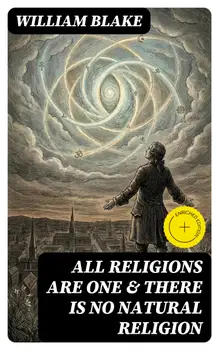
In "All Religions Are One" and "There Is No Natural Religion," William Blake presents a provocative examination of spiritual truth beyond the constraints of institutional doctrine. The dual texts encapsulate Blake's visionary style, characterized by richly symbolic language and a deep exploration of the relationship between divine gnosis and human perception. By challenging the existing religious paradigms of his time, Blake seeks to illuminate a universal consciousness that transcends sectarian divides, positioning his work within the broader Romantic movement that emphasizes individual experience and the sublime. William Blake (1757-1827), an unorthodox poet and artist, was profoundly influenced by his own mystical experiences and the tumultuous intellectual climate of the late 18th century. His oeuvre reflects a quest for enlightenment that parallels the questions and anxieties of his era, illustrating the conflict between Enlightenment rationalism and the depths of spiritual insight. Blake's unique position as a visionary poet and engraver informed his belief in the interconnectedness of all spiritual paths, revealing an artist deeply concerned with the state of humanity's soul. This collection is a must-read for anyone interested in spirituality, philosophy, or literature, offering profound insights into the nature of belief and the human condition. Blake's work serves as a timeless invitation to explore beyond established doctrines, encouraging readers to find their own paths to spiritual enlightenment.

In this enriched edition, we have carefully created added value for your reading experience:

- A comprehensive Introduction outlines these selected works' unifying features, themes, or stylistic evolutions.

- The Author Biography highlights personal milestones and literary influences that shape the entire body of writing.

- A Historical Context section situates the works in their broader era—social currents, cultural trends, and key events that underpin their creation.

- A concise Synopsis (Selection) offers an accessible overview of the included texts, helping readers navigate plotlines and main ideas without revealing critical twists.

- A unified Analysis examines recurring motifs and stylistic hallmarks across the collection, tying the stories together while spotlighting the different work's strengths.

- Reflection questions inspire deeper contemplation of the author's overarching message, inviting readers to draw connections among different texts and relate them to modern contexts.

- Lastly, our hand‐picked Memorable Quotes distill pivotal lines and turning points, serving as touchstones for the collection's central themes.
Begin vandaag nog met dit boek voor € 0

  • Krijg volledige toegang tot alle boeken in de app tijdens de proefperiode
  • Geen verplichtingen, op elk moment annuleren
Probeer nu gratis
Meer dan 52.000 mensen hebben Nextory 5 sterren gegeven in de App store en op Google Play.

Meer van William Blake

  1. Mystique of the Darkness : Exploring the Shadows: A Treasury of Gothic Tales

    Charles Dickens, Friedrich Schiller, Oscar Wilde, Robert Louis Stevenson, Edgar Allan Poe, William Hope Hodgson, Joseph Sheridan Fanu, George MacDonald, Percy Bysshe Shelley, Bram Stoker, Charlotte Brontë, Emily Brontë, William Godwin, Henry James, Victor Hugo, Théophile Gautier, Arthur Conan Doyle, Joseph Conrad, Guy Boothby, Jane Austen, Mayne Reid, John Meade Falkner, Guy De Maupassant, George Eliot, Samuel Taylor Coleridge, Robert Hugh Benson, Horace Walpole, Frederick Marryat, Thomas love Peacock, Washington Irving, Nathaniel Hawthorne, Gaston Leroux, Grant Allen, Arthur Machen, Wilkie Collins, Thomas Peckett Prest, James Malcolm Rymer, Robert Browning, Walter Hubbell, Marie Corelli, Charles Brockden Brown, James Hogg, William Blake, Charlotte Perkins Gilman, John Keats, Richard Marsh, Clara Reeve, Charles Robert Maturin, John William Polidori, Lord Byron, W. W. Jacobs, E F Benson, M. R. James, E. T. Hoffmann, George W. Reynolds, William Thomas Beckford, Christina Rossetti, Tobias Smollett, Nikolai Gogol, Mary Shelley, Edward Bulwer-Lytton, Ann Radcliffe, Matthew Gregory Lewis, Eliza Parsons, Eleanor Sleath, Émile Erckmann, Alexandre Chatrian

  2. William Blake: Song of Innocence and of Experience

    William Blake

  3. 1 nov

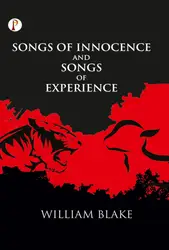
    Songs of Innocence and Songs of Experience

    William Blake

  4. The Big Book of Christmas

    Hans Christian Andersen, Charles Dickens, Louisa May Alcott, Lucy Maud Montgomery, Anne Brontë, Willa Cather, G.K. Chesterton, F. Marion Crawford, Fyodor Dostoyevsky, Arthur Conan Doyle, Mary E. Freeman, The Brothers Grimm, Thomas Hardy, Nathaniel Hawthorne, O.Henry, E. T. Hoffmann, Washington Irving, James Joyce, Rudyard Kipling, H.P. Lovecraft, John Milton, Beatrix Potter, Arthur Thomas Quiller-Couch, Walter Scott, Robert Louis Stevenson, Harriet Beecher Stowe, Leo Tolstoy, Anthony Trollope, Mark Twain, Oscar Wilde, Anton Chekhov, L. Frank Baum, William Blake, Samuel Taylor Coleridge, Emily Dickinson, Henry Wadsworth Longfellow, Clement C. Moore, William Shakespeare, Andrew Lang

  5. 4.7

    The Marriage Of Heaven And Hell

    William Blake

  6. 3.0

    The Book of Thel

    William Blake

  7. 4.7

    The Marriage of Heaven and Hell

    William Blake

  8. Laocoon

    William Blake

  9. #1

    William Blake Poems

    William Blake

  10. 2.0

    Songs of Innocence and of Experience

    William Blake

  11. 4.7
    #1

    The Marriage of Heaven and Hell

    William Blake

  12. 2.0

    Songs of Innocence and of Experience

    William Blake