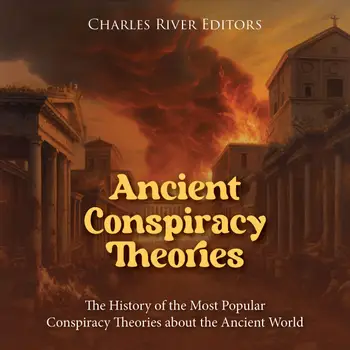
Ancient Conspiracy Theories: The History of the Most Popular Conspiracy Theories about the Ancient World

For decades, parodies featuring ominous, mysterious cults have been a favorite gag in pop culture. These fraternal brothers are often depicted in some type of underground lair, dressed in extravagant ceremonial robes with their faces hidden in their hoods, seated around a long table brimming with Gothic chalices, skulls, and glittering dark treasure. Like all art, creativity is sparked by a source of inspiration, and the inspiration for scenes like those have for centuries come from conspiracy theories, which often have profound impact regardless of their veracity. Indeed, conspiracy theories are nothing new: when the Great Fire of Rome occurred in 64 CE, Suetonius and Cassius Dio, two of Nero’s ancient biographers, were adamant that it was the emperor himself who set the fire (or ordered it set), and they are the originators of the myth that Nero played the lyre, danced around his palace, and sang “The Sack of Troy” while Rome burned outside his windows.

Perhaps it should also not be surprising that the themes found in contemporary conspiracy theories are often echoed in ancient conspiracy theories. While some people still insist that Lyndon B. Johnson was in on John F. Kennedy’s assassination, it was speculated across the ancient world that the young Macedonian king, Alexander the Great, conspired to have his own father, Philip II of Macedon, assassinated. Likewise, the New Age beliefs that Mesoamerican ruins in Mexico were somehow tied to extraterrestrials find common cause with people who believe the ancient Indus Valley site at Mohenjo-daro was destroyed by a nuclear weapon. And through it all, the lack of surviving documentary evidence about much of antiquity has allowed for all of the unknowns to become highly speculative sources of debate. For example, did Caesar’s men burn the Library of Alexandria in the 1st century BCE, or was it destroyed later, if at all?
Begin vandaag nog met dit boek voor € 0

  • Krijg volledige toegang tot alle boeken in de app tijdens de proefperiode
  • Geen verplichtingen, op elk moment annuleren
Probeer nu gratis
Meer dan 52.000 mensen hebben Nextory 5 sterren gegeven in de App store en op Google Play.

  1. The Most Controversial Cases of the Early 20th Century: The Murder of Stanford White, Sacco & Vanzetti, Leopold & Loeb, and the Lindbergh Baby Kidnapping

    Charles River Editors

  2. 3.0

    Modern Sicily: The History and Legacy of the Mediterranean Island Since the Middle Ages

    Charles River Editors

  3. 4.0

    Simón Bolívar: The Life and Legacy of the Venezuelan Leader Who Liberated Much of Latin America from the Spanish Empire

    Charles River Editors

  4. 3.0

    The Battle of Chosin Reservoir: The History of the Chinese Victory that Pushed UN Forces Out of North Korea during the Korean War

    Charles River Editors

  5. 3.7

    The Battle of Chaldiran: The History and Legacy of the Ottoman Empire’s Decisive Victory Over the Safavid Dynasty in Anatolia

    Charles River Editors

  6. 3.6

    The Battle of the Somme: The History and Legacy of World War I’s Biggest Battle

    Charles River Editors

  7. The Megalodon: The History and Legacy of the World’s Largest Prehistoric Predator

    Charles River Editors

  8. Demonic Possession and Exorcism: The History of the Belief that the Devil Possesses People

    Charles River Editors

  9. The Jacobites: The History and Legacy of the Movement to Restore the Stuart Dynasty to the British Throne

    Charles River Editors

  10. Edith Stein: The Life and Legacy of the Jewish Philosopher Who Became a Catholic Saint

    Charles River Editors

  11. Zimbabwe under the British Empire: The History of Great Britain’s Colonization and Decolonization Before the Country’s Independence

    Charles River Editors

  12. 4.0

    The War of the Spanish Succession: The History of the Conflict Between the Bourbons and Habsburgs that Engulfed Europe

    Charles River Editors