4.0(2)

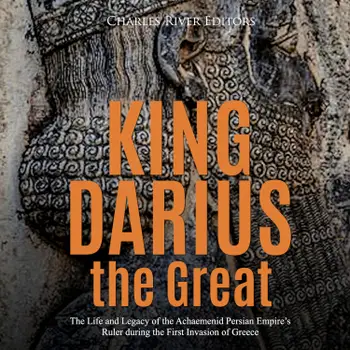
King Darius the Great: The Life and Legacy of the Achaemenid Persian Empire's Ruler during the First Invasion of Greece

It was not until the excavations of the 1930s that many of the relics, reliefs, and clay tablets that offer so much information about Persian life could be studied for the first time. Through archaeological remains, ancient texts, and work by a new generation of historians, a picture can today be built of this remarkable civilization and their capital city. Although the city had been destroyed, the legacy of the Persians survived, even as they mostly remain an enigma to the West and are not nearly as well understood as the Greeks, Romans, or Egyptians. In a sense, the Achaemenid Persian Empire holds some of the most enduring mysteries of ancient civilization.

When considering this empire’s rulers, the two most often referenced are Xerxes, the leader of the Persian invasion of Greece which caused the heroic sacrifice of the Spartans and their allies at Thermopylae, or Cyrus the Great, the man who created the Persian Empire. But the Persians had another critical ruler sandwiched between them, and Cyrus’s accomplishments and Xerxes’s defeats would not have been possible without him. That king was Xerxes’s own father, Darius I, best known as Darius the Great.

Darius I took the throne after the death of Cyrus’s son, Cambyses II, and though his reign would not have been possible without the construction of the empire and the administrative groundwork laid by Cyrus the Great before him, Darius proved himself just as worthy of the epithet. Reigning for over 35 years, Darius kept control of the massive Persian Empire despite numerous rebellions and uprisings, and he also managed to implement reforms and improvements that established the empire’s golden age. He followed the example of Cyrus before him in his foreign policy and mode of kingship as well, offering tolerance and patience to various cultures and religions, and even treating his enemies fairly in most cases.
Over dit boek

It was not until the excavations of the 1930s that many of the relics, reliefs, and clay tablets that offer so much information about Persian life could be studied for the first time. Through archaeological remains, ancient texts, and work by a new generation of historians, a picture can today be built of this remarkable civilization and their capital city. Although the city had been destroyed, the legacy of the Persians survived, even as they mostly remain an enigma to the West and are not nearly as well understood as the Greeks, Romans, or Egyptians. In a sense, the Achaemenid Persian Empire holds some of the most enduring mysteries of ancient civilization.

When considering this empire’s rulers, the two most often referenced are Xerxes, the leader of the Persian invasion of Greece which caused the heroic sacrifice of the Spartans and their allies at Thermopylae, or Cyrus the Great, the man who created the Persian Empire. But the Persians had another critical ruler sandwiched between them, and Cyrus’s accomplishments and Xerxes’s defeats would not have been possible without him. That king was Xerxes’s own father, Darius I, best known as Darius the Great.

Darius I took the throne after the death of Cyrus’s son, Cambyses II, and though his reign would not have been possible without the construction of the empire and the administrative groundwork laid by Cyrus the Great before him, Darius proved himself just as worthy of the epithet. Reigning for over 35 years, Darius kept control of the massive Persian Empire despite numerous rebellions and uprisings, and he also managed to implement reforms and improvements that established the empire’s golden age. He followed the example of Cyrus before him in his foreign policy and mode of kingship as well, offering tolerance and patience to various cultures and religions, and even treating his enemies fairly in most cases.
Begin vandaag nog met dit boek voor € 0

  • Krijg volledige toegang tot alle boeken in de app tijdens de proefperiode
  • Geen verplichtingen, op elk moment annuleren
Probeer nu gratis
Meer dan 52.000 mensen hebben Nextory 5 sterren gegeven in de App store en op Google Play.

  1. Eleanor of Aquitaine and Richard the Lionheart: The History of the Mother and Son Who Shaped Medieval Europe

    Charles River Editors

  2. Billie Holiday and Etta James: The Lives and Legacies of the Famous Jazz Singers

    Charles River Editors

  3. The Wars that Forged Ancient Rome: The History of the Military Campaigns that Established Antiquity’s Greatest Empire

    Charles River Editors

  4. The Myths of India: The History and Legacy of Mythology across the Indian Subcontinent

    Charles River Editors

  5. Nostradamus and Baba Vanga: The Controversial Lives and Prophecies of the Modern Era’s Most Famous Seers

    Charles River Editors

  6. Rome’s Conquest of Western Europe: The History of the Campaigns that Expanded the Roman Empire across the Continent

    Charles River Editors

  7. 3.0

    Basque Country: The Turbulent History and Legacy of the Basque Autonomous Community in Spain

    Charles River Editors

  8. The Greatest Generals of the Roman Republic: The History of the Military Leaders Who Led the Rise of Rome

    Charles River Editors

  9. 4.0

    The War of the Spanish Succession: The History of the Conflict Between the Bourbons and Habsburgs that Engulfed Europe

    Charles River Editors

  10. 3.0

    Flat Earth and Hollow Earth Theories: A History of Strange Tales and Bizarre Beliefs about the Planet

    Charles River Editors

  11. Niels Bohr and J. Robert Oppenheimer: The Lives and Careers of the Physicists Who Pioneered Atomic Energy

    Charles River Editors

  12. Ernest Shackleton and Robert Falcon Scott: The History of the British Explorers’ Notorious Rivalry during the Heroic Age of Antarctic Exploration

    Charles River Editors