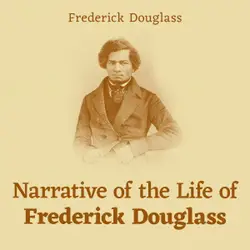
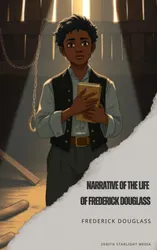
Narrative Of The Life Of Frederick Douglass

We rely on your support to help us keep producing beautiful, free, and unrestricted editions of literature for the digital age. Will you support our efforts with a donation ? The Narrative of the Life of Frederick Douglass was written in 1845, seven years after Douglass escaped slavery, and is the first of three autobiographies. It covers his life as a slave, enduring the whips of the overseers and the hopelessness of his circumstances, until his escape to the north and arrival at New Bedford, Massachusetts. The brutalities he witnessed and his slowly growing desire for freedom are presented in the vivid language he was already known for in his antislavery oration. The eloquence of Douglass's speeches caused some skeptics to doubt his credibility, believing that a former slave with no education could never speak so well. Thus, part of his motivation for writing the book was to dispel this suspicion and to provide a fuller history than was possible in his lectures. The abolitionists William Lloyd Garrison and Wendell Phillips provided introductions vouching for the truth of Douglass's words. The book was an immediate best seller. The fame brought danger to Douglass, who sailed for England shortly after the book's publication to ensure he would not be apprehended as a fugitive slave. He spent two years touring and lecturing in Great Britain and Ireland before returning to America to continue his abolitionist work. English supporters raised funds to purchase his freedom from his former master. The slave narrative is an autobiographical genre written by escaped slaves concerning their lives in bondage. Slave narratives not only promoted abolitionism by giving first hand evidence of the cruelty and hypocrisy of slaveholders, but also allowed African Americans to express themselves as intelligent, articulate individuals, deserving of respect and freedom. Douglass's Narrative is perhaps the most important example of the genre, on the basis of its literary merits and its impact on the abolitionist movement.

Over dit boek

We rely on your support to help us keep producing beautiful, free, and unrestricted editions of literature for the digital age. Will you support our efforts with a donation ? The Narrative of the Life of Frederick Douglass was written in 1845, seven years after Douglass escaped slavery, and is the first of three autobiographies. It covers his life as a slave, enduring the whips of the overseers and the hopelessness of his circumstances, until his escape to the north and arrival at New Bedford, Massachusetts. The brutalities he witnessed and his slowly growing desire for freedom are presented in the vivid language he was already known for in his antislavery oration. The eloquence of Douglass's speeches caused some skeptics to doubt his credibility, believing that a former slave with no education could never speak so well. Thus, part of his motivation for writing the book was to dispel this suspicion and to provide a fuller history than was possible in his lectures. The abolitionists William Lloyd Garrison and Wendell Phillips provided introductions vouching for the truth of Douglass's words. The book was an immediate best seller. The fame brought danger to Douglass, who sailed for England shortly after the book's publication to ensure he would not be apprehended as a fugitive slave. He spent two years touring and lecturing in Great Britain and Ireland before returning to America to continue his abolitionist work. English supporters raised funds to purchase his freedom from his former master. The slave narrative is an autobiographical genre written by escaped slaves concerning their lives in bondage. Slave narratives not only promoted abolitionism by giving first hand evidence of the cruelty and hypocrisy of slaveholders, but also allowed African Americans to express themselves as intelligent, articulate individuals, deserving of respect and freedom. Douglass's Narrative is perhaps the most important example of the genre, on the basis of its literary merits and its impact on the abolitionist movement.
Begin vandaag nog met dit boek voor € 0

  • Krijg volledige toegang tot alle boeken in de app tijdens de proefperiode
  • Geen verplichtingen, op elk moment annuleren
Probeer nu gratis
Meer dan 52.000 mensen hebben Nextory 5 sterren gegeven in de App store en op Google Play.

  1. 1.0

    Born a Slave: Anthology : Collected Memoirs and Interviews

    Sojourner Truth, Solomon Northup, Harriet Jacobs, Booker T. Washington, Frederick Douglass, Mary Prince, Boyrereau Brinch, Olaudah Equiano, Zamba Zembola, Solomon Bayley, William Grimes, William Craft, Ellen Craft, Moses Roper, Henry Watson, John Brown, J. W. Loguen, John Andrew Jackson, Willie Lynch, Nat Turner, Louis Hughes, Jacob D. Green, Elizabeth Keckley, Josiah Henson, Charles Ball, Austin Steward, Henry Bibb, William Wells Brown, L. S. Thompson, James W. C. Pennington, Kate Drumgoold, Lucy A. Delaney, Moses Grandy, Leonard Black, John Gabriel Stedman, Henry Box Brown, Margaretta Matilda Odell, Thomas S. Gaines, James L. Smith, Joseph Mountain, Peter Still, Emma Ray, Lloyd Ray, Annie L. Burton, Nina Hill Robinson, Nicholas Said, George Henry, Israel Campbell, Lewis Clarke, Francis Fedric, Venture Smith

  2. 4.0

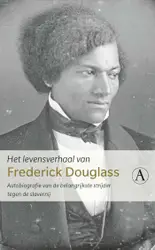
    Het levensverhaal van Frederick Douglass : Autobiografie van de belangrijkste strijder tegen de slavernij

    Frederick Douglass

  3. Narrative of the Life of Frederick Douglass

    Frederick Douglass

  4. My Bondage and My Freedom

    Frederick Douglass

  5. J’étais esclave aux États-Unis : Le témoignage choc qui a ébranlé l’Amérique et changé le cours de l’Histoire

    Frederick Douglass

  6. Vie d'un esclave américain, écrite par lui-même

    Frederick Douglass

  7. Vida de un esclavo americano : escrita por él mismo

    Frederick Douglass

  8. My Bondage and My Freedom

    Frederick Douglass

  9. Narrative of the Life of Frederick Douglass

    Frederick Douglass

  10. The Essential Classics: Volume 2 : Arsène Lupin, Gentleman Burglar; Animal Farm; Crime and Punishment; Narrative of the Life of Frederick Douglass; & Wuthering Heights

    George Orwell, Fyodor Dostoyevsky, Maurice Leblanc, Emily Brontë, Frederick Douglass

  11. History's Great Speeches: The Definitive Collection : 40 hours of historical highlights from Pericles to Mao covering 54 orators, and 153 speeches

    Julius Caesar, Marcus Tullius Cicero, Demosthenes, Pericles, William Pitt, William Lloyd Garrison, William Morris, Abraham Lincoln, Albert Apponyi, Alexander the Great, A.M. Sullivan, Annie Besant, Caius Marius, Caius Memmius, Catiline, Cato The Younger, Charles Phillips, Joseph, Daniel O'Connell, Dinarchus, EDMUND BURKE, Eduard Bernstein, Edward Carpenter, Elizabeth I, Emilio Castelar, Eugene Debs, Frederick Douglass, Mohandas Gandhi, George Graham Vest, Girolamo Savonarola, Giuseppe Garibaldi, Huldrych Zwingli, John Calvin, Gaetano, Louis Kossuth, Louis Lingg, Mao Tsetung, Mark Anthony, Mark Twain, Martin Luther, Maximillian Robespierre, Mikhail Bakunin, Muhammad, Napoleon Bonaparte, Otto von Bismarck, Peter Kropotkin, Phillip Melanchthon, Pico della Mirandola, Pierre Joseph Proudhon, Pope Urban, Red Jacket, Robert Emmet, Susan B. Anthony, Swami Vivekananda

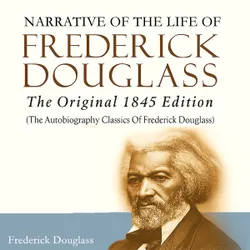
  12. Narrative of the Life of Frederick Douglass: The Original 1845 Edition (The Autobiography Classics Of Frederick Douglass) :

    Frederick Douglass