Narrative Of The Life Of Frederick Douglass

We rely on your support to help us keep producing beautiful, free, and unrestricted editions of literature for the digital age. Will you support our efforts with a donation ? The Narrative of the Life of Frederick Douglass was written in 1845, seven years after Douglass escaped slavery, and is the first of three autobiographies. It covers his life as a slave, enduring the whips of the overseers and the hopelessness of his circumstances, until his escape to the north and arrival at New Bedford, Massachusetts. The brutalities he witnessed and his slowly growing desire for freedom are presented in the vivid language he was already known for in his antislavery oration. The eloquence of Douglass's speeches caused some skeptics to doubt his credibility, believing that a former slave with no education could never speak so well. Thus, part of his motivation for writing the book was to dispel this suspicion and to provide a fuller history than was possible in his lectures. The abolitionists William Lloyd Garrison and Wendell Phillips provided introductions vouching for the truth of Douglass's words. The book was an immediate best seller. The fame brought danger to Douglass, who sailed for England shortly after the book's publication to ensure he would not be apprehended as a fugitive slave. He spent two years touring and lecturing in Great Britain and Ireland before returning to America to continue his abolitionist work. English supporters raised funds to purchase his freedom from his former master. The slave narrative is an autobiographical genre written by escaped slaves concerning their lives in bondage. Slave narratives not only promoted abolitionism by giving first hand evidence of the cruelty and hypocrisy of slaveholders, but also allowed African Americans to express themselves as intelligent, articulate individuals, deserving of respect and freedom. Douglass's Narrative is perhaps the most important example of the genre, on the basis of its literary merits and its impact on the abolitionist movement.

Om den här boken

We rely on your support to help us keep producing beautiful, free, and unrestricted editions of literature for the digital age. Will you support our efforts with a donation ? The Narrative of the Life of Frederick Douglass was written in 1845, seven years after Douglass escaped slavery, and is the first of three autobiographies. It covers his life as a slave, enduring the whips of the overseers and the hopelessness of his circumstances, until his escape to the north and arrival at New Bedford, Massachusetts. The brutalities he witnessed and his slowly growing desire for freedom are presented in the vivid language he was already known for in his antislavery oration. The eloquence of Douglass's speeches caused some skeptics to doubt his credibility, believing that a former slave with no education could never speak so well. Thus, part of his motivation for writing the book was to dispel this suspicion and to provide a fuller history than was possible in his lectures. The abolitionists William Lloyd Garrison and Wendell Phillips provided introductions vouching for the truth of Douglass's words. The book was an immediate best seller. The fame brought danger to Douglass, who sailed for England shortly after the book's publication to ensure he would not be apprehended as a fugitive slave. He spent two years touring and lecturing in Great Britain and Ireland before returning to America to continue his abolitionist work. English supporters raised funds to purchase his freedom from his former master. The slave narrative is an autobiographical genre written by escaped slaves concerning their lives in bondage. Slave narratives not only promoted abolitionism by giving first hand evidence of the cruelty and hypocrisy of slaveholders, but also allowed African Americans to express themselves as intelligent, articulate individuals, deserving of respect and freedom. Douglass's Narrative is perhaps the most important example of the genre, on the basis of its literary merits and its impact on the abolitionist movement.
Kom igång med den här boken idag för 0 kr

  • Få full tillgång till alla böcker i appen under provperioden
  • Ingen bindningstid, avsluta när du vill
Prova gratis nu
Mer än 52 000 personer har gett Nextory 5 stjärnor i App Store och på Google Play.

  1. 100$ REWARD ON MY HEAD – Powerful & Unflinching Memoirs Of Former Slaves: 28 Narratives in One Volume : Voices of Resilience and Freedom: Untold Stories of Former Slaves

    Thomas Clarkson, Daniel Drayton, Louis Hughes, Lydia Maria Child, Austin Steward, Ida B. Wells-Barnett, Moses Grandy, William Wells Brown, William Still, Nat Turner, Henry Bibb, Olaudah Equiano, Sojourner Truth, Mary Prince, Kate Drumgoold, Frederick Douglass, Brantz Mayer, Theodore Canot, Booker T. Washington, Elizabeth Keckley, Charles Ball, Solomon Northup, Josiah Henson, Stephen Smith, Ellen Craft, William Craft, John Gabriel Stedman, Sarah H. Bradford, Lucy A. Delaney, L. S. Thompson, F. G. De Fontaine, Henry Box Brown, John Dixon Long, Harriet Jacobs, Jacob D. Green, Thomas S. Gaines, Willie Lynch, Margaretta Matilda Odell, Joseph Mountain

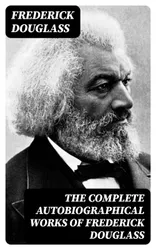
  2. The Complete Autobiographical Works of Frederick Douglass

    Frederick Douglass

  3. 4.5

    Narrative of the Life of Frederick Douglass

    Frederick Douglass

  4. Narrative of the Life of Frederick Douglass, an American Slave

    Frederick Douglass

  5. UNCHAINED - Powerful & Unflinching Narratives Of Former Slaves: 28 True Life Stories in One Volume : Journey to Freedom: Unyielding Slavery Narratives

    Frederick Douglass, Solomon Northup, Willie Lynch, Nat Turner, Sojourner Truth, Harriet Jacobs, Mary Prince, William Craft, Ellen Craft, Louis Hughes, Jacob D. Green, Booker T. Washington, Olaudah Equiano, Elizabeth Keckley, William Still, Sarah H. Bradford, Josiah Henson, Charles Ball, Austin Steward, Henry Bibb, L. S. Thompson, Kate Drumgoold, Lucy A. Delaney, Moses Grandy, John Gabriel Stedman, Henry Box Brown, Margaretta Matilda Odell, Thomas S. Gaines, Brantz Mayer, Theodore Canot, Daniel Drayton, Thomas Clarkson, F. G. De Fontaine, John Dixon Long, Stephen Smith, Joseph Mountain, Ida B. Wells-Barnett, Lydia Maria Child, William Wells Brown

  6. My Bondage and My Freedom

    Frederick Douglass

  7. Narrative of the Life of Frederick Douglass

    Frederick Douglass

  8. My Bondage and My Freedom

    Frederick Douglass

  9. J’étais esclave aux États-Unis : Le témoignage choc qui a ébranlé l’Amérique et changé le cours de l’Histoire

    Frederick Douglass

  10. Vie d'un esclave américain, écrite par lui-même

    Frederick Douglass

  11. Vida de un esclavo americano : escrita por él mismo

    Frederick Douglass

  12. Narrative of the Life of Frederick Douglass

    Frederick Douglass