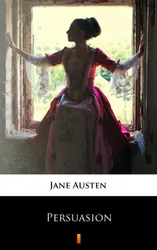
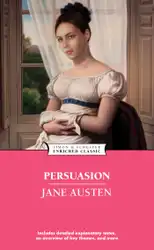
Persuasion

In Jane Austen's final completed novel, "Persuasion," the narrative unfolds around Anne Elliot, a woman whose mature perspective on love and societal expectations serves as a poignant critique of early 19th-century English gentry. The novel employs a richly layered literary style, combining sharp dialogue and keen social observation, often veering towards irony and self-reflection. Austen's exploration of themes such as regret, resilience, and the powerful nature of true love is set against a backdrop of shifting social dynamics, enhanced by her astute characterizations and intricate plot developments. This work stands as a testament to Austen's mastery in encapsulating human emotions, particularly the nuances of persuasion that influence personal relationships and societal positions. Jane Austen (1775-1817) was a pioneering novelist whose keen insights into the lives of women and class structures have rendered her an enduring figure in English literature. The inspiration for "Persuasion" stems from Austen's own life experiences and the societal limitations placed upon women, particularly regarding marriage and autonomy. Having remained single for much of her life, Austen's observations on love and the complexities of romantic entanglements are further enriched by her personal reflections on choices and second chances. "Persuasion" is highly recommended for readers interested in a thoughtful yet engaging exploration of love, social status, and the intricacies of human relationships. Austen's work provides a profound understanding of personal reflections and societal critique, making it not only a delightful read but also a significant contribution to the literary canon. Whether for a first-time reader or a seasoned Austen enthusiast, this novel invites contemplation on the art of persuasion in the context of enduring human emotions.

Over dit boek

In Jane Austen's final completed novel, "Persuasion," the narrative unfolds around Anne Elliot, a woman whose mature perspective on love and societal expectations serves as a poignant critique of early 19th-century English gentry. The novel employs a richly layered literary style, combining sharp dialogue and keen social observation, often veering towards irony and self-reflection. Austen's exploration of themes such as regret, resilience, and the powerful nature of true love is set against a backdrop of shifting social dynamics, enhanced by her astute characterizations and intricate plot developments. This work stands as a testament to Austen's mastery in encapsulating human emotions, particularly the nuances of persuasion that influence personal relationships and societal positions. Jane Austen (1775-1817) was a pioneering novelist whose keen insights into the lives of women and class structures have rendered her an enduring figure in English literature. The inspiration for "Persuasion" stems from Austen's own life experiences and the societal limitations placed upon women, particularly regarding marriage and autonomy. Having remained single for much of her life, Austen's observations on love and the complexities of romantic entanglements are further enriched by her personal reflections on choices and second chances. "Persuasion" is highly recommended for readers interested in a thoughtful yet engaging exploration of love, social status, and the intricacies of human relationships. Austen's work provides a profound understanding of personal reflections and societal critique, making it not only a delightful read but also a significant contribution to the literary canon. Whether for a first-time reader or a seasoned Austen enthusiast, this novel invites contemplation on the art of persuasion in the context of enduring human emotions.
Begin vandaag nog met dit boek voor € 0

  • Krijg volledige toegang tot alle boeken in de app tijdens de proefperiode
  • Geen verplichtingen, op elk moment annuleren
Probeer nu gratis
Meer dan 52.000 mensen hebben Nextory 5 sterren gegeven in de App store en op Google Play.

  1. 4.5

    Emma

    Jane Austen

  2. 4.5

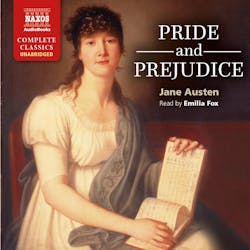
    Pride and Prejudice

    Jane Austen

  3. 3.0

    50 Masterpieces you have to read before you die vol: 1 (2020 Edition) : Included: Little Women, The Richest Man in Babylon Emma, The Call Of The Wild ....

    Louisa May Alcott, Dante Alighieri, Marcus Aurelius, Jane Austen, L. Frank Baum, Charlotte Brontë, Emily Brontë, Anne Brontë, Miguel de Cervantes, Agatha Christie, George S. Clason, Arthur Conan Doyle, Joseph Conrad, Charles Dickens, Fyodor Dostoyevsky, Alexandre Dumas, George Eliot, G.K. Chesterton, G.K. Chesterton, Zane Grey, Nathaniel Hawthorne, Napoleon Hill, Homer, Victor Hugo, Frances Hodgson Burnett, Washington Irving, Henry James, Franz Kafka, Rudyard Kipling, Jack London, Leo Tolstoy, H.P. Lovecraft, Lucy Maud Montgomery, Joseph Murphy, Robert Louis Stevenson, Edgar Allan Poe, Marcel Proust, Publius, Mary Shelley, Bram Stoker, Mark Twain, Sun Tzu, Lew Wallace, Wallace D. Wattles, H.G. Wells

  4. 2.1

    Emma

    Jane Austen

  5. 4.5

    Pride and Prejudice

    Jane Austen

  6. The Complete Novels of Jane Austen

    Jane Austen

  7. The Horror Beyond Life's Edge : Gothic Horror Classics & Supernatural Mysteries Unveiled

    Mary Shelley, H.P. Lovecraft, H.G. Wells, Edgar Allan Poe, Henry James, Hugh Walpole, M. R. James, Wilkie Collins, E F Benson, Nathaniel Hawthorne, Ambrose Bierce, Arthur Machen, William Hope Hodgson, Arthur Conan Doyle, Grant Allen, Bram Stoker, Théophile Gautier, Richard Marsh, Joseph Sheridan Fanu, Thomas Hardy, Charles Dickens, Rudyard Kipling, Guy De Maupassant, Elizabeth Gaskell, Mark Twain, Daniel Defoe, Jerome K Jerome, Fitz-James O’Brien, Catherine Crowe, Émile Erckmann, Alexandre Chatrian, Pedro De Alarçon, Amelia B. Edwards, Washington Irving, John Meade Falkner, Harriet Beecher Stowe, Mary E. Freeman, Louisa M. Alcott, Edith Nesbit, Mary Louisa Molesworth, Francis Marion Crawford, John Kendrick Bangs, John Buchan, Sabine Baring-Gould, Cleveland Moffett, Louis Tracy, Nikolai Gogol, James Malcolm Rymer, Thomas Peckett Prest, Frederick Marryat, Oscar Wilde, Robert Louis Stevenson, Charlotte Perkins Gilman, W. W. Jacobs, H. H. (Saki), Wilhelm Hauff, Mary Elizabeth Braddon, Robert W. Chambers, Edward Bulwer-Lytton, Thomas De Quincey, William Makepeace Thackeray, E. T. Hoffmann, Robert E. Howard, David Lindsay, Marie Belloc Lowndes, Edward Bellamy, Jack London, Pliny the Younger, Helena Blavatsky, Fergus Hume, Florence Marryat, Villiers de Adam, William Archer, William F. Harvey, Katherine Rickford, Ralph Adams Cram, Leopold Kompert, Brander Matthews, Vincent O'Sullivan, Ellis Parker Butler, A. T. Quiller-Couch, Fiona Macleod, Lafcadio Hearn, William T. Stead, Gambier Bolton, Andrew Jackson Davis, Nizida, Walter F. Prince, Chester Bailey Fernando, Leonard Kip, Frank R. Stockton, Bithia Mary Croker, Catherine L. Pirkis, Leonid Andreyev, Anatole France, Richard Le Gallienne, Lucy Maud Montgomery, Stanley G. Weinbaum, Horace Walpole, William Thomas Beckford, Matthew Gregory Lewis, Ann Radcliffe, Jane Austen, John William Polidori, Charlotte Brontë, Emily Brontë, Walter Hubbell, George W. Reynolds, M.P. Shiel, Adelbert von Chamisso

  8. Gevoel en verstand

    Gonne Van Uildriks, Jane Austen

  9. 4.3

    Emma

    Jane Austen

  10. Emma

    Jane Austen

  11. 4.2
    #1

    Pride and Prejudice - Audiobook

    Jane Austen, Classic Audiobooks

  12. 4.3

    Trots en vooroordeel

    Jane Austen


Gerelateerde categorieën