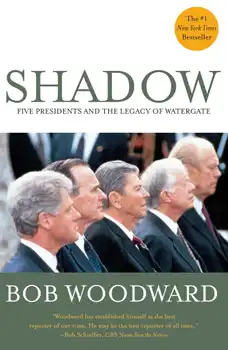
Shadow : Five Presidents And The Legacy Of Watergate

Twenty-five years ago, after Richard Nixon resigned the presidency, Gerald Ford promised a return to normalcy. "My fellow Americans, our long national nightmare is over," President Ford declared.

But it was not. The Watergate scandal, and the remedies against future abuses of power, would have an enduring impact on presidents and the country. In Shadow, Bob Woodward takes us deep into the administrations of Ford, Carter, Reagan, Bush and Clinton to describe how each discovered that the presidency was forever altered. With special emphasis on the human toll, Woodward shows the consequences of the new ethics laws, and the emboldened Congress and media. Powerful investigations increasingly stripped away the privacy and protections once expected by the nation's chief executive.

Using presidential documents, diaries, prosecutorial records and hundreds of interviews with firsthand witnesses, Woodward chronicles how all five men failed first to understand and then to manage the inquisitorial environment.

"The mood was mean," Gerald Ford says. Woodward explains how Ford believed he had been offered a deal to pardon Nixon, then clumsily rejected it and later withheld all the details from Congress and the public, leaving lasting suspicions that compromised his years in the White House.

Jimmy Carter used Watergate to win an election, and then watched in bewilderment as the rules of strict accountability engulfed his budget director, Bert Lance, and challenged his own credibility. From his public pronouncements to the Iranian hostage crisis, Carter never found the decisive, healing style of leadership the first elected post-Watergate president had promised.

Woodward also provides the first behind-the-scenes account of how President Reagan and a special team of more than 60 attorneys and archivists beat Iran-contra. They turned the Reagan White House and United States intelligence agencies upside down investigating the president with orders to disclose any incriminating information they found. A fresh portrait of an engaged Reagan emerges as he realizes his presidency is in peril and attempts to prove his innocence.

In Shadow, a bitter and disoriented President Bush routinely pours out his anger at the permanent scandal culture to his personal diary as a dozen investigations touch some of those closest to him. At one point, Bush pounds a plastic mallet on his Oval Office desk because of the continuing investigation of Iran-contra Independent Counsel Lawrence Walsh. "Take that, Walsh!" he shouts. "I'd like to get rid of this guy." Woodward also reveals why Bush avoided telling one of the remaining secrets of the Gulf War.

The second half of Shadow focuses on President Clinton's scandals. Woodward shows how and why Independent Counsel Kenneth Starr's investigation became a state of permanent war with the Clintons. He reveals who Clinton really feared in the Paula Jones case, and the behind-the-scenes maneuvering and ruthless, cynical legal strategies to protect the Clintons. Shadow also describes how impeachment affected Clinton's war decisions and scarred his life, his marriage and his presidency. "How can I go on?" First Lady Hillary Clinton asked in 1996, when she was under scrutiny by Starr and the media, two years before the Lewinsky scandal broke. "How can I?"

Shadow is an authoritative, unsettling narrative of the modern, beleaguered presidency.

Over dit boek

Twenty-five years ago, after Richard Nixon resigned the presidency, Gerald Ford promised a return to normalcy. "My fellow Americans, our long national nightmare is over," President Ford declared.

But it was not. The Watergate scandal, and the remedies against future abuses of power, would have an enduring impact on presidents and the country. In Shadow, Bob Woodward takes us deep into the administrations of Ford, Carter, Reagan, Bush and Clinton to describe how each discovered that the presidency was forever altered. With special emphasis on the human toll, Woodward shows the consequences of the new ethics laws, and the emboldened Congress and media. Powerful investigations increasingly stripped away the privacy and protections once expected by the nation's chief executive.

Using presidential documents, diaries, prosecutorial records and hundreds of interviews with firsthand witnesses, Woodward chronicles how all five men failed first to understand and then to manage the inquisitorial environment.

"The mood was mean," Gerald Ford says. Woodward explains how Ford believed he had been offered a deal to pardon Nixon, then clumsily rejected it and later withheld all the details from Congress and the public, leaving lasting suspicions that compromised his years in the White House.

Jimmy Carter used Watergate to win an election, and then watched in bewilderment as the rules of strict accountability engulfed his budget director, Bert Lance, and challenged his own credibility. From his public pronouncements to the Iranian hostage crisis, Carter never found the decisive, healing style of leadership the first elected post-Watergate president had promised.

Woodward also provides the first behind-the-scenes account of how President Reagan and a special team of more than 60 attorneys and archivists beat Iran-contra. They turned the Reagan White House and United States intelligence agencies upside down investigating the president with orders to disclose any incriminating information they found. A fresh portrait of an engaged Reagan emerges as he realizes his presidency is in peril and attempts to prove his innocence.

In Shadow, a bitter and disoriented President Bush routinely pours out his anger at the permanent scandal culture to his personal diary as a dozen investigations touch some of those closest to him. At one point, Bush pounds a plastic mallet on his Oval Office desk because of the continuing investigation of Iran-contra Independent Counsel Lawrence Walsh. "Take that, Walsh!" he shouts. "I'd like to get rid of this guy." Woodward also reveals why Bush avoided telling one of the remaining secrets of the Gulf War.

The second half of Shadow focuses on President Clinton's scandals. Woodward shows how and why Independent Counsel Kenneth Starr's investigation became a state of permanent war with the Clintons. He reveals who Clinton really feared in the Paula Jones case, and the behind-the-scenes maneuvering and ruthless, cynical legal strategies to protect the Clintons. Shadow also describes how impeachment affected Clinton's war decisions and scarred his life, his marriage and his presidency. "How can I go on?" First Lady Hillary Clinton asked in 1996, when she was under scrutiny by Starr and the media, two years before the Lewinsky scandal broke. "How can I?"

Shadow is an authoritative, unsettling narrative of the modern, beleaguered presidency.

Begin vandaag nog met dit boek voor € 0

  • Krijg volledige toegang tot alle boeken in de app tijdens de proefperiode
  • Geen verplichtingen, op elk moment annuleren
Probeer nu gratis
Meer dan 52.000 mensen hebben Nextory 5 sterren gegeven in de App store en op Google Play.

Populaire titels

Sla de lijst over
  1. The Clinton Enigma: A Four and a Half Minute Speech Reveals This President's Entire Life

    David Maraniss

  2. Sex With Presidents : The Ins and Outs of Love and Lust in the White House

    Eleanor Herman

  3. Thanks for the Memories, Mr. President : Wit and Wisdom from the Front Row at the White House

    Helen Thomas

  4. 3.0

    The Clinton Tapes : Wrestling History with the President

    Taylor Branch

  5. Man of the World : The Further Endeavors of Bill Clinton

    Joe Conason

  6. Eisenhower : Soldier and President

    Stephen E. Ambrose

  7. 3.0

    American Gunfight : The Plot to Kill Harry Truman--and the Shoot-out that Stopped It

    Stephen Hunter, John Bainbridge

  8. The Bomb in the Basement : How Israel Went Nuclear and What That Means for the World

    Michael Karpin

  9. 2.0

    President's Inaugural Speeches: From Washington to Trump (1789-2017) : The Rise and Development of America Through the Ambitions and Platforms of Elected Presidents

    George Washington, John Adams, Thomas Jefferson, James Madison, James Monroe, John Quincy Adams, Andrew Jackson, Martin Van Buren, William Henry Harrison, James Knox Polk, Zachary Taylor, Franklin Pierce, James Buchanan, Abraham Lincoln, Ulysses S. Grant, Rutherford B. Hayes, James A. Garfield, Grover Cleveland, Benjamin Harrison, William McKinley, Theodore Roosevelt, William Howard Taft, Woodrow Wilson, Warren G. Harding, Calvin Coolidge, Herbert Hoover, Franklin D. Roosevelt, Harry S. Truman, Dwight D. Eisenhower, John F. Kennedy, Lyndon Baines Johnson, Richard Milhous Nixon, Jimmy Carter, Ronald Reagan, George Bush, Bill Clinton, George W. Bush, Barack Obama, Donald John Trump

  10. Hard Measures : How Aggressive CIA Actions After 9/11 Saved American Lives

    Jose A. Rodriguez, Bill Harlow

  11. First Lady's. De vrouwen in het Witte Huis : de charme en kracht van Amerika's moderne presidentsvrouwen. Van Jacqueline Kennedy tot Michelle Obama

    Kate Andersen Brower

  12. 3.7

    Unit X : How the Pentagon and Silicon Valley Are Transforming the Future of War

    Raj M. Shah, Christopher Kirchhoff