Over dit boek

Discover an ancient philosophy centered on simplicity, harmony, balance, and living in accordance with the natural flow of life.

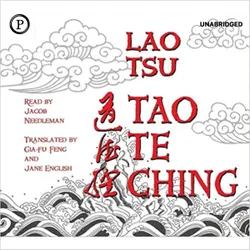
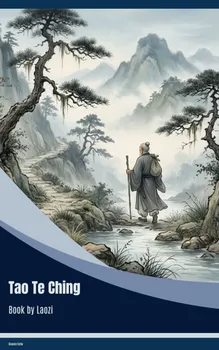
Tao Te Ching, traditionally attributed to Laozi, is one of the foundational texts of Taoist philosophy and one of the most influential works of wisdom literature in the world. Composed of concise and poetic teachings, the text explores the nature of the Tao, or "the Way," and offers reflections on how individuals can live with greater balance, humility, simplicity, and awareness.

Through brief yet profound passages, Laozi considers enduring questions about human nature, leadership, power, knowledge, desire, simplicity, compassion, and harmony with nature. Rather than presenting a rigid system of rules, the work encourages readers to observe the natural order of things and discover a more balanced way of living.

A central idea of the Tao Te Ching is wu wei, often translated as "non-action" or "effortless action." The concept emphasizes acting without unnecessary force and allowing situations to unfold according to their natural tendencies. Alongside this principle, Laozi's teachings highlight humility, moderation, compassion, and freedom from excessive desire.

The text has influenced philosophy, spirituality, literature, political thought, and approaches to personal development for centuries. Its short chapters and poetic language make it a work that can be read quickly yet contemplated for a lifetime.

Whether you are exploring Taoism, Eastern philosophy, spiritual wisdom, meditation, or the search for a simpler and more harmonious life, Tao Te Ching offers timeless ideas that continue to inspire readers across cultures.

Step into one of the world's great works of philosophical wisdom. Read Tao Te Ching today and explore Laozi's enduring teachings on the Way, balance, simplicity, nature, and the art of living.
Begin vandaag nog met dit boek voor € 0

  • Krijg volledige toegang tot alle boeken in de app tijdens de proefperiode
  • Geen verplichtingen, op elk moment annuleren
Probeer nu gratis
Meer dan 52.000 mensen hebben Nextory 5 sterren gegeven in de App store en op Google Play.

  1. 3.7

    Tao Te Ching : The Way

    Laozi

  2. 4.3

    500 Quotes from Great Minds

    Charles Baudelaire, Carl Jung, Martin Luther King, Dalai-lama, Laozi

  3. 4.5

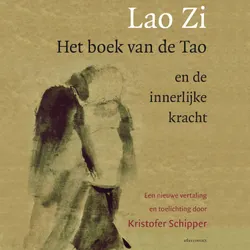
    Het boek van de Tao en de innerlijke kracht : Een nieuwe vertaling en toelichting door Kristofer Schipper

    Kristofer Schipper, Laozi

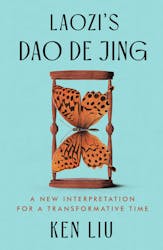
  4. Laozi's Dao De Jing : A New Interpretation for a Transformative Time

    Laozi, Ken Liu

  5. Tao Te Ching : The Timeless Classic of Taoist Wisdom, by Lao Tzu

    Laozi, Lao Tzu

  6. 4.0

    3500 Final Quotes

    Marcus Aurelius, Jane Austen, Beaumarchais, Napoleon Bonaparte, Buddha, Winston Churchill, Cicero, Confucius, Nicolas de Chamfort, Charles de Gaulle, Antoine de Saint-Exupéry, Denis Diderot, Fyodor Dostoevsky, Albert Einstein, Ralph Waldo Emerson, Anne Frank, Mahatma Gandhi, Immanuel Kant, Søren Kierkegaard, Martin Luther King, Georg Christoph Lichtenberg, Abraham Lincoln, Montesquieu, Friedrich Nietzsche, Plato, Marcel Proust, Arthur Schopenhauer, William Shakespeare, Socrates, Baruch Spinoza, Henry David Thoreau, Leonardo da Vinci, Voltaire, Oscar Wilde, Laozi

  7. Tao Te Ching

    Laozi, Lao Tzu

  8. 4.2

    Lao Zi’s Dao De Jing

    Laozi

  9. 4.0

    Dao De Jing

    Laozi

  10. Nieuw

    The Essential Ancient Wisdom Library : 10 Classics of Philosophy, Strategy and Self-Mastery

    Marcus Aurelius, Seneca, Epictetus, Laozi, Plato, Sun Tzu, Musashi Miyamoto, Niccolò Machiavelli, Friedrich Wilhelm Nietzsche, James Allen

  11. The Essential Ancient Wisdom Library : 10 Timeless Works of Stoicism, Philosophy, Strategy and the Art of Living

    Marcus Aurelius, Seneca, Epictetus, Laozi, Plato, Sun Tzu, Musashi Miyamoto, Niccolò Machiavelli, Friedrich Wilhelm Nietzsche, James Allen

  12. The Essential Ancient Wisdom Library : 10 Timeless Works of Stoicism, Philosophy, Strategy and the Art of Living

    Marcus Aurelius, Seneca, Epictetus, Laozi, Plato, Sun Tzu, Musashi Miyamoto, Niccolò Machiavelli, Friedrich Wilhelm Nietzsche, James Allen