The Complete Confucius: The Analects, The Doctrine Of The Mean, and The Great Learning

Confucius (/kənˈfjuːʃəs/ kən-FEW-shəs; 551–479 BC) was a Chinese philosopher and politician of the Spring and Autumn period.The philosophy of Confucius, also known as Confucianism, emphasized personal and governmental morality, correctness of social relationships, justice and sincerity. His followers competed successfully with many other schools during the Hundred Schools of Thought era only to be suppressed in favor of the Legalists during the Qin dynasty. Following the victory of Han over Chu after the collapse of Qin, Confucius's thoughts received official sanction and were further developed into a system known in the West as Neo-Confucianism, and later New Confucianism (Modern Neo-Confucianism).Confucius is traditionally credited with having authored or edited many of the Chinese classic texts including all of the Five Classics, but modern scholars are cautious of attributing specific assertions to Confucius himself. Aphorisms concerning his teachings were compiled in the Analects, but only many years after his death.Confucius's principles have commonality with Chinese tradition and belief. He championed strong family loyalty, ancestor veneration, and respect of elders by their children and of husbands by their wives, recommending family as a basis for ideal government. He espoused the well-known principle "Do not do unto others what you do not want done to yourself", the Golden Rule. He is also a traditional deity in Daoism.Confucius is widely considered as one of the most important and influential individuals in shaping human history. His teaching and philosophy greatly impacted people around the world and remains influential today.

Over dit boek

Confucius (/kənˈfjuːʃəs/ kən-FEW-shəs; 551–479 BC) was a Chinese philosopher and politician of the Spring and Autumn period.The philosophy of Confucius, also known as Confucianism, emphasized personal and governmental morality, correctness of social relationships, justice and sincerity. His followers competed successfully with many other schools during the Hundred Schools of Thought era only to be suppressed in favor of the Legalists during the Qin dynasty. Following the victory of Han over Chu after the collapse of Qin, Confucius's thoughts received official sanction and were further developed into a system known in the West as Neo-Confucianism, and later New Confucianism (Modern Neo-Confucianism).Confucius is traditionally credited with having authored or edited many of the Chinese classic texts including all of the Five Classics, but modern scholars are cautious of attributing specific assertions to Confucius himself. Aphorisms concerning his teachings were compiled in the Analects, but only many years after his death.Confucius's principles have commonality with Chinese tradition and belief. He championed strong family loyalty, ancestor veneration, and respect of elders by their children and of husbands by their wives, recommending family as a basis for ideal government. He espoused the well-known principle "Do not do unto others what you do not want done to yourself", the Golden Rule. He is also a traditional deity in Daoism.Confucius is widely considered as one of the most important and influential individuals in shaping human history. His teaching and philosophy greatly impacted people around the world and remains influential today.

Begin vandaag nog met dit boek voor € 0

  • Krijg volledige toegang tot alle boeken in de app tijdens de proefperiode
  • Geen verplichtingen, op elk moment annuleren
Probeer nu gratis
Meer dan 52.000 mensen hebben Nextory 5 sterren gegeven in de App store en op Google Play.

  1. Chinese philosophy. The classic collection : The Analects, Tao Te Ching, Musings of a Chinese Mystic, The Sayings of Mencius, The Art of War

    Lao Tzu, Sun Tzu, Confucius, Chuang Tzu, Mencius

  2. 50+ Self-Help Classics Collection

    Napoleon Hill, James Allen, Kahlil Gibran, Sun Tzu, Lao Tzu, Confucius, Benjamin Franklin, Marcus Aurelius Antoninus, Russell H. Conwell, Ralph Waldo Emerson, Florence Scovel Shinn, Charles F. Haanel, Wallace D. Wattles, Orison Swett Marden, George Samuel Clason, William Walker Atkinson, P.T. Barnum, G.K. Chesterton, Leo Tolstoy

  3. The Philosophy Collection

    Marcus Aurelius, Miyamoto Musashi, Ralph Waldo Emerson, Friedrich Nietzsche, Søren Kierkegaard, Sun Tzu, Epictetus, Confucius, Plato, Lucretius, Seneca

  4. 4.0

    3500 Final Quotes

    Marcus Aurelius, Jane Austen, Beaumarchais, Napoleon Bonaparte, Buddha, Winston Churchill, Cicero, Confucius, Nicolas de Chamfort, Charles de Gaulle, Antoine de Saint-Exupéry, Denis Diderot, Fyodor Dostoevsky, Albert Einstein, Ralph Waldo Emerson, Anne Frank, Mahatma Gandhi, Immanuel Kant, Søren Kierkegaard, Martin Luther King, Georg Christoph Lichtenberg, Abraham Lincoln, Montesquieu, Friedrich Nietzsche, Plato, Marcel Proust, Arthur Schopenhauer, William Shakespeare, Socrates, Baruch Spinoza, Henry David Thoreau, Leonardo da Vinci, Voltaire, Oscar Wilde, Laozi

  5. 4.0

    Develop your General Culture in 500 Quotes

    Winston Churchill, Confucius, Albert Einstein, William Shakespeare, Sun Tzu

  6. 600 Mystical and Spiritual Quotations

    Buddha, Confucius, Mahatma Gandhi, Martin Luther King, Dalai-lama, Mother Teresa

  7. 20+ Classic Philosophy Book Collection : Eastern (The Art of War, Analects, Tao Te ching), Ancient (Republic), Stoicism (Meditations), Medieval (The Prince) and others

    Sun Tzu, Confucius, Lao Tzu, Plato, Aristotle, Marcus Aurelius, Niccolo Machiavelli

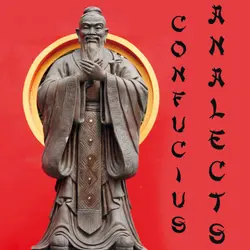
  8. The Analects of Confucius

    Confucius

  9. Nieuw

    The Doctrine of the Mean

    Confucius

  10. The Confucius Collection

    Confucius

  11. The Analects

    Confucius

  12. The Complete Works of Confucius : Teachings of the Great Sage of Harmony and Virtue

    Confucius