Over dit boek

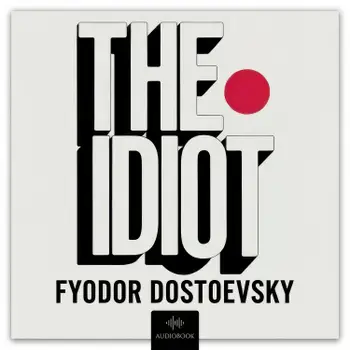
What happens when perfect goodness confronts a corrupt world? Fyodor Dostoevsky's The Idiot (1869) poses this devastating question through one of literature's most extraordinary characters: Prince Myshkin, a man so pure of heart that society can only regard him as a fool.

Returning to Russia after treatment for epilepsy in Switzerland, Myshkin enters St. Petersburg with the radical notion that human beings can be redeemed through love and compassion. His Christ-like innocence draws him into the lives of two remarkable women: Nastasya Filippovna, a beauty shattered by abuse and betrayal, and Aglaya Epanchin, torn between convention and fierce independence. What follows is a tragedy that ranks among Dostoevsky's greatest achievements.

Myshkin's very existence becomes a mirror reflecting the moral compromises, jealousies, and desperate hungers of those around him. His inability to navigate social ambition and desire makes him simultaneously the most innocent and most dangerous person in every room he enters.

Set against 1860s Russian high society—a world where old certainties are crumbling and new philosophies promise salvation or destruction—Dostoevsky weaves together faith and doubt, love and possession, sacrifice and self-destruction with psychological insight that feels startlingly modern.

This is a novel that asks whether goodness itself might be a form of madness, and whether compassion, forgiveness, and selfless love are compatible with survival in an unforgiving world.

For readers willing to confront these questions, The Idiot offers one of literature's most rewarding and heartbreaking experiences—a masterpiece that challenges our assumptions about virtue, suffering, and what it means to be human.
Begin vandaag nog met dit boek voor € 0

  • Krijg volledige toegang tot alle boeken in de app tijdens de proefperiode
  • Geen verplichtingen, op elk moment annuleren
Probeer nu gratis
Meer dan 52.000 mensen hebben Nextory 5 sterren gegeven in de App store en op Google Play.

  1. 4.6

    Crime and Punishment

    Fyodor Dostoevsky

  2. Nieuw

    White Nights : The Classic 1918 Translation — With an Exclusive Commentary on Love, Loneliness, Ghosting & Modern Relationships

    Fyodor Dostoevsky

  3. Nieuw

    50 Masterpieces You Have to Read : Volume One - An Essential Library of World Literature

    Louisa May Alcott, Jane Austen, Honoré de Balzac, Henri Barbusse, Anne Brontë, Charlotte Brontë, Emily Brontë, Edgar Rice Burroughs, Samuel Butler, Lewis Carroll, Willa Cather, Miguel de Cervantes, Kate Chopin, John Cleland, Wilkie Collins, Joseph Conrad, Charles Dickens, Fyodor Dostoevsky, Alexandre Dumas, George Eliot, Ralph Waldo Emerson, Gustave Flaubert, E. M. Forster, H. Rider Haggard, Thomas Hardy, Nathaniel Hawthorne, Robert Heinlein, Victor Hugo, Aldous Huxley, Henry James, D. H. Lawrence, H.P. Lovecraft, Herman Melville, John Milton, Robert Musil, Vladimir Nabokov, George Orwell, Edgar Allan Poe, Marcel Proust, William Shakespeare, Mary Shelley, Leo Tolstoy

  4. 4.1

    White Nights

    Fyodor Dostoevsky

  5. 3.9

    White Nights

    Fyodor Dostoevsky

  6. World's Greatest Christmas Stories

    O.Henry, Selma Lagerlöf, Beatrix Potter, Mark Twain, Susan Coolidge, Fyodor Dostoevsky, Mary Hartwell Catherwood, Thomas Hardy, Charles Dickens, Anna Robinson

  7. 4.5

    Crime and Punishment

    Fyodor Dostoevsky

  8. 4.0

    White Nights : A Tender Tale of Solitude and Dreams by Fyodor Dostoevsky

    Fyodor Dostoevsky

  9. 3.2

    White Nights :

    Fyodor Dostoevsky

  10. White Nights : A Heartfelt Tale of Longing and Dreams by Fyodor Dostoevsky

    Fyodor Dostoevsky

  11. 4.2

    White Nights - Audiobook

    Fyodor Dostoevsky, Classic Audiobooks

  12. White Nights : A Timeless Tale of Love and Longing by Fyodor Dostoevsky

    Fyodor Dostoevsky