Over dit boek

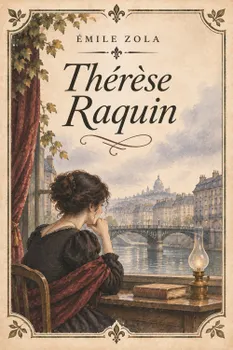
*Thérèse Raquin* is a psychological novel by Émile Zola, first published in 1867. Set in nineteenth-century Paris, the story explores forbidden passion, adultery, murder, guilt, and the destructive consequences of human desire.

Thérèse Raquin is a young woman trapped in a loveless marriage to her sickly cousin, Camille, and confined to a monotonous existence in a gloomy haberdashery shop. Her oppressive life changes when she meets Laurent, Camille's charming but selfish friend. Their passionate affair soon develops into a dangerous obsession, leading them to commit a terrible crime in pursuit of freedom.

However, instead of finding happiness together, Thérèse and Laurent become consumed by guilt, fear, and psychological torment. Haunted by memories of their actions, they gradually descend into paranoia, hatred, and emotional devastation.

Through vivid descriptions and unsettling psychological realism, Zola examines the influence of environment, heredity, and instinct on human behavior. The novel challenges conventional morality while exposing the darker aspects of passion and conscience.

Considered an early masterpiece of literary naturalism, *Thérèse Raquin* offers a haunting exploration of obsession, remorse, and self-destruction. Its intense atmosphere and tragic characters reveal how unchecked desires can transform love into suffering and ultimately destroy those who surrender to their impulses.


Begin vandaag nog met dit boek voor € 0

  • Krijg volledige toegang tot alle boeken in de app tijdens de proefperiode
  • Geen verplichtingen, op elk moment annuleren
Probeer nu gratis
Meer dan 52.000 mensen hebben Nextory 5 sterren gegeven in de App store en op Google Play.

Meer van Émile Zola

  1. Germinal - Audiobook

    Émile Zola, Classic Audiobooks

  2. The Giants of Literature : Gothic Terror, Historical Romance, Social Realism, and Dark Romantic Tales

    H.P. Lovecraft, Edgar Allan Poe, Alexandre Dumas, Frances Hodgson Burnett, Walter Scott, Frances Burney, Bram Stoker, Nathaniel Hawthorne, Anthony Trollope, Émile Zola

  3. Dokter Pascal

    Émile Zola

  4. 2.3

    The Markets of Paris

    John Sterling, Émile Zola

  5. Nieuw

    Nana

    Émile Zola

  6. Nieuw

    L'Assommoir

    Émile Zola

  7. Nieuw

    Germinal

    Émile Zola

  8. Nieuw

    50 Masterpieces you have to read before you die vol: 2

    Joseph Sheridan Fanu, Madame de Fayette, Jerome K Jerome, James Joyce, Charles Kingsley, Rudyard Kipling, Pierre Choderlos Laclos, D. H. Lawrence, Matthew Gregory Lewis, Sinclair Lewis, Jack London, H.P. Lovecraft, Thomas Mann, W. Somerset Maugham, Guy De Maupassant, Herman Melville, Edgar Allan Poe, Marcel Proust, Ann Radcliffe, Samuel Richardson, George Sand, Walter Scott, Mary Shelley, Henryk Sienkiewicz, May Sinclair, Upton Sinclair, Stendhal, Laurence Sterne, Robert Louis Stevenson, Bram Stoker, Harriet Beecher Stowe, Jonathan Swift, Rabindranath Tagore, William Makepeace Thackeray, Leo Tolstoy, Anthony Troloppe, Ivan Turgenev, Mark Twain, Jules Verne, Lew Wallace, H.G. Wells, Rebecca West, Edith Wharton, Oscar Wilde, Cao Xueqin, Émile Zola

  9. 50 Masterpieces you have to read before you die vol: 2

    Joseph Sheridan Fanu, Madame de Fayette, Jerome K Jerome, James Joyce, Charles Kingsley, Rudyard Kipling, Pierre Choderlos Laclos, D. H. Lawrence, Matthew Gregory Lewis, Sinclair Lewis, Jack London, H.P. Lovecraft, Thomas Mann, W. Somerset Maugham, Guy De Maupassant, Herman Melville, Edgar Allan Poe, Marcel Proust, Ann Radcliffe, Samuel Richardson, George Sand, Walter Scott, Mary Shelley, Henryk Sienkiewicz, May Sinclair, Upton Sinclair, Stendhal, Laurence Sterne, Robert Louis Stevenson, Bram Stoker, Harriet Beecher Stowe, Jonathan Swift, Rabindranath Tagore, William Makepeace Thackeray, Leo Tolstoy, Anthony Troloppe, Ivan Turgenev, Mark Twain, Jules Verne, Lew Wallace, H.G. Wells, Rebecca West, Edith Wharton, Oscar Wilde, Cao Xueqin, Émile Zola

  10. His Masterpiece : A Painter Defeated by His Own Canvas

    Émile Zola

  11. Fruitfulness : A Family Against a Barren Paris

    Émile Zola