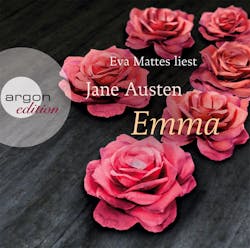
Emma

A high-spirited young woman meddles in other peoples' love lives in this classic comedy of errors set in nineteenth century England.

For Emma, raised to think well of herself, has such a high opinion of her own worth that it blinds her to the opinions of others. The story revolves around a comedy of errors: Emma befriends Harriet Smith, a young woman of unknown parentage, and attempts to remake her in her own image. Ignoring the gaping difference in their respective fortunes and stations in life, Emma convinces herself and her friend that Harriet should look as high as Emma herself might for a husband—and she zeroes in on an ambitious vicar as the perfect match. At the same time, she reads too much into a flirtation with Frank Churchill, the newly arrived son of family friends, and thoughtlessly starts a rumor about poor but beautiful Jane Fairfax, the beloved niece of two genteelly impoverished elderly ladies in the village.

As Emma's fantastically misguided schemes threaten to surge out of control, the voice of reason is provided by Mr. Knightly, the Woodhouse's longtime friend and neighbor. Though Austen herself described Emma as "a heroine whom no one but myself will much like," she endowed her creation with enough charm to see her through her most egregious behavior, and the saving grace of being able to learn from her mistakes. By the end of the novel Harriet, Frank, and Jane are all properly accounted for, Emma is wiser (though certainly not sadder), and the reader has had the satisfaction of enjoying Jane Austen at the height of her powers.

This edition inludes:

-A concise introduction that gives readers important background information

-A chronology of the author's life and work

-A timeline of significant events that provides the book's historical context

-An outline of key themes and plot points to help readers form their own interpretations

-Detailed explanatory notes

-Critical analysis, including contemporary and modern perspectives on the work

-Discussion questions to promote lively classroom and book group interaction

-A list of recommended related books and films to broaden the reader's experience

Enriched Classics offer readers affordable editions of great works of literature enhanced by helpful notes and insightful commentary. The scholarship provided in Enriched Classics enables readers to appreciate, understand, and enjoy the world's finest books to their full potential.
Über dieses Buch

A high-spirited young woman meddles in other peoples' love lives in this classic comedy of errors set in nineteenth century England.

For Emma, raised to think well of herself, has such a high opinion of her own worth that it blinds her to the opinions of others. The story revolves around a comedy of errors: Emma befriends Harriet Smith, a young woman of unknown parentage, and attempts to remake her in her own image. Ignoring the gaping difference in their respective fortunes and stations in life, Emma convinces herself and her friend that Harriet should look as high as Emma herself might for a husband—and she zeroes in on an ambitious vicar as the perfect match. At the same time, she reads too much into a flirtation with Frank Churchill, the newly arrived son of family friends, and thoughtlessly starts a rumor about poor but beautiful Jane Fairfax, the beloved niece of two genteelly impoverished elderly ladies in the village.

As Emma's fantastically misguided schemes threaten to surge out of control, the voice of reason is provided by Mr. Knightly, the Woodhouse's longtime friend and neighbor. Though Austen herself described Emma as "a heroine whom no one but myself will much like," she endowed her creation with enough charm to see her through her most egregious behavior, and the saving grace of being able to learn from her mistakes. By the end of the novel Harriet, Frank, and Jane are all properly accounted for, Emma is wiser (though certainly not sadder), and the reader has had the satisfaction of enjoying Jane Austen at the height of her powers.

This edition inludes:

-A concise introduction that gives readers important background information

-A chronology of the author's life and work

-A timeline of significant events that provides the book's historical context

-An outline of key themes and plot points to help readers form their own interpretations

-Detailed explanatory notes

-Critical analysis, including contemporary and modern perspectives on the work

-Discussion questions to promote lively classroom and book group interaction

-A list of recommended related books and films to broaden the reader's experience

Enriched Classics offer readers affordable editions of great works of literature enhanced by helpful notes and insightful commentary. The scholarship provided in Enriched Classics enables readers to appreciate, understand, and enjoy the world's finest books to their full potential.
Starte noch heute mit diesem Buch für 0 €

  • Hole dir während der Testphase vollen Zugriff auf alle Bücher in der App
  • Keine Verpflichtungen, jederzeit kündbar
Jetzt kostenlos testen
Mehr als 52 000 Menschen haben Nextory im App Store und auf Google Play 5 Sterne gegeben.

  1. 4.3

    Emma (Ungekürzt)

    Jane Austen

  2. 4.6

    Stolz und Vorurteil (Ungekürzte Fassung)

    Jane Austen

  3. 4.3

    Überredung (Ungekürzte Lesung)

    Jane Austen

  4. Gekürzt
    5.0

    Anne Elliot : oder die Kraft der Überredung

    Jane Austen

  5. 100 Meisterwerke der englischen Literatur - Klassiker, die man kennen muss

    George Orwell, Charles Dickens, Jane Austen, Katherine Mansfield, H.P. Lovecraft, William Wordsworth, John Keats, Percy Bysshe Shelley, Robert Burns, John Milton, William Shakespeare, Christopher Marlowe, Geoffrey Chaucer, Laurence Sterne, Henry Fielding, Mary Shelley, Emily Brontë, Charlotte Brontë, Anne Brontë, William Makepeace Thackeray, George Eliot, D. H. Lawrence, Herman Melville, Thomas Wolfe, Virginia Woolf, Joseph Conrad, Sinclair Lewis, Walt Whitman, Edgar Allan Poe, Oscar Wilde, Jerome K Jerome, Washington Irving, Bram Stoker, H.G. Wells, Daniel Defoe, Lew Wallace, James Fenimore Cooper, Jonathan Swift, Robert Louis Stevenson, Mark Twain, Lewis Carrol, Edward Bulwer-Lytton, F. Scott Fitzgerald, Arthur Conan Doyle, Jack London, Henry David Thoreau, G.K. Chesterton, Edith Wharton, Henry James, Thomas Hardy, Margaret Mitchell, Kate Chopin, Willa Cather, Charlotte Perkins Gilman, James Joyce, John Galsworthy, Francis Hodgson Burnett, Lucy Maud Montgomery, Louisa May Alcott, Rudyard Kipling

  6. Die größten weiblichen Bildungsromane : Moll Flanders, Gabriele, Jane Eyre, Heidi, Brigitta, Netotschka Njeswanowa, Aus guter Familie, Emma

    Charlotte Brontë, Johanna Schopenhauer, Johanna Spyri, Jane Austen, Marianne Ehrmann, Caroline von Wolzogen, Gabriele Reuter, Charles Dickens, Fjodor Michailowitsch Dostojewski, Daniel Defoe, Lou Andreas-Salomé, John Cleland, Adalbert Stifter, Charles-Louis Philippe, D. H. Lawrence

  7. Die größten Liebesgeschichten der britischen Literatur : Romeo und Julia, Stolz und Vorurteil, Emma, Cecilia, Überredung, Jane Eyre, Große Erwartungen, Die Braut von Lammermoor

    Jane Austen, Charlotte Brontë, William Shakespeare, Walter Scott, Frances Burney, Emily Brontë, Anne Brontë, Charles Dickens, Rudyard Kipling, George Eliot, Nathaniel Hawthorne, D. H. Lawrence, Daniel Defoe, Lew Wallace, F. Scott Fitzgerald

  8. 1.0

    100 Meisterwerke der Weltliteratur - Klassiker die man kennen muss : Bereicherte Ausgabe. Ein literarisches Panorama: Meisterwerke, Klassiker und Autoren der Weltliteratur

    Johann Wolfgang Goethe, Jules Verne, Gustave Flaubert, Franz Kafka, Lewis Carroll, Selma Lagerlöf, Sigmund Freud, Johanna Spyri, Theodor Storm, Rainer Maria Rilke, Charles Dickens, Stefan Zweig, Heinrich Heine, Honoré de Balzac, Theodor Fontane, Karl May, Gottfried Keller, Mark Twain, Heinrich Mann, Else Lasker-Schüler, Robert Musil, Walt Whitman, Oscar Wilde, Annette von Droste-Hülshoff, Arthur Schopenhauer, Robert Louis Stevenson, Gustav Freytag, James Fenimore Cooper, Edgar Allan Poe, Heinrich von Kleist, William Shakespeare, Dante Alighieri, Charlotte Brontë, Emily Brontë, Jack London, Arthur Conan Doyle, Joseph Conrad, Jane Austen, Herman Melville, Guy De Maupassant, Walter Scott, Jonathan Swift, Jacob Grimm, Wilhelm Grimm, Alexandre Dumas, Rudyard Kipling, Nathaniel Hawthorne, Homer, O.Henry, Voltaire, Lew Wallace, John Galsworthy, E. T. Hoffmann, Marcus Aurelius, Hans Christian Andersen, Anton Pawlowitsch Tschechow, Platon, Friedrich Nietzsche, Iwan Sergejewitsch Turgenew, Tacitus, Nikolai Gogol, Miguel de Cervantes, Mary Shelley, Thomas Wolfe, Emile Zola, Fjodor Michailowitsch Dostojewski, Leo Tolstoi, Joseph Roth, Joseph von Eichendorff, Kurt Tucholsky, Iwan Alexandrowitsch Gontscharow, Oswald Spengler, Moliere, Alfred Adler, Sophie von Roche, Klaus Mann, Rumi

  9. 23. Juli

    Verstand und Gefühl : Der Klassiker als liebevoll umgesetzte Graphic Novel - Slow-Burn-Lovestory in der Regency-Zeit

    Jane Austen, Claudia Kühn

  10. 4.0
    #1

    Sense and Sensibility

    Jane Austen

  11. Die beliebtesten Liebesromane der Regency-Zeit : 60+ Titel in einem Band: Stolz und Vorurteil, Überredung, Emma, Cecilia, Verbotene Ehe, Der breite Weg, Fantomina, Sturmhöhe, Paul und Virginie

    Fanny Burney, Jane Austen, Susan Ferrier, Jeffery Farnol, Johann Wolfgang von Goethe, Mary Wollstonecraft, Walter Scott, Pierre-Ambroise Choderlos de Laclos, Victor Hugo, Dorothea Schlegel, Rafael Sabatini, Joseph von Eichendorff, Eliza Haywood, Maria Edgeworth, Johanna Schopenhauer, Marianne Ehrmann, Sophie Albrecht, Caroline von Wolzogen, Sophie Mereau, Bernardin de Saint-Pierre, Benedikte Naubert, Lew Tolstoi, Sophie von La Roche, Germaine de Staël, Christian August Vulpius, Stendhal, Frau von W., Levin Schücking, Hermann Stegemann, Selma Lagerlöf, Emily Brontë, Charlotte Brontë, Anne Brontë, Eufemia von Adlersfeld-Ballestrem

  12. Sämtliche Romane von Jane Austen & Brontë-Schwestern

    Jane Austen, Charlotte Brontë, Emily Brontë, Anne Brontë