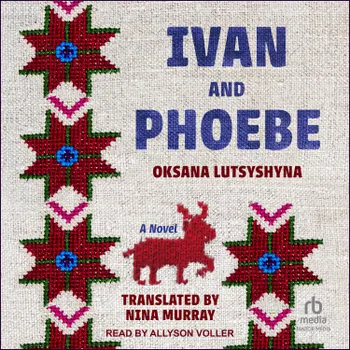
Ivan and Phoebe

Ivan and Phoebe chronicles the lives of several young people involved in the Ukranian student protests of the 1990's, otherwise known as the Revolution On Granite or the "First Maidan." The story bounces between politically charged cities like Kyiv and Lviv, and protagonist Ivan's small, traditional hometown of Uzhgorod. As characters come to exercise their rights to free speech and protest, they must also reevaluate the norms of marriage, family, and home life. While these initially appear to be spaces of peace and harmony, they are soon revealed to be hotbeds of conflict and multigenerational trauma.

Married couple Ivan and Phoebe grapple with questions about family, trauma, and independence. Although Ivan tells the story, Phoebe's voice rings through the text as she divulges her own traumas through poetic monologues. The two reflect on the traumatic aftermath of revolution: torture at the hands of the KGB and each other. While Ivan refuses to talk about his pain, Phoebe describes her past through poetic monologues. Lutsyshyna's poetic form allows her to experiment with characterization and genre, creating her own category. Through her characters' vivid voices, Lutsyshyna creates a his- and her-story of Ukraine: a panoramic view of post-Soviet society and family life through social, political, and economic crises.

Über dieses Buch

Ivan and Phoebe chronicles the lives of several young people involved in the Ukranian student protests of the 1990's, otherwise known as the Revolution On Granite or the "First Maidan." The story bounces between politically charged cities like Kyiv and Lviv, and protagonist Ivan's small, traditional hometown of Uzhgorod. As characters come to exercise their rights to free speech and protest, they must also reevaluate the norms of marriage, family, and home life. While these initially appear to be spaces of peace and harmony, they are soon revealed to be hotbeds of conflict and multigenerational trauma.

Married couple Ivan and Phoebe grapple with questions about family, trauma, and independence. Although Ivan tells the story, Phoebe's voice rings through the text as she divulges her own traumas through poetic monologues. The two reflect on the traumatic aftermath of revolution: torture at the hands of the KGB and each other. While Ivan refuses to talk about his pain, Phoebe describes her past through poetic monologues. Lutsyshyna's poetic form allows her to experiment with characterization and genre, creating her own category. Through her characters' vivid voices, Lutsyshyna creates a his- and her-story of Ukraine: a panoramic view of post-Soviet society and family life through social, political, and economic crises.

Starte noch heute mit diesem Buch für 0 €

  • Hole dir während der Testphase vollen Zugriff auf alle Bücher in der App
  • Keine Verpflichtungen, jederzeit kündbar
Jetzt kostenlos testen
Mehr als 52 000 Menschen haben Nextory im App Store und auf Google Play 5 Sterne gegeben.