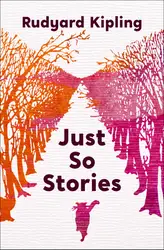
Just So Stories

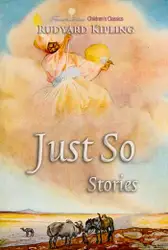
Just So Stories for Little Children is a 1902 collection of origin stories by the British author Rudyard Kipling. Considered a classic of children's literature, the book is among Kipling's best known works.

Kipling began working on the book by telling the first three chapters

as bedtime stories to his daughter Josephine. These had to be told

"just so" (exactly in the words she was used to) or she would complain.

The stories describe how one animal or another acquired its most

distinctive features, such as how the Leopard got his spots. For the

book, Kipling illustrated the stories himself.

The stories have appeared in a variety of adaptations including a

musical and animated films. Evolutionary biologists have noted that what

Kipling did in fiction, they have done in reality, providing

explanations for the evolutionary development of animal features.

The Just So Stories each tell how a particular animal was

modified from an original form to its current form by the acts of man,

or some magical being. For example, the Whale has a tiny throat because

he swallowed a mariner, who tied a raft inside to block the whale from

swallowing other men. The Camel has a hump given to him by a djinn

as punishment for the camel's refusing to work (the hump allows the

camel to work longer between times of eating). The Leopard's spots were

painted by an Ethiopian

(after the Ethiopian painted himself black). The Kangaroo gets its

powerful hind legs, long tail, and hopping gait after being chased all

day by a dingo, sent by a minor god responding to the Kangaroo's request to be made different from all other animals.

The Just So Stories began as bedtime stories told to his

daughter "Effie" [Josephine, Kipling's firstborn]; when the first three

were published in a children’s magazine, a year before her death,

Kipling explained: "in the evening there were stories meant to put Effie

to sleep, and you were not allowed to alter those by one single little

word. They had to be told just so; or Effie would wake up and put back

the missing sentence. So at last they came to be like charms, all three

of them,—the whale tale, the camel tale, and the rhinoceros tale."

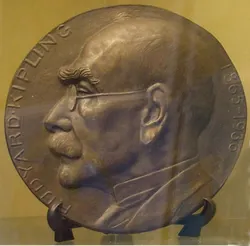
Joseph Rudyard Kipling (30 December 1865 – 18 January 1936) was an English journalist, short-story writer, poet, and novelist.

Kipling's works of fiction include The Jungle Book (1894), Kim (1901), and many short stories, including "The Man Who Would Be King" (1888). His poems include "Mandalay" (1890), "Gunga Din" (1890), "The Gods of the Copybook Headings" (1919), "The White Man's Burden" (1899), and "If—" (1910). He is regarded as a major innovator in the art of the short story; his children's books are classics of children's literature, and one critic described his work as exhibiting "a versatile and luminous narrative gift".

Kipling was one of the most popular writers in the United Kingdom, in both prose and verse, in the late 19th and early 20th centuries. Henry James said: "Kipling strikes me personally as the most complete man of genius, as distinct from fine intelligence, that I have ever known."In 1907, at the age of 42, he was awarded the Nobel Prize in Literature, making him the first English-language writer to receive the prize and its youngest recipient to date. He was also sounded out for the British Poet Laureateship and on several occasions for a knighthood, both of which he declined.
Über dieses Buch

Just So Stories for Little Children is a 1902 collection of origin stories by the British author Rudyard Kipling. Considered a classic of children's literature, the book is among Kipling's best known works.

Kipling began working on the book by telling the first three chapters

as bedtime stories to his daughter Josephine. These had to be told

"just so" (exactly in the words she was used to) or she would complain.

The stories describe how one animal or another acquired its most

distinctive features, such as how the Leopard got his spots. For the

book, Kipling illustrated the stories himself.

The stories have appeared in a variety of adaptations including a

musical and animated films. Evolutionary biologists have noted that what

Kipling did in fiction, they have done in reality, providing

explanations for the evolutionary development of animal features.

The Just So Stories each tell how a particular animal was

modified from an original form to its current form by the acts of man,

or some magical being. For example, the Whale has a tiny throat because

he swallowed a mariner, who tied a raft inside to block the whale from

swallowing other men. The Camel has a hump given to him by a djinn

as punishment for the camel's refusing to work (the hump allows the

camel to work longer between times of eating). The Leopard's spots were

painted by an Ethiopian

(after the Ethiopian painted himself black). The Kangaroo gets its

powerful hind legs, long tail, and hopping gait after being chased all

day by a dingo, sent by a minor god responding to the Kangaroo's request to be made different from all other animals.

The Just So Stories began as bedtime stories told to his

daughter "Effie" [Josephine, Kipling's firstborn]; when the first three

were published in a children’s magazine, a year before her death,

Kipling explained: "in the evening there were stories meant to put Effie

to sleep, and you were not allowed to alter those by one single little

word. They had to be told just so; or Effie would wake up and put back

the missing sentence. So at last they came to be like charms, all three

of them,—the whale tale, the camel tale, and the rhinoceros tale."

Joseph Rudyard Kipling (30 December 1865 – 18 January 1936) was an English journalist, short-story writer, poet, and novelist.

Kipling's works of fiction include The Jungle Book (1894), Kim (1901), and many short stories, including "The Man Who Would Be King" (1888). His poems include "Mandalay" (1890), "Gunga Din" (1890), "The Gods of the Copybook Headings" (1919), "The White Man's Burden" (1899), and "If—" (1910). He is regarded as a major innovator in the art of the short story; his children's books are classics of children's literature, and one critic described his work as exhibiting "a versatile and luminous narrative gift".

Kipling was one of the most popular writers in the United Kingdom, in both prose and verse, in the late 19th and early 20th centuries. Henry James said: "Kipling strikes me personally as the most complete man of genius, as distinct from fine intelligence, that I have ever known."In 1907, at the age of 42, he was awarded the Nobel Prize in Literature, making him the first English-language writer to receive the prize and its youngest recipient to date. He was also sounded out for the British Poet Laureateship and on several occasions for a knighthood, both of which he declined.

Starte noch heute mit diesem Buch für 0 €

  • Hole dir während der Testphase vollen Zugriff auf alle Bücher in der App
  • Keine Verpflichtungen, jederzeit kündbar
Jetzt kostenlos testen
Mehr als 52 000 Menschen haben Nextory im App Store und auf Google Play 5 Sterne gegeben.

  1. 100 Meisterwerke der englischen Literatur - Klassiker, die man kennen muss

    George Orwell, Charles Dickens, Jane Austen, Katherine Mansfield, H.P. Lovecraft, William Wordsworth, John Keats, Percy Bysshe Shelley, Robert Burns, John Milton, William Shakespeare, Christopher Marlowe, Geoffrey Chaucer, Laurence Sterne, Henry Fielding, Mary Shelley, Emily Brontë, Charlotte Brontë, Anne Brontë, William Makepeace Thackeray, George Eliot, D. H. Lawrence, Herman Melville, Thomas Wolfe, Virginia Woolf, Joseph Conrad, Sinclair Lewis, Walt Whitman, Edgar Allan Poe, Oscar Wilde, Jerome K Jerome, Washington Irving, Bram Stoker, H.G. Wells, Daniel Defoe, Lew Wallace, James Fenimore Cooper, Jonathan Swift, Robert Louis Stevenson, Mark Twain, Lewis Carrol, Edward Bulwer-Lytton, F. Scott Fitzgerald, Arthur Conan Doyle, Jack London, Henry David Thoreau, G.K. Chesterton, Edith Wharton, Henry James, Thomas Hardy, Margaret Mitchell, Kate Chopin, Willa Cather, Charlotte Perkins Gilman, James Joyce, John Galsworthy, Francis Hodgson Burnett, Lucy Maud Montgomery, Louisa May Alcott, Rudyard Kipling

  2. 3.0

    200 Meisterwerke der Literaturgeschichte : Die größten Klassiker der Weltliteratur

    Franz Kafka, Victor Hugo, Fjodor Michailowitsch Dostojewski, Lord Byron, Giacomo Leopardi, Marcel Proust, Henrik Ibsen, Percy Bysshe Shelley, Charles Dickens, Jane Austen, Mary Shelley, Emily Brontë, Charlotte Brontë, Anne Brontë, William Makepeace Thackeray, Bram Stoker, Henry Fielding, George Eliot, William Shakespeare, D. H. Lawrence, Walt Whitman, Herman Melville, Thomas Wolfe, Virginia Woolf, Joseph Conrad, Sinclair Lewis, Lewis Carrol, Edgar Allan Poe, Edward Bulwer-Lytton, Oscar Wilde, H.G. Wells, Daniel Defoe, James Fenimore Cooper, Lew Wallace, Jonathan Swift, Robert Louis Stevenson, Mark Twain, Walter Scott, Nathaniel Hawthorne, Harriet Beecher Stowe, Laurence Sterne, Frances Hodgson Burnett, Arthur Conan Doyle, Wilkie Collins, Edgar Wallace, Jack London, Henry David Thoreau, John Galsworthy, F. Scott Fitzgerald, Rudyard Kipling, G.K. Chesterton, Washington Irvin, O.Henry, Ambrose Bierce, Alexander Sergejewitsch Puschkin, Michail Lermontow, Iwan Sergejewitsch Turgenew, Leo Tolstoi, Nikolai Gogol, Iwan Gontscharow, Nikolai Leskow, Anton Pawlowitsch Tschechow, Maxim Gorki, François Rabelais, Jean de la Fontaine, Blaise Pascal, Pierre Corneille, Moliere, Jean Baptiste Racine, Charles Perrault, Voltaire, Denis Diderot, Jean-Jacques Rousseau, Pierre-Ambroise Choderlos de Laclos, Antoine-François Prévost, Marquis De Sade, François René Chateaubriand, Stendhal, Honoré de Balzac, Alexandre Dumas, Alphonse de Lamartine, George Sand, Gustave Flaubert, Emile Zola, Guy De Maupassant, Alphonse Daudet, Jules Verne, Joris-Karl Huysmans, Prosper Mérimée, Charles Baudelaire, Stéphane Mallarmé, Arthur Rimbaud, André Gide, Arthur Schopenhauer, Heinrich Heine, Friedrich Schiller, Johann Wolfgang von Goethe, Jacob Grimm, Gottfried von Straßburg, Wolfram von Eschenbach, E T A Hoffmann, Annette von Droste-Hülshoff, Heinrich von Kleist, Friedrich Hölderlin, Theodor Fontane, Gustav Freytag, Gottfried Keller, Theodor Storm, Stefan Zweig, Joseph von Eichendorff, Klaus Mann, Rainer Maria Rilke, Johanna Spyri, Joseph Roth, Karl May, Robert Musil, Heinrich Mann, Sigmund Freud, Friedrich Nietzsche, Dante Alighieri, Giovanni Boccaccio, Giacomo Casanova, Luigi Pirandello, Giosuè Carducci, Gabriele D’Annunzio, Niccolo Machiavelli, Miguel Cervantes de Saavedra, Pedro Calderón de la Barca, Vicente Blasco Ibañez, Knut Hamsun, Homer, Äsop, Herodot, Thukydides, Xenophon, Platon, - Aristoteles, - Sophokles, Euripides, - Aristophanes, Lao Tse, - Konfuzius, Siddhartha Gautama Buddha, Titus Livius, Tacitus, Marcus Tullius Cicero, Vergil, Ovid, Lukian, Petronius, Apuleius, Longos von Lesbos, Mark Aurel, Aurelius Augustinus

  3. 1.0

    100 Meisterwerke der Weltliteratur - Klassiker die man kennen muss : Bereicherte Ausgabe. Ein literarisches Panorama: Meisterwerke, Klassiker und Autoren der Weltliteratur

    Johann Wolfgang von Goethe, Jules Verne, Gustave Flaubert, Franz Kafka, Lewis Carroll, Selma Lagerlöf, Sigmund Freud, Johanna Spyri, Theodor Storm, Rainer Maria Rilke, Charles Dickens, Stefan Zweig, Heinrich Heine, Honoré de Balzac, Theodor Fontane, Karl May, Gottfried Keller, Mark Twain, Heinrich Mann, Else Lasker-Schüler, Robert Musil, Walt Whitman, Oscar Wilde, Annette von Droste-Hülshoff, Arthur Schopenhauer, Robert Louis Stevenson, Gustav Freytag, James Fenimore Cooper, Edgar Allan Poe, Heinrich von Kleist, William Shakespeare, Dante Alighieri, Charlotte Brontë, Emily Brontë, Jack London, Arthur Conan Doyle, Joseph Conrad, Jane Austen, Herman Melville, Guy De Maupassant, Walter Scott, Jonathan Swift, Jacob Grimm, Wilhelm Grimm, Alexandre Dumas, Rudyard Kipling, Nathaniel Hawthorne, Homer, O.Henry, Voltaire, Lew Wallace, John Galsworthy, E T A Hoffmann, Marcus Aurelius, Hans Christian Andersen, Anton Pawlowitsch Tschechow, Platon, Friedrich Nietzsche, Iwan Sergejewitsch Turgenew, Tacitus, Nikolai Gogol, Miguel de Cervantes, Mary Shelley, Thomas Wolfe, Emile Zola, Fjodor Michailowitsch Dostojewski, Leo Tolstoi, Joseph Roth, Joseph von Eichendorff, Kurt Tucholsky, Iwan Alexandrowitsch Gontscharow, Oswald Spengler, Moliere, Alfred Adler, Sophie von La Roche, Klaus Mann, Rumi

  4. Die größten Liebesgeschichten der britischen Literatur : Romeo und Julia, Stolz und Vorurteil, Emma, Cecilia, Überredung, Jane Eyre, Große Erwartungen, Die Braut von Lammermoor

    Jane Austen, Charlotte Brontë, William Shakespeare, Walter Scott, Frances Burney, Emily Brontë, Anne Brontë, Charles Dickens, Rudyard Kipling, George Eliot, Nathaniel Hawthorne, D. H. Lawrence, Daniel Defoe, Lew Wallace, F. Scott Fitzgerald

  5. Kim - Hörbuch Klassiker

    Rudyard Kipling, Hörbuch Klassiker

  6. 5.0

    Das Dschungelbuch (Hörbuch)

    Rudyard Kipling, Hörbücher für Kinder

  7. Grusel, Horror und Schauer: Die große Hörbuch Box : Klassiker der Weltliteratur

    Robert Louis Stevenson, Nathaniel Hawthorne, E T A Hoffmann, Anton Tschechow, Georg Heym, W. Jacobs, Rudyard Kipling, Guy De Maupassant, H.P. Lovecraft, John Polidori, Edgar Allan Poe, H.G. Wells, Theodor Storm, A. J. Mordtmann

  8. Die große Märchen-Hörbuch-Box : Mit Geschichten von Theodor Storm, Hans Christian Andersen, Hans Fallada, Rudyard Kipling und Karel Čapek

    Theodor Storm, Hans Christian Andersen, Hans Fallada, Rudyard Kipling, Karel Čapek

  9. Das große Buch der Gute-Nacht-Geschichten

    Beatrix Potter, Hans Christian Andersen, Jacob Grimm, Wilhelm Grimm, Selma Lagerlöf, Peter Christen Asbjørnsen, Alexander Sergejewitsch Puschkin, Ludwig Tieck, Thomas Crofton Croker, Anton Dietrich, Clemens Brentano, Josef Wenzig, Karl Albrecht Heise, Richard Wilhelm, Gustav Weil, Wilhelm Ruland, Wilhelm Hauff, Benedikte Naubert, Carl Einstein, Alois Essigmann, Luise Büchner, Gerdt von Bassewitz, Lothar Meggendorfer, Oscar Wilde, Ludwig Bechstein, Heinrich Pröhle, Heinrich Seidel, Richard von Volkmann, Waldemar Bonsels, Felix Salten, Rudyard Kipling, ETA Hoffman, Wilhelm Busch, Carlo Collodi, Hermann Löns, Elsbeth Montzheimer, Walter Scott, Rosalie Koch, Julius Wolff, Joseph Jacobs

  10. Erste Kinderbücher für die Kleinsten : Peterchens Mondfahrt, Bambi, Die Biene Maja und ihre Abenteuer, ABC-Buch, Max und Moritz

    Selma Lagerlöf, Beatrix Potter, Waldemar Bonsels, Felix Salten, Gerdt von Bassewitz, Else Ury, Karl Philipp Moritz, Hans Christian Andersen, Ludwig Tieck, Hermann Löns, Johanna Spyri, Rudyard Kipling, Jack London, Wilhelm Busch, Walther Kabel, Franz Bonn, Joachim Ringelnatz, Jacob Grimm, Wilhelm Grimm, Joseph Jacobs, Ludwig Bechstein, Elsbeth Montzheimer, Heinrich Seidel, Lothar Meggendorfer, ETA Hoffman, Oscar Wilde, Rosalie Koch, Walter Scott

  11. Die Meisterwerke der Weltliterature : Bereicherte Ausgabe. 100 Klassiker die man kennen muss

    Johann Wolfgang von Goethe, Jules Verne, Gustave Flaubert, Franz Kafka, Lewis Carroll, Selma Lagerlöf, Sigmund Freud, Johanna Spyri, Theodor Storm, Rainer Maria Rilke, Charles Dickens, Stefan Zweig, Heinrich Heine, Honoré de Balzac, Theodor Fontane, Karl May, Gottfried Keller, Mark Twain, Heinrich Mann, Else Lasker-Schüler, Robert Musil, Walt Whitman, Oscar Wilde, Annette von Droste-Hülshoff, Arthur Schopenhauer, Robert Louis Stevenson, Gustav Freytag, James Fenimore Cooper, Edgar Allan Poe, Heinrich von Kleist, William Shakespeare, Dante Alighieri, Charlotte Brontë, Emily Brontë, Jack London, Arthur Conan Doyle, Joseph Conrad, Jane Austen, Herman Melville, Guy De Maupassant, Walter Scott, Jonathan Swift, Jacob Grimm, Wilhelm Grimm, Alexandre Dumas, Rudyard Kipling, Nathaniel Hawthorne, Homer, O.Henry, Voltaire, Lew Wallace, John Galsworthy, E T A Hoffmann, Marcus Aurelius, Hans Christian Andersen, Anton Pawlowitsch Tschechow, Platon, Friedrich Nietzsche, Iwan Sergejewitsch Turgenew, Tacitus, Nikolai Gogol, Miguel de Cervantes, Mary Shelley, Thomas Wolfe, Emile Zola, Fjodor Michailowitsch Dostojewski, Leo Tolstoi, Joseph Roth, Joseph von Eichendorff, Kurt Tucholsky, Iwan Alexandrowitsch Gontscharow, Oswald Spengler, Moliere, Alfred Adler, Sophie von La Roche, Klaus Mann, Rumi

  12. 200 Literarische Meisterwerke der Weltgeschichte : Die größten Klassiker aus Deutschland, England, den USA, Russland und Frankreich

    Lew Tolstoi, Virginia Woolf, Henrik Ibsen, Franz Kafka, Fjodor Michailowitsch Dostojewski, Lord Byron, Victor Hugo, Giacomo Leopardi, Marcel Proust, Percy Bysshe Shelley, Charles Dickens, Jane Austen, Mary Shelley, Emily Brontë, Charlotte Brontë, Anne Brontë, William Makepeace Thackeray, Bram Stoker, Henry Fielding, George Eliot, William Shakespeare, D. H. Lawrence, Walt Whitman, Herman Melville, Thomas Wolfe, Joseph Conrad, Sinclair Lewis, Lewis Carrol, Edgar Allan Poe, Edward Bulwer-Lytton, Oscar Wilde, H.G. Wells, Daniel Defoe, James Fenimore Cooper, Lew Wallace, Jonathan Swift, Robert Louis Stevenson, Mark Twain, Walter Scott, Nathaniel Hawthorne, Harriet Beecher Stowe, Laurence Sterne, Frances Hodgson Burnett, Arthur Conan Doyle, Wilkie Collins, Edgar Wallace, Jack London, Henry David Thoreau, John Galsworthy, F. Scott Fitzgerald, Rudyard Kipling, G.K. Chesterton, Alexander Sergejewitsch Puschkin, Leo Tolstoi, Nikolai Gogol, Charles Baudelaire, Arthur Rimbaud, Edmond Rostand, Jean Giraudoux, André Gide, Arthur Schopenhauer, Heinrich Heine, Friedrich Schiller, Johann Wolfgang von Goethe, Jacob Grimm, Wilhelm Grimm, Gottfried von Straßburg, Wolfram von Eschenbach, E T A Hoffmann, Annette von Droste-Hülshoff, Dante Alighieri, Giovanni Boccaccio, Luigi Pirandello, Niccolo Machiavelli, Miguel Cervantes de Saavedra, Pedro Calderón de la Barca, Vicente Blasco Ibañez, Knut Hamsun, Friedrich Nietzsche, Homer, Äsop, Herodot, Thukydides, Xenophon, Platon, - Aristoteles, Tacitus, - Konfuzius, Siddhartha Gautama Buddha, Marcus Tullius Cicero, Vergil, Ovid, Mark Aurel, Aurelius Augustinus