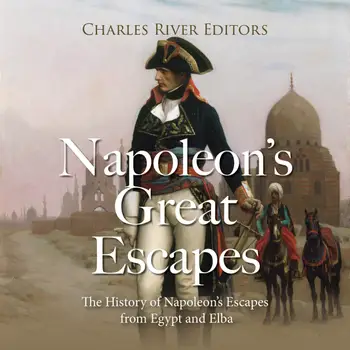
Napoleon’s Great Escapes: The History of Napoleon’s Escapes from Egypt and Elba

Napoleon harbored all kinds of delusions about his time in Egypt that were not based in reality, but he definitely left a lasting legacy in the region, one he would never live to see or appreciate. By shifting the theater of operations to Africa and the Middle East, Napoleon inadvertently ensured the Europeans would fight there in the future, and the French occupation impressed upon the locals the necessity of catching up to the modern world in terms of technology. Ancient tactics could not prevail against a modern army, no matter the numbers, but while that was a lesson Napoleon consistently taught his enemies in Egypt and the Levant to their detriment, the French also sped up the occupied populations’ technological advances as well.

Of all the incredible military feats Napoleon accomplished, none were more impressive than his escape from Elba and his return to France, which was literally a bloodless revolution. On February 26, 1815, Napoleon escaped from Elba, and in a desperate gamble, he landed on the French mainland with less than a thousand men and marched on Paris.

What happened next was truly remarkable. An infantry regiment was sent to intercept Napoleon and his men, but Napoleon rode up to them alone and shouted, "Here I am. Kill your Emperor, if you wish." Upon seeing their once invincible leader before them, the soldiers mutinied and went over to his side en masse. Other corps soon followed, and in no time at all Napoleon found himself at the head of an army marching on Paris. The newly reinstituted Bourbon monarch fled the city, and so, with barely a shot fired, Napoleon found himself enthroned as emperor once more. In an astonishing feat of political chutzpah and military organization, within three months he had seized power anew and rebuilt his veteran forces to a strength of 200,000 men. Of these, 128,000 were assembled into the Armee du Nord, under Napoleon’s personal command.
Über dieses Buch

Napoleon harbored all kinds of delusions about his time in Egypt that were not based in reality, but he definitely left a lasting legacy in the region, one he would never live to see or appreciate. By shifting the theater of operations to Africa and the Middle East, Napoleon inadvertently ensured the Europeans would fight there in the future, and the French occupation impressed upon the locals the necessity of catching up to the modern world in terms of technology. Ancient tactics could not prevail against a modern army, no matter the numbers, but while that was a lesson Napoleon consistently taught his enemies in Egypt and the Levant to their detriment, the French also sped up the occupied populations’ technological advances as well.

Of all the incredible military feats Napoleon accomplished, none were more impressive than his escape from Elba and his return to France, which was literally a bloodless revolution. On February 26, 1815, Napoleon escaped from Elba, and in a desperate gamble, he landed on the French mainland with less than a thousand men and marched on Paris.

What happened next was truly remarkable. An infantry regiment was sent to intercept Napoleon and his men, but Napoleon rode up to them alone and shouted, "Here I am. Kill your Emperor, if you wish." Upon seeing their once invincible leader before them, the soldiers mutinied and went over to his side en masse. Other corps soon followed, and in no time at all Napoleon found himself at the head of an army marching on Paris. The newly reinstituted Bourbon monarch fled the city, and so, with barely a shot fired, Napoleon found himself enthroned as emperor once more. In an astonishing feat of political chutzpah and military organization, within three months he had seized power anew and rebuilt his veteran forces to a strength of 200,000 men. Of these, 128,000 were assembled into the Armee du Nord, under Napoleon’s personal command.

Starte noch heute mit diesem Buch für 0 €

  • Hole dir während der Testphase vollen Zugriff auf alle Bücher in der App
  • Keine Verpflichtungen, jederzeit kündbar
Jetzt kostenlos testen
Mehr als 52 000 Menschen haben Nextory im App Store und auf Google Play 5 Sterne gegeben.

  1. The Iranian Revolution and Iran Hostage Crisis: The History of the Events that Broke American Relations with Iran

    Charles River Editors

  2. Das mittelalterliche Russland: Die Geschichte und das Erbe der Gruppen, die den russischen Staat im Mittelalter entwickelten

    Charles River Editors

  3. 4.0

    The Empires of India: The History of the Dynasties that Ruled India Before the British

    Charles River Editors

  4. Imperial Germany’s Colonization in Africa: The History of the German Efforts and Conflicts to Colonize Parts of Africa

    Charles River Editors

  5. Japan in the World Wars: The History of the Imperial Japanese Empire during World War I and World War II

    Charles River Editors

  6. Die Han-Dynastie: Geschichte und Erbe des einflussreichsten Reiches des alten China

    Charles River Editors

  7. Ada Lovelace: The Life and Legacy of the Math Prodigy Who Pioneered Computer Science

    Charles River Editors

  8. 3.4

    Mustafa Kemal Atatürk and the Republic of Turkey: The History of the Ottoman Empire’s Collapse and the Establishment of a New State

    Charles River Editors

  9. 4.3

    The Sentinelese: The History of the Uncontacted People on North Sentinel Island

    Charles River Editors

  10. 2.0

    Die Panzer: Die Geschichte und das Vermächtnis von Nazideutschlands berühmtesten Panzern des Zweiten Weltkriegs

    Charles River Editors

  11. The Spanish Empire in the Americas: The History of Spain’s Colonization across Central America and South America

    Charles River Editors

  12. Neu

    Queen Catherine de' Medici: The Life and Legacy of Renaissance France’s Most Influential Queen

    Charles River Editors